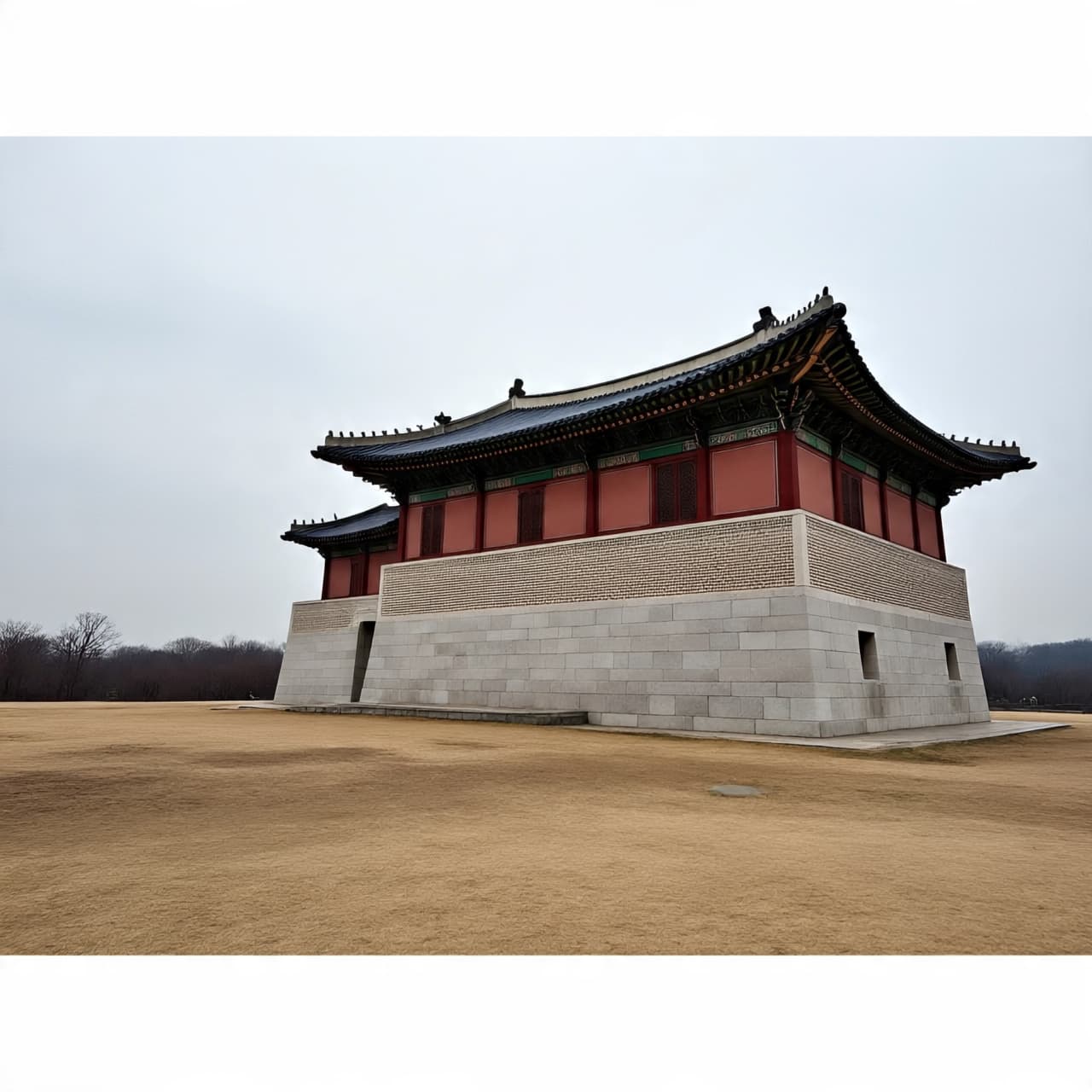
In North Korea, symbolism often speaks louder than statements. This week, that symbolism took the form of a young girl walking beside her father through one of the country’s most sacred spaces — the Kumsusan Palace of the Sun.
Kim Jong-un’s daughter accompanied the North Korean leader during a visit to the state mausoleum that houses the preserved bodies of Kim Il-sung and Kim Jong-il, the nation’s founding and second leaders. The setting was deliberate, the moment carefully framed. In a political system where lineage defines legitimacy, such appearances rarely pass without interpretation.
The visit followed a familiar pattern of ritual reverence. Floral tributes were laid. Formal bows were observed. What stood out was not the ceremony itself, but who was present — and who was not. Kim’s daughter, whose name has never been officially confirmed by state media, appeared prominently, reinforcing her growing visibility at events once reserved for senior elites.
North Korean media offered no explicit explanation, nor did it hint at succession. It rarely does. Yet observers inside and outside the Korean Peninsula are accustomed to reading between the lines. In a dynasty built on bloodline continuity, proximity to sacred spaces carries meaning that transcends age or official title.
Kim Jong-un has several children, but only his daughter has been consistently shown in public. She has appeared at missile launches, military parades, and now at the mausoleum that anchors the regime’s historical narrative. Each appearance adds a layer to speculation that she may be undergoing a slow, symbolic introduction to public life.
Succession in North Korea has never followed a rigid timetable. Kim Jong-un himself was largely unknown until shortly before his father’s death. The regime favors ambiguity, using silence as a tool of control. Still, moments like this suggest preparation rather than spontaneity — an effort to familiarize the public with a future that remains officially unspoken.
There are also limits to interpretation. The child remains young, with no formal role and no confirmation of intent. Some analysts caution against assuming inevitability, noting that appearances can serve multiple purposes: reinforcing dynastic continuity, humanizing the leader, or signaling stability rather than transition.
Yet North Korea’s political language is visual and ceremonial. Every gesture is curated. Every setting is chosen. A visit to the mausoleum is not casual, and attendance there is not incidental.
For now, the question lingers without answer. Was this simply a daughter accompanying her father, or a carefully staged reminder that the Kim bloodline extends forward as well as back?
In Pyongyang, the future is rarely announced. It is revealed slowly, through ritual, repetition, and silence — one appearance at a time.
Published by Banx Network. This article is part of the Banx decentralized media programme, powered by the BXE token on the XRP Ledger.