In Washington, transitions often unfold without spectacle. They arrive through formal announcements and familiar faces, layered atop institutions designed to outlast any single moment. The Federal Reserve, steady and restrained by design, now finds itself approaching another such passage.
President Donald Trump has named Kevin Warsh as his pick to replace Jerome Powell as chair of the Federal Reserve, setting the stage for a potential shift at the helm of the world’s most influential central bank. Powell’s term is due to end in 2026, concluding a period defined by pandemic recovery, inflation shocks, and the sharpest interest-rate tightening cycle in decades.
Warsh brings with him both institutional memory and public distance. He served on the Federal Reserve’s Board of Governors from 2006 to 2011, years that encompassed the global financial crisis and the emergency measures that reshaped modern central banking. Since leaving the board, he has remained a visible voice in economic debates, often questioning prolonged stimulus and warning about the long-term costs of expansive monetary policy.
The nomination lands at a moment when the Federal Reserve’s role feels unusually exposed. Interest-rate decisions now ripple quickly through housing markets, government budgets, and global capital flows, drawing political attention even as the institution insists on its independence. Trump has repeatedly criticized the Fed for what he views as overly restrictive policy, and his selection of Warsh signals an appetite for a different balance between restraint and growth.
Yet the choice is not a simple departure from tradition. Warsh is widely regarded as a defender of central-bank credibility, someone shaped by crisis management rather than partisan cycles. His record reflects both skepticism of excess and respect for institutional limits, a combination that will be closely examined as his nomination moves toward Senate confirmation.
For markets, the announcement offers implication rather than instruction. Analysts parse past speeches and essays, searching for hints about future rate paths, while investors weigh continuity against recalibration. For households and businesses, the consequences will be slower and subtler, felt in borrowing costs, hiring plans, and the pace of economic confidence.
As the process unfolds, the Federal Reserve remains what it has always been: powerful, constrained, and watched closely. Leadership may change, but the larger challenge endures—steering the economy through uncertainty while standing apart from the politics that inevitably surround it.
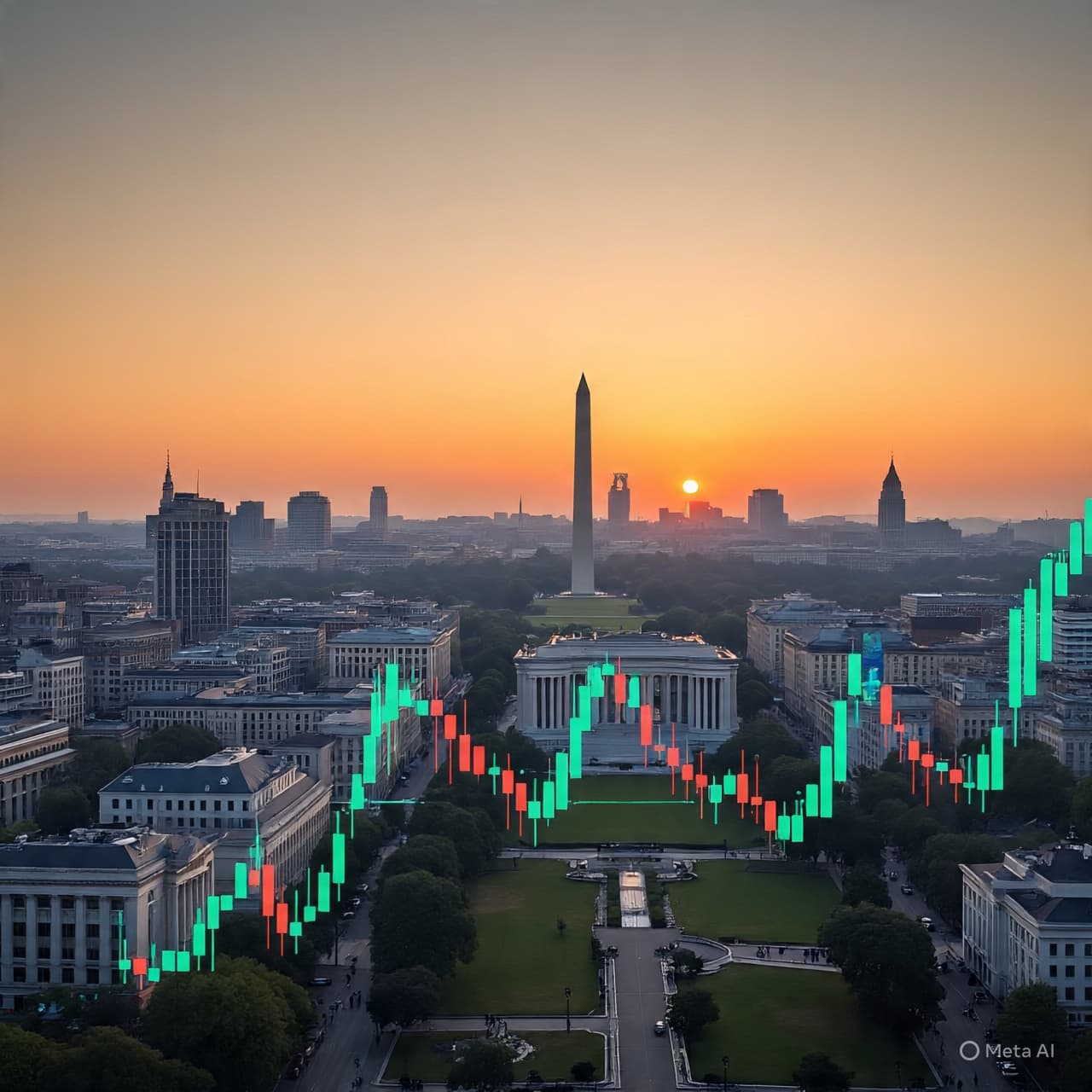
AI Image Disclaimer Visuals are AI-generated and serve as conceptual representations.
Sources Associated Press Reuters PBS NewsHour The Guardian
Published by Banx Network. This article is part of the Banx decentralized media programme, powered by the BXE token on the XRP Ledger.