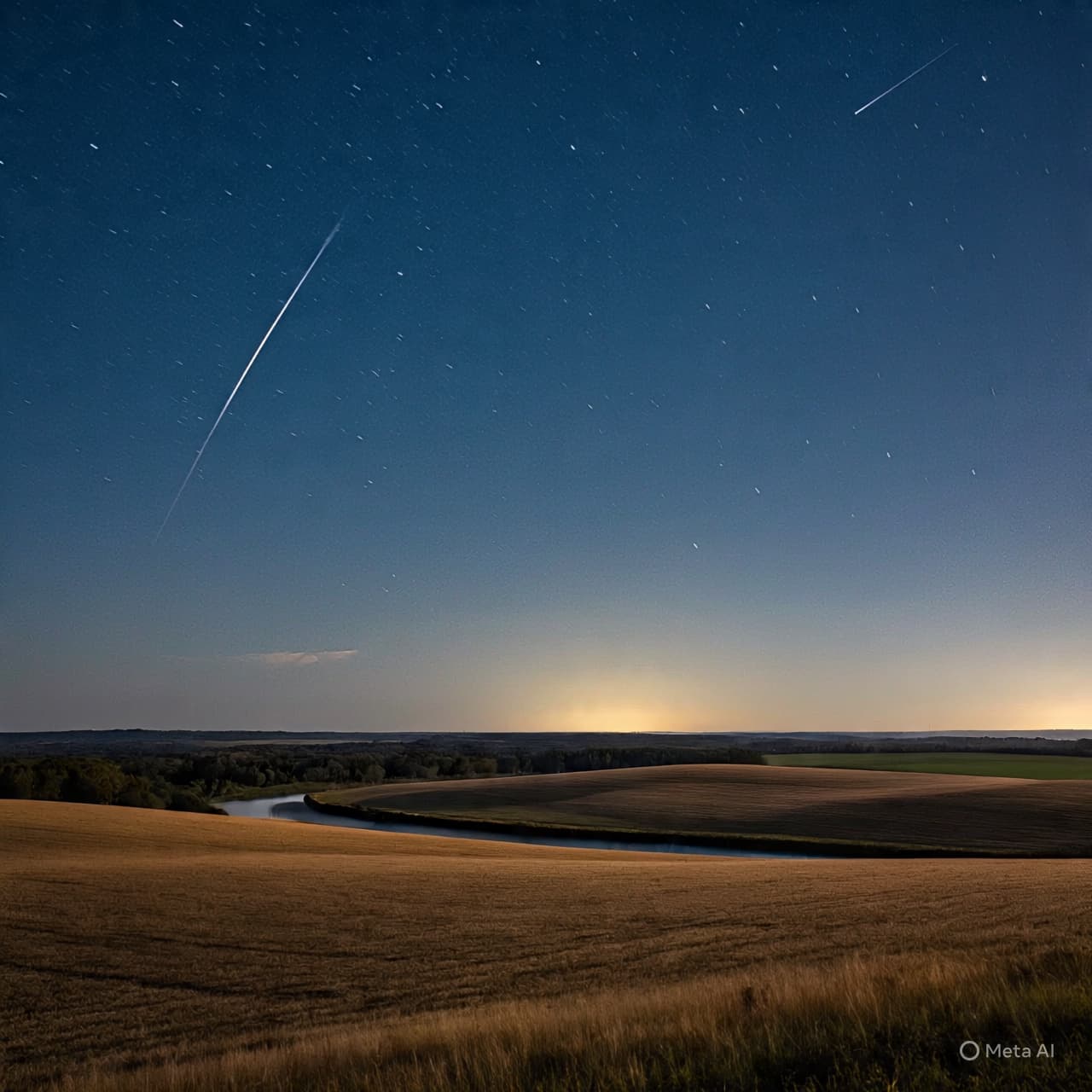
Not all meteor showers announce themselves with spectacle. Some arrive quietly, slipping into the sky while most of the world sleeps. The Ursids belong to that category — a soft, understated finale to the astronomical year.
Early Monday morning, the Ursid meteor shower reaches its peak, sending brief streaks of light across the northern sky. Unlike the Geminids or Perseids, the Ursids do not overwhelm the night with numbers. They are patient, sparse, and easy to miss — unless you know when and where to look.
For Mississippi, the answer is cautiously optimistic.
The Ursids favor the Northern Hemisphere, and Mississippi sits well within viewing range. The meteors appear to radiate from the constellation Ursa Minor, near the North Star. That radiant remains above the horizon all night, giving observers a steady opportunity rather than a narrow window.
Timing matters more than enthusiasm. The best viewing hours fall after midnight and before dawn, when the sky is darkest and the radiant climbs higher. Under clear skies, observers may see between five and ten meteors per hour, with the occasional brighter streak cutting through the cold air.
Moonlight, often the enemy of meteor watching, is less of a concern this year. A thinner lunar phase means less glare, allowing fainter meteors to remain visible — provided clouds stay away. Weather, as always, will be the deciding factor.
What makes the Ursids distinctive is not their volume, but their mood. These meteors are linked to debris from a short-period comet, producing a shower known for brief outbursts and unpredictable bursts. Some years surprise; others pass gently, leaving only a handful of sightings and the memory of stillness.
For Mississippi residents willing to step outside before sunrise, the experience is less about counting meteors and more about participation. A quiet yard, a clear northern view, and a few unhurried minutes are often enough. No telescopes. No apps. Just patience.
The Ursids will not dominate social media feeds or flood the sky with fire. But they offer something subtler: a reminder that even as the year closes, the universe continues its quiet motion overhead — visible to anyone willing to look up at the right moment.
Published by Banx Network. This article is part of the Banx decentralized media programme, powered by the BXE token on the XRP Ledger.