Space exploration is often measured not only by launches and landings, but also by the quiet years spent collecting data far from Earth. Some missions become familiar companions to scientists, steadily transmitting information across millions of miles while expanding humanity's understanding of distant worlds. One such chapter has now reached its conclusion with the end of NASA's MAVEN mission at Mars.
NASA has officially concluded operations for the Mars Atmosphere and Volatile Evolution mission, better known as MAVEN. Since arriving at Mars, the spacecraft has played a significant role in studying the planet's upper atmosphere and its long-term evolution.
Launched in 2013 and inserted into Martian orbit in 2014, MAVEN was designed to investigate how Mars lost much of its atmosphere over billions of years. Understanding that process remains central to explaining why the planet transformed from a potentially wetter environment into the cold and dry world observed today.
Throughout its mission, the spacecraft gathered extensive measurements related to atmospheric escape, solar wind interactions, and the structure of Mars' upper atmosphere. These observations helped researchers build a clearer picture of the planet's environmental history.
Scientists have long sought answers to one of Mars' most intriguing questions: what happened to the conditions that may once have supported flowing water on the surface? MAVEN's findings provided important evidence regarding the gradual loss of atmospheric protection.
The mission also contributed to broader planetary science research. By examining how solar activity affects atmospheric systems, MAVEN offered insights applicable to both Mars and other planetary environments.
Data collected by the spacecraft supported numerous scientific studies and international collaborations. Researchers around the world continue analyzing observations gathered during its operational lifetime.
NASA officials note that although active operations have ended, the mission's scientific legacy will continue through years of ongoing research. Archived data remain available for future investigations and educational initiatives.
As MAVEN concludes its journey, it leaves behind a deeper understanding of Mars and its past. The mission stands as a reminder that exploration often advances through patience, persistence, and the careful collection of knowledge across vast distances.
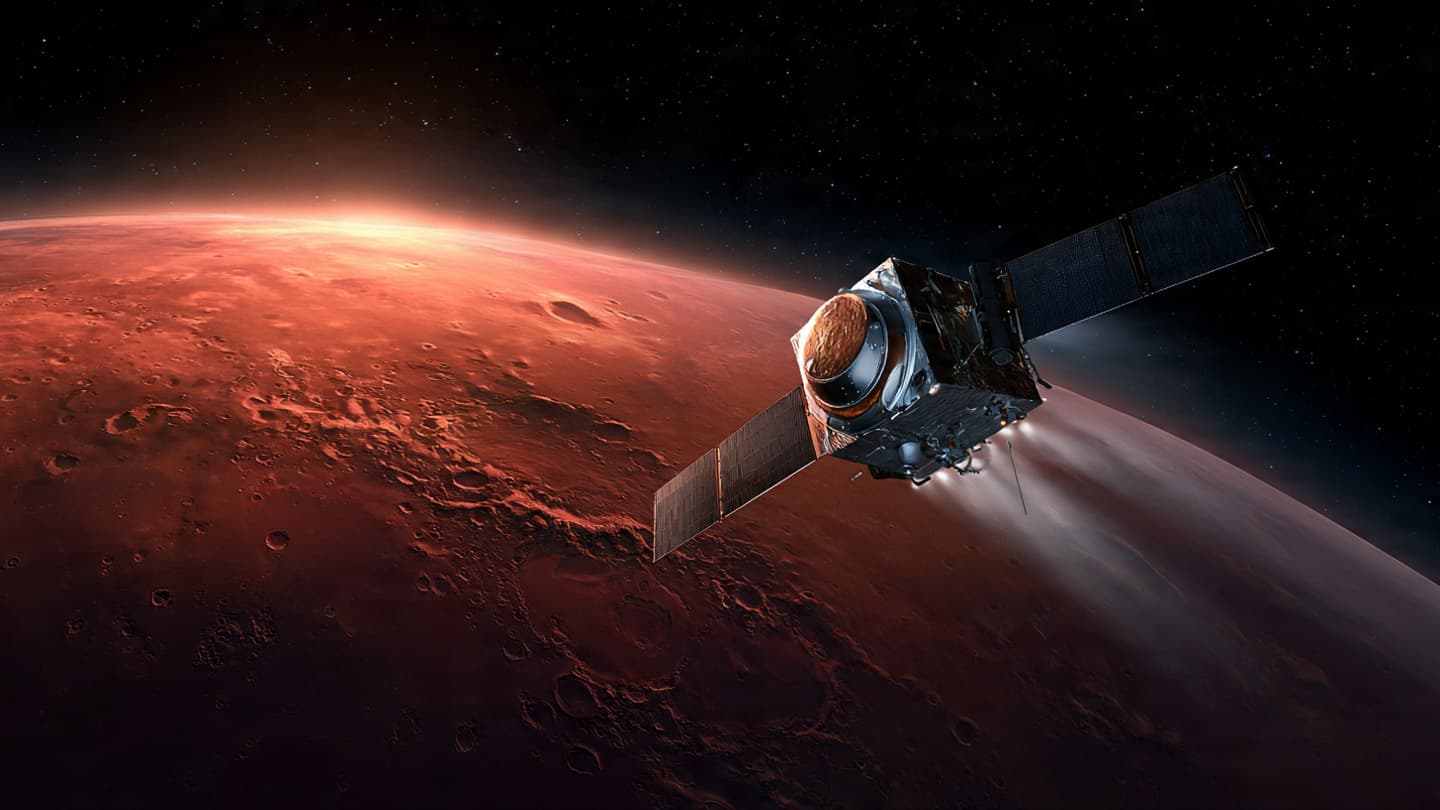
AI Image Disclaimer: The illustrations accompanying this article are AI-generated visual interpretations and are not actual mission photographs.
Sources (Verification Check): NASA, Science News, Space.com, Reuters, Jet Propulsion Laboratory
Published by Banx Network. This article is part of the Banx decentralized media programme, powered by the BXE token on the XRP Ledger.