
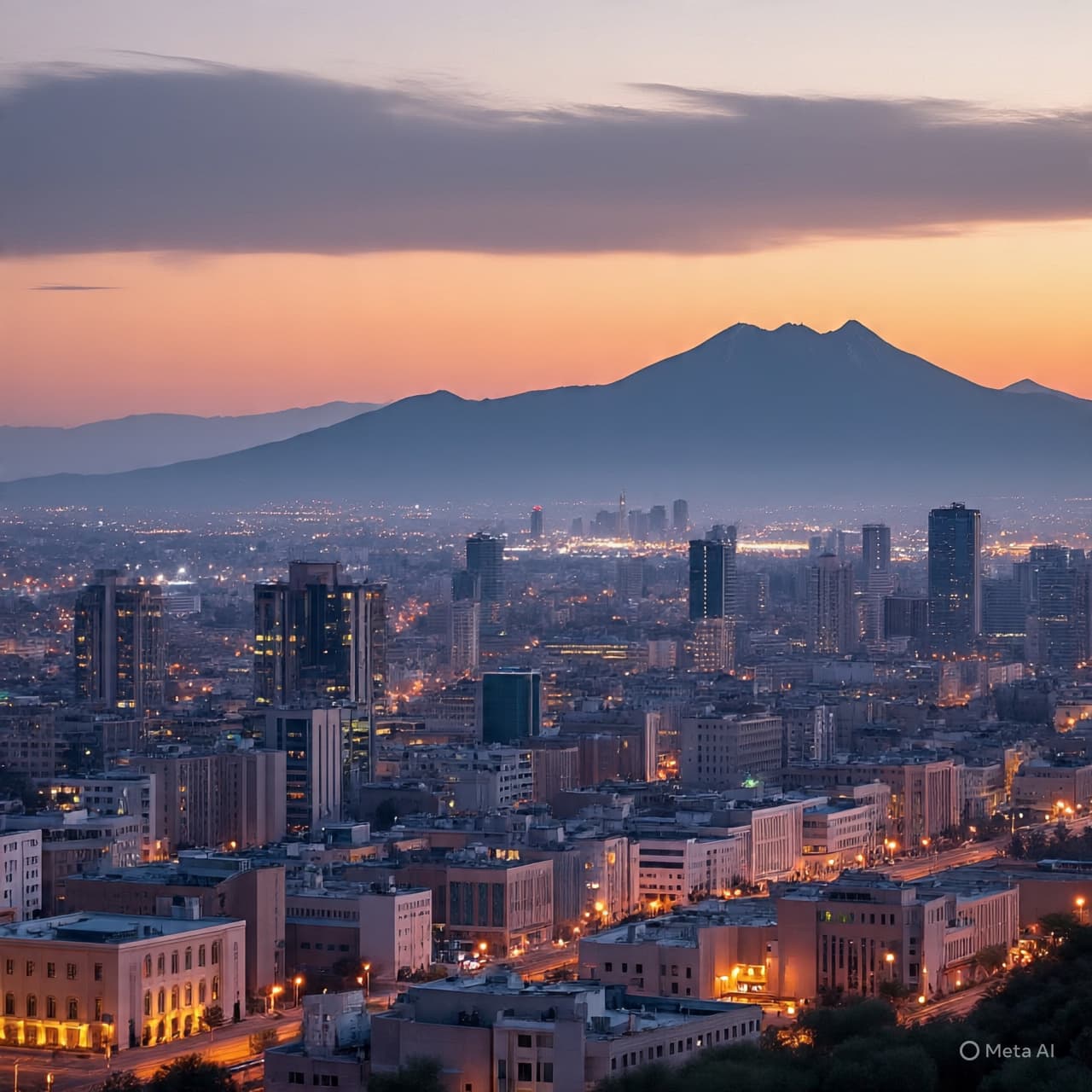
In the pale light before sunrise, the waters of the Persian Gulf appear calm from a distance. Oil tankers move slowly across the horizon, and the cities along the shoreline—Doha, Abu Dhabi, Manama—wake to another morning shaped by uncertainty. In recent weeks, the skies above this narrow sea have carried the sound of drones and missiles, reminders that geography here is never just landscape; it is history, alliances, and sometimes a battlefield.
Now, amid the rhythm of war, a softer note has entered the conversation.
Iran’s president, Masoud Pezeshkian, delivered what many observers describe as the first significant public signal from Tehran suggesting a path toward de-escalation. In a prerecorded address, he apologized to the Arab states of the Persian Gulf for the strikes that have shaken cities across the region, acknowledging the fear and disruption caused by Iran’s recent missile and drone attacks.
Yet the message arrived with a careful condition.
Tehran said it would halt attacks on neighboring Gulf countries—provided that their territories are not used as launch points for strikes against Iran. The promise was framed not as surrender or retreat, but as a boundary: calm would be possible, the statement suggested, if the geography of the Gulf did not become a staging ground for further assaults.
In the language of diplomacy, such conditions are familiar. They are the punctuation marks of conflict: pauses, commas, clauses that leave room for both restraint and response.
The war itself has moved quickly and violently. Joint strikes by the United States and Israel on Iranian targets earlier in the conflict ignited a wider regional confrontation, triggering missile launches, drone attacks, and retaliatory operations across the Middle East.
The consequences have rippled far beyond the immediate battlefield. Airspace closures and disrupted shipping lanes have shaken global markets, while energy prices and international trade routes have felt the strain of instability along one of the world’s most vital corridors.
Against this backdrop, Pezeshkian’s remarks sounded almost reflective. He suggested that Iran’s armed forces had acted in defense of the country, even as he expressed regret toward neighboring states that suddenly found themselves under threat.
But events on the ground—and in the air—remained complicated. Reports of additional missile launches surfaced soon after the speech, a reminder that statements from political leaders do not always move in perfect harmony with military operations.
Some analysts interpret the message less as a ceasefire proposal and more as a strategic signal. In conflicts like this, words often travel alongside weapons, each shaping the landscape in different ways. A declaration of restraint can reassure allies, test adversaries, or open the faintest door to negotiation.
Behind the scenes, there are hints that such doors might exist. Intelligence channels have reportedly carried indirect messages suggesting that Tehran could be open to discussions about ending the conflict, though officials say no formal negotiations have begun.
For now, the region continues to move between tension and possibility.
In the Gulf, the horizon still carries the memory of recent nights when sirens echoed across coastal cities and interceptor missiles climbed into the sky. Yet it also carries something quieter: a conditional promise, suspended in the air like a fragile truce.
Whether it becomes the first step toward calm—or simply another moment in a long cycle of escalation—remains uncertain.
But even in wars shaped by thunder, diplomacy sometimes begins with a single, carefully measured sentence.
AI Image Disclaimer Illustrations were created using AI tools and are intended as conceptual visualizations rather than documentary photographs.
Sources CNN Reuters Associated Press The Guardian Al Jazeera
Published by Banx Network. This article is part of the Banx decentralized media programme, powered by the BXE token on the XRP Ledger.


