The sky has its own way of remembering human moments. Sometimes it keeps them quiet, folded into clouds and stars. At other times, it writes them boldly, in fire and motion, across the dark. In the early hours over the western United States, the heavens briefly became a page, and a spacecraft traced a glowing sentence upon it — a reminder that even the most advanced journeys remain deeply human at their core.
The fiery streak belonged to SpaceX’s Crew-11 Dragon capsule, returning sooner than planned from the International Space Station. After months of orbiting Earth in silence and sunlight, the crew began their descent not because the mission had ended, but because care required it. One astronaut experienced a medical issue that could be better addressed on Earth, prompting NASA and SpaceX to initiate a carefully coordinated early return. Details were kept private, as they often are in such moments, but officials emphasized stability and precaution rather than urgency.
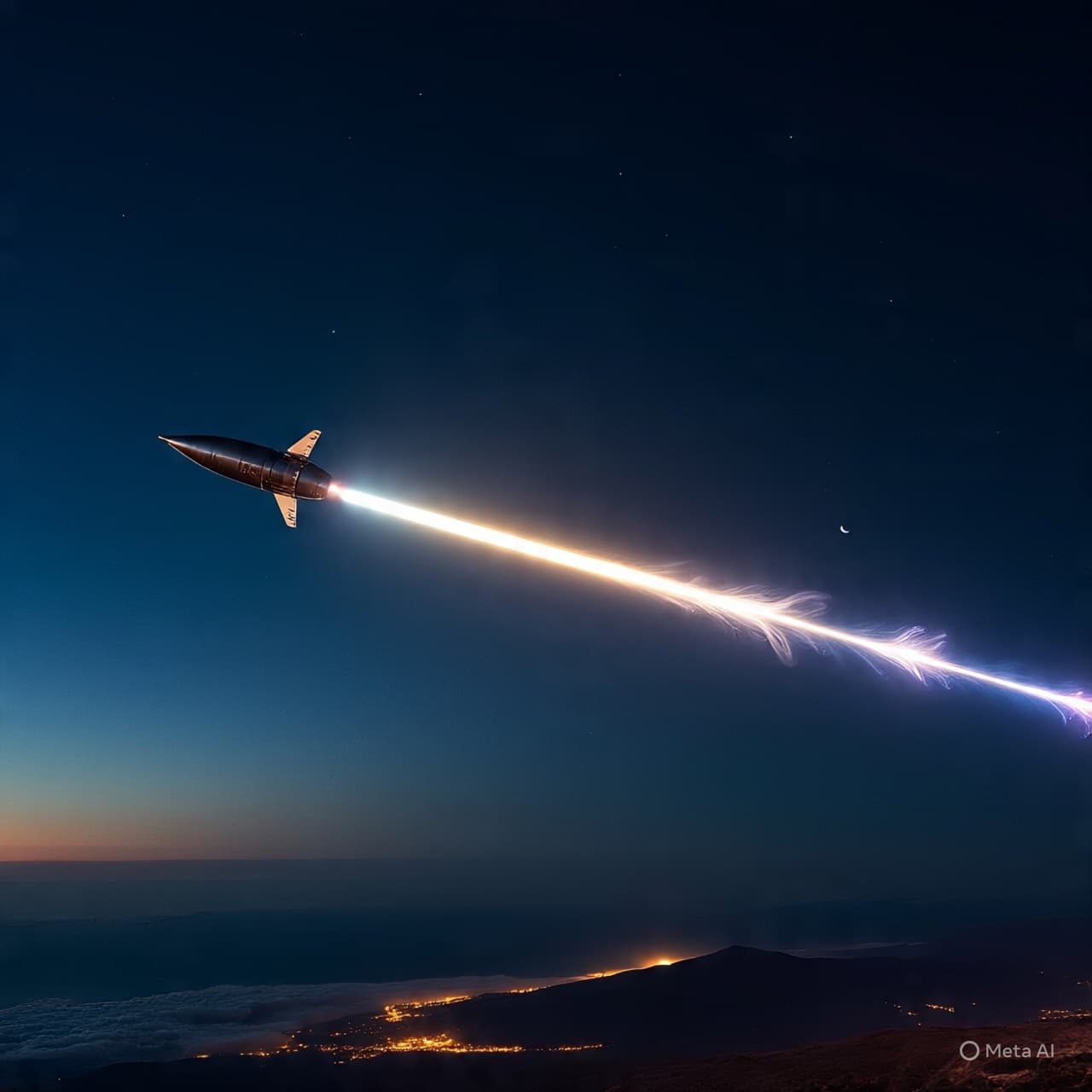
As the capsule pierced the atmosphere, friction transformed speed into light. Observers across parts of California saw the Dragon blaze overhead, its plasma trail glowing like a slow meteor, gentle yet unmistakable. It was not a sign of danger, but of design — a protective shell doing exactly what it was meant to do. Still, the sight carried weight. It reminded viewers that spaceflight, for all its precision, is never abstract. It is always tied to bodies, breath, and vulnerability.
Crew-11’s return quietly marked a first. It became the first medical evacuation from the ISS in more than twenty years of continuous human presence in orbit. That such a moment unfolded calmly, without alarm, spoke to how spaceflight has evolved. Commercial spacecraft, flexible planning, and refined medical protocols have reshaped how missions respond when the unexpected arrives. The priority, this time, was not extending time in orbit, but ensuring well-being on the ground.
The Dragon capsule splashed down safely in the Pacific Ocean before dawn, where recovery teams waited with practiced ease. The astronauts emerged one by one, carried gently into gravity after months without it. Medical checks followed, as expected, and the crew was transported for further evaluation. NASA later confirmed the landing was nominal and that post-mission procedures were underway.
The light in the sky had faded by then, but its meaning lingered. It was a reminder that exploration does not end when plans change, and that progress sometimes reveals itself not in how far we go, but in how carefully we choose to return.
AI IMAGE DISCLAIMER (Rotated Wording) Illustrations were produced with AI and serve as conceptual depictions.
Sources (names only):
Space.com NASA Associated Press Washington Post BBC News
Published by Banx Network. This article is part of the Banx decentralized media programme, powered by the BXE token on the XRP Ledger.