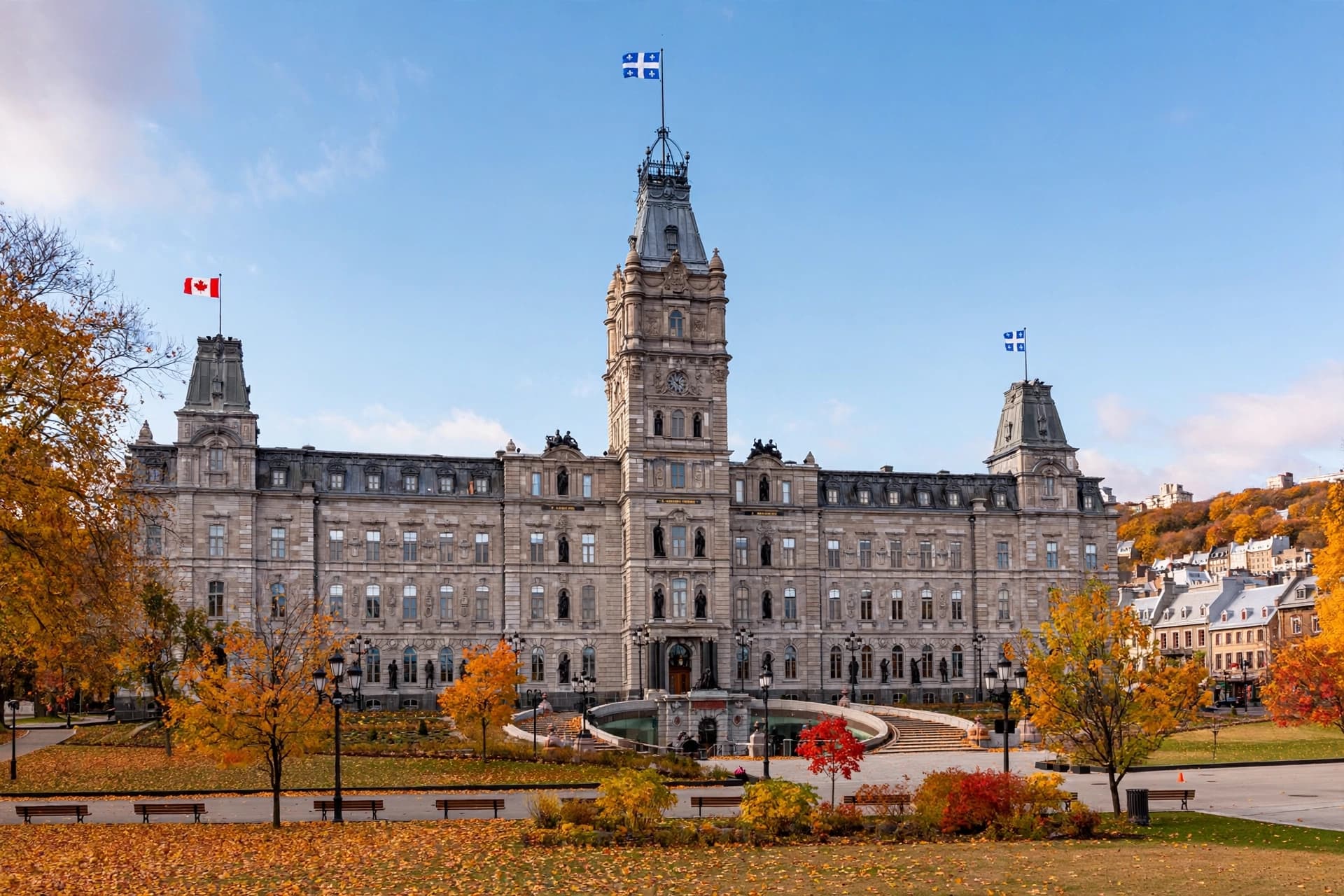
There is a certain audacity in promising to abolish an institution that the Constitution itself protects. It is not merely a policy proposal; it is a declaration that the rules as written are no longer acceptable, and that the fight over their meaning is worth having. In Quebec, with less than a week before election day, Parti Québécois Leader Paul St-Pierre Plamondon has made that fight a centerpiece of his campaign, vowing to “abolish whatever monarchy exists in Quebec” and setting the stage for a confrontation with Prime Minister Mark Carney’s federal government.
The promise is bold, and its legal path is narrow. Quebec’s lieutenant-governor, Manon Jeannotte, represents King Charles and holds a principal constitutional duty: granting royal assent to bills passed by the National Assembly. Section 41(a) of the Constitution Act, 1982, stipulates that any changes to the office of the King, the Governor General, or the lieutenant-governor require approval from the House of Commons, the Senate, and all ten provincial legislatures . Constitutional experts say a unilateral move by Quebec would be unconstitutional, and cutting the office’s funding to the point where the lieutenant-governor could no longer function would be legally perilous .
St-Pierre Plamondon’s announcement was sparked by a Le Devoir report revealing that a trip by Governor General Mary Simon to Scandinavia and Greenland cost taxpayers more than $700,000 . He estimated that Canada spends between $50 million and $60 million annually on the monarchy, and that Quebec’s share—based on its population—amounts to roughly $12 million to $15 million per year. He promised to redirect the $1.3 million budget of the lieutenant-governor’s office toward combatting homelessness .
Beyond the monarchy, the PQ leader has also vowed to oppose from “Day 1” any attempt by Ottawa to increase immigration. This stance places him in direct conflict with Carney, who told the New York Times last week that measures to control immigration numbers have been successful and suggested it was time to resume “a controlled increase in the population” . The federal government has until November 1 to table its 2027–29 immigration levels plan, and the Conservative Party has already vowed to “vigorously oppose” any increase .
Quebec’s outgoing premier, Christine Fréchette, said she was not informed of Carney’s intentions before reading about them in the newspaper. She reiterated that Ottawa must respect Quebec’s permanent immigration targets, regardless of what it does elsewhere in the country .
St-Pierre Plamondon has acknowledged that his plan will face a jurisdictional battle. “We are going to do what we have to do to get the monarchy out of Quebec, repatriate those funds, and send them to social causes,” he said . Whether that battle is fought in court, in negotiations with Ottawa, or at the ballot box, it represents a reopening of constitutional questions that many in Canada have long considered settled. The PQ has pushed these boundaries before—in 2022, its elected members refused to swear an oath to the King, prompting a law that made the oath optional. That law is now the subject of a legal challenge .
For voters heading to the polls on October 5, the choice is not only about who governs Quebec, but about how far that government is willing to go in redefining the province’s place within Canada.
AI Image Disclaimer: The accompanying images in this report were created with artificial intelligence and are intended for conceptual representation only.
Sources: CBC News, Radio-Canada, Montreal Gazette, La Presse, L’actualité
Published by Banx Network. This article is part of the Banx decentralized media programme, powered by the BXE token on the XRP Ledger.