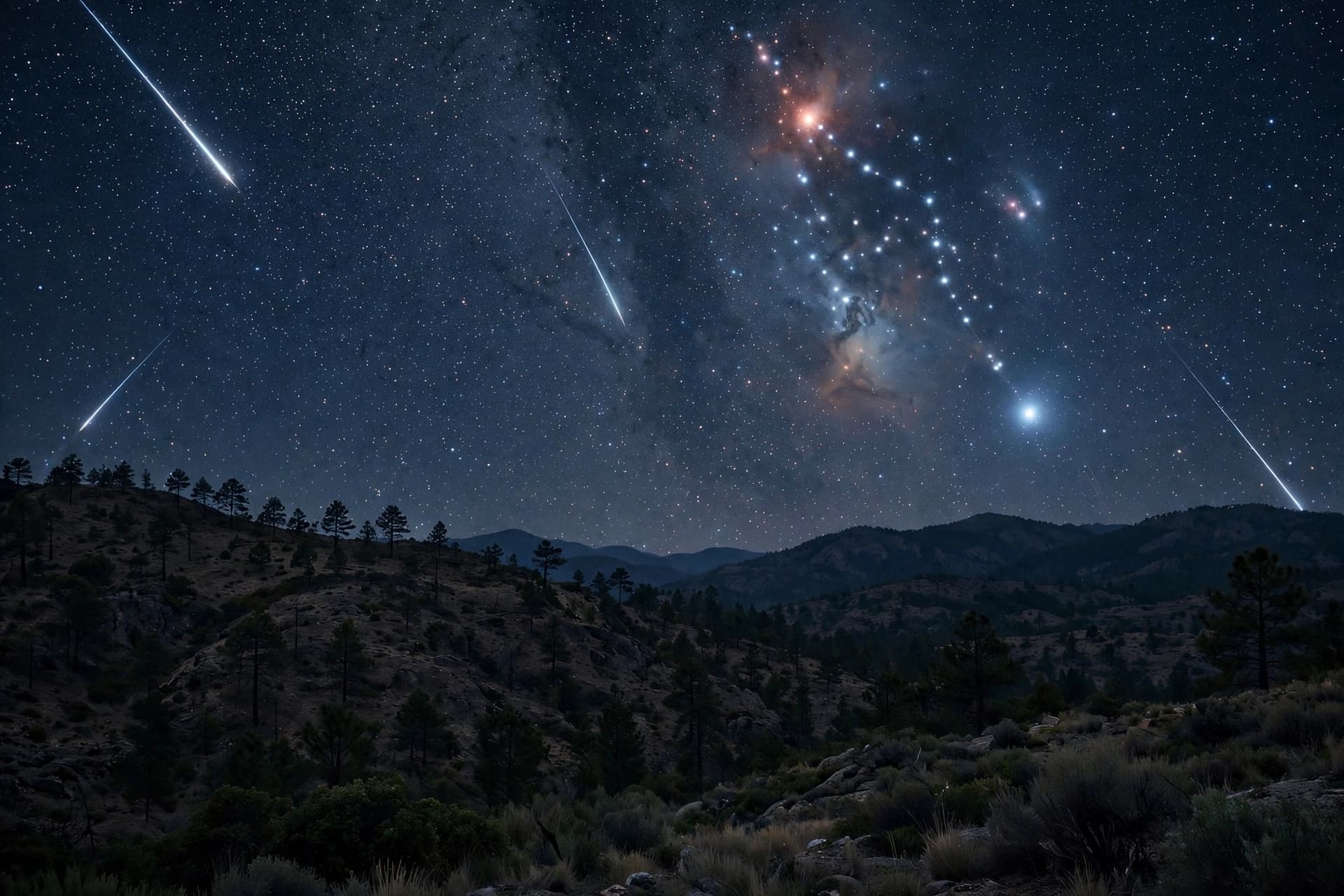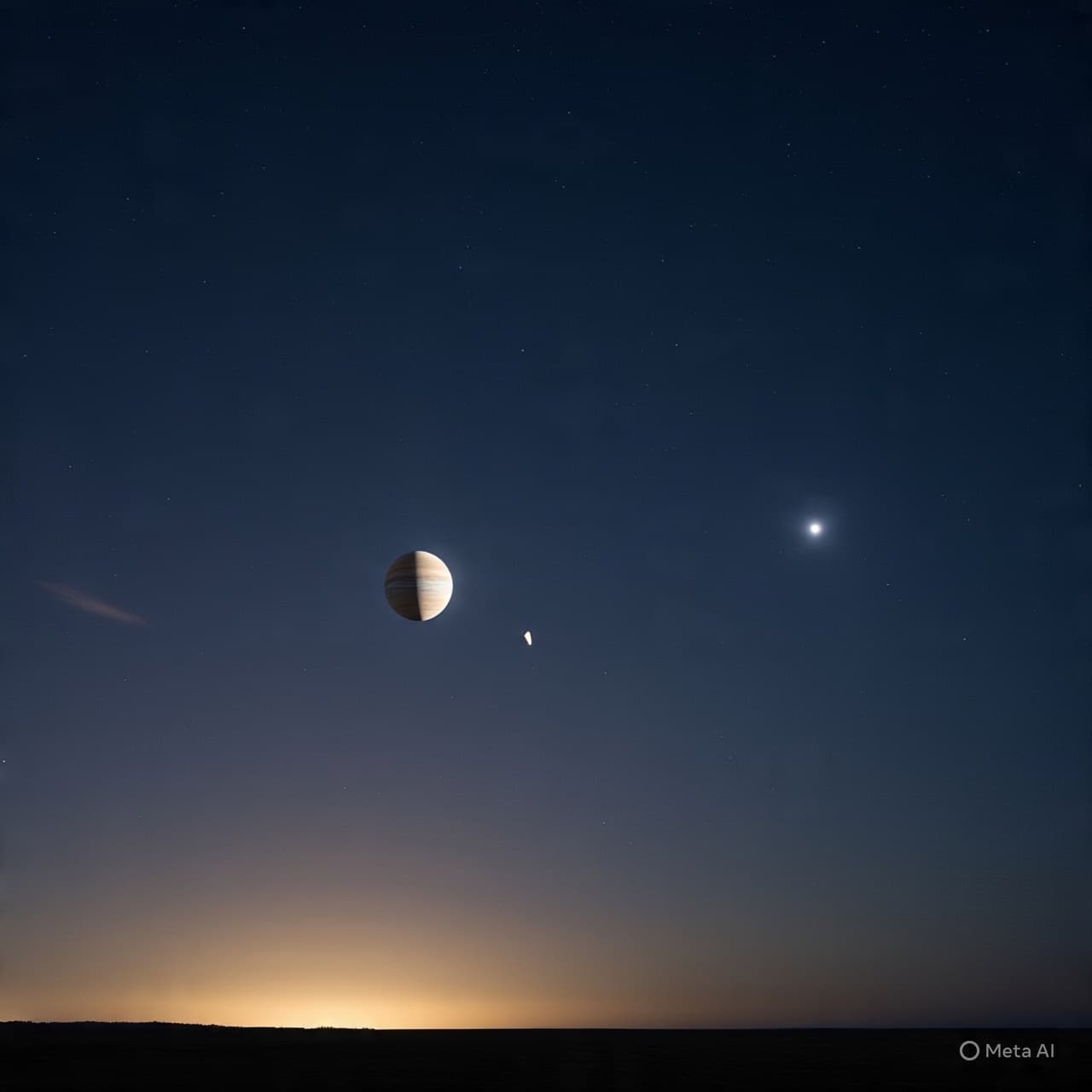
There are evenings when the sky feels unusually generous, as if it has decided to gather its brightest wanderers into a single sweeping view. At the end of February, such a moment quietly arrives. In the fading light after sunset, six planets will appear strung across the night sky — not in perfect symmetry, not in a neat row, but in a broad celestial procession that invites patience and wonder.
Astronomers sometimes refer to this kind of event as a “planet parade,” a term more poetic than technical. The planets are not physically clustered together in space; rather, from Earth’s perspective, they appear along the same arc of sky known as the ecliptic — the path the Sun traces throughout the year. Because the planets orbit in roughly the same plane, there are times when several become visible at once.
By late February, skywatchers will have the opportunity to spot Mercury, Venus, Mars, Jupiter, Saturn, and Uranus during the same general window of time. Some will be easily visible to the naked eye, while others will require binoculars or a small telescope.
Venus and Jupiter are typically the most luminous, often outshining surrounding stars. Mars may glow with a faint reddish hue, steady rather than twinkling. Saturn, with its softer golden light, will sit lower in the sky and may require an unobstructed horizon. Mercury, always elusive, hugs the twilight near the Sun and is best viewed shortly after sunset. Uranus, dim and distant, will likely require optical aid under dark skies.
The key to observing the parade is timing. Shortly after sunset, look toward the western and southwestern horizon. As darkness deepens, more of the lineup becomes visible, stretching upward and across the sky. Unlike a rare eclipse or meteor storm, this planetary gathering unfolds gradually. The planets rise and set at different times, and their spacing spans a large portion of the sky rather than forming a tight cluster.
While six planets appearing at once may sound extraordinary, such alignments occur periodically when orbital positions coincide favorably. What makes each event distinct is the particular combination of brightness, visibility, and sky conditions. Urban light pollution can obscure dimmer planets, making rural or coastal viewing spots preferable.
Astronomical organizations such as NASA and publications like Sky & Telescope note that no special safety precautions are required. Simply allow your eyes to adjust to the dark for at least 20 minutes. Binoculars can enhance the view of Uranus and provide a clearer look at Saturn’s steady glow, though its rings will require a telescope to resolve.
There is something quietly humbling about seeing multiple planets at once. Each one is separated by millions — sometimes billions — of miles, orbiting the Sun at its own pace. Yet from our vantage point, they seem briefly united along a shared path. It is a reminder that perspective shapes what we see, and that even distant worlds can appear to gather in companionship.
The parade will remain visible for several evenings at the end of February, weather permitting. Clear skies and an unobstructed horizon will offer the best chance of seeing all six planets in one night.
In straightforward terms, six planets will be visible in the evening sky during the final days of February. Most can be seen without special equipment, while Uranus may require binoculars. Observers are advised to look shortly after sunset toward the western sky.
And so, as winter edges toward spring, the sky arranges its quiet procession — not with fanfare, but with steady light.
AI Image Disclaimer Graphics are AI-generated and intended for representation, not reality.
Sources (Media Names Only): NASA Space.com Sky & Telescope EarthSky Timeanddate.com
Published by Banx Network. This article is part of the Banx decentralized media programme, powered by the BXE token on the XRP Ledger.