There is a certain poetry in a president spending his final campaign weekend in states he once won without effort, asking voters there to remember what they felt when the maps were kinder and the majorities were wider. On Sunday, President Donald Trump stood in Dubuque, Iowa, and then in Salina, Kansas—places that were not supposed to require his attention in the closing days of a midterm, places that now do.
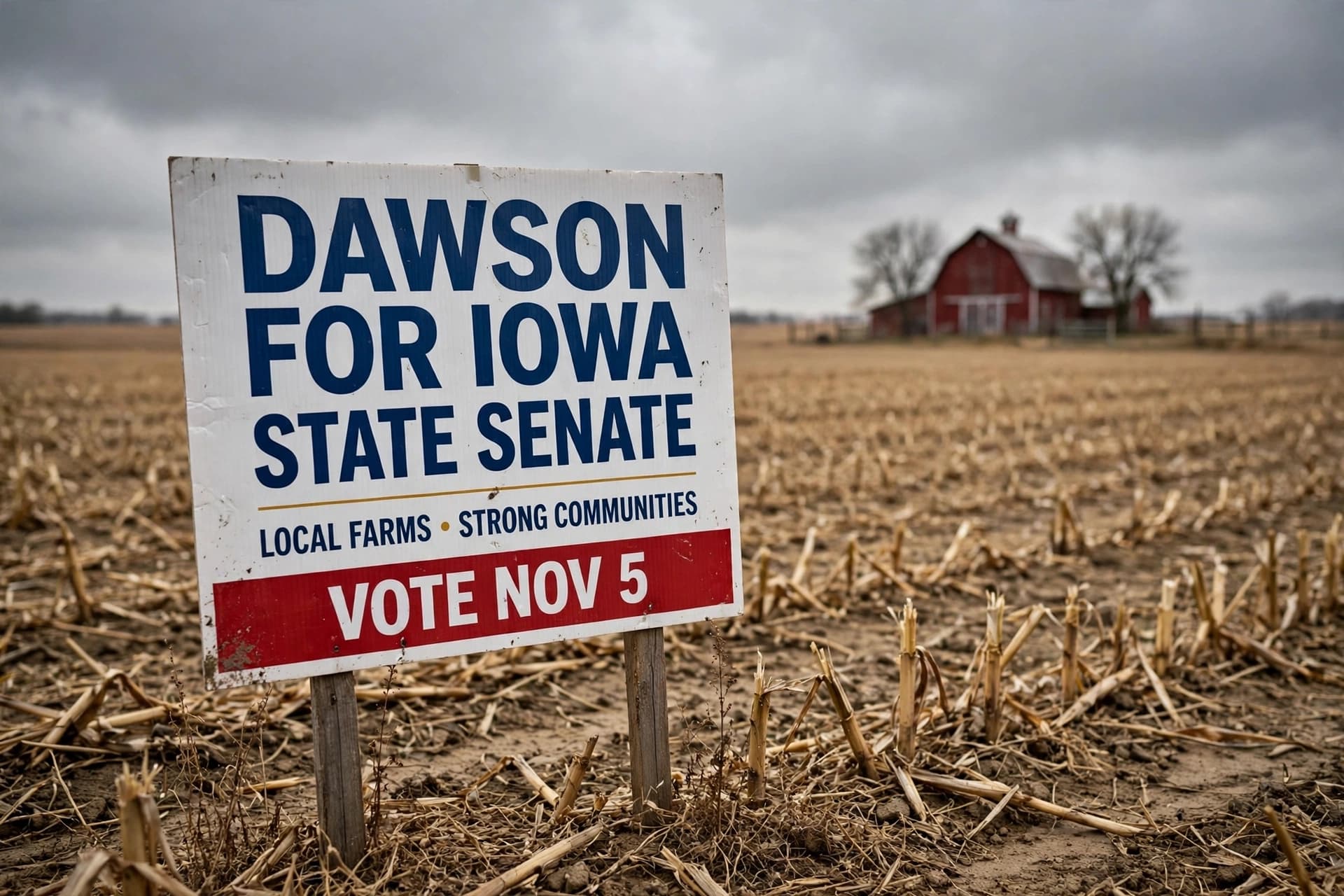
Trump's rallies in the two traditionally Republican states underscored the defensive posture his party has adopted as voters prepare to cast ballots on Tuesday . Iowa, which Trump won by double digits in 2024, has seen Democrats tied with or leading Republicans in several races, and Trump's approval among rural Americans fell to a new low of 45 percent in October, according to Reuters/Ipsos polling . Kansas, which last elected a Democratic senator in 1932, is hosting an unexpectedly competitive Senate race .
The president's message was a blend of nostalgia and warning. He told supporters that Democrats had left the country in a "dark age" and that under his command, "we quickly turned it into the golden age of America" . He warned that if Democrats won, they would "open the border," "bankrupt your family," and "take away your guns" . The crowds cheered. But the itinerary itself told a story that the rhetoric worked to obscure: a president campaigning in states he should not need to campaign in, two days before an election his party is fighting to keep.
The headwinds are not mysterious. Prices have risen, particularly for fuel, groceries, and health care, since the war in Iran began more than eight months ago . Trump's tariffs have driven up the cost of farm inputs like fertilizer and diesel, and his administration has promised $15 billion to farmers in recent weeks to offset the damage . In Iowa and Kansas, where agriculture is not an abstraction but a livelihood, those numbers land with particular weight.
Early voting has surged, with more than 53 million ballots cast as of Sunday morning, according to the University of Florida's Election Lab . Registered Democrats who have voted so far outnumber registered Republicans, 11.1 million to 8.2 million, in the states that collate such data . A forecasting tool from Harvard University that analyzes polls and historical data suggests Democrats have a 96 percent chance of taking the House and a 76 percent chance of taking the Senate .
Trump's decision to reverse course and hold in-person rallies after initially canceling them for tele-rallies was itself a signal—an acknowledgment that the race had tightened in places that were not supposed to be close . The president who once campaigned to flip states is now campaigning to hold them, and the arithmetic of that shift was visible in every crowd.
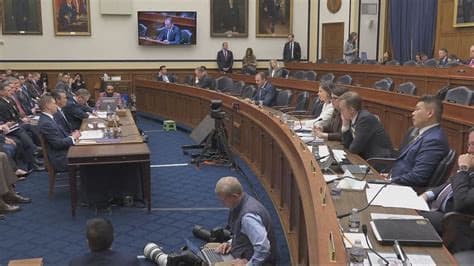
The votes will be counted on Tuesday, and the results will determine whether the Republican majority survives, or whether the final two years of Trump's term will be conducted in the shadow of a Congress controlled by the opposition. The president has said that if his party does not win, he will "veto everything." The voters will decide whether that is a promise or a warning.
Image Disclaimer: The visuals in this article were created using artificial intelligence and are illustrative in nature.
Sources: The Canadian Press, The Guardian, BBC, Daily Mail
Published by Banx Network. This article is part of the Banx decentralized media programme, powered by the BXE token on the XRP Ledger.