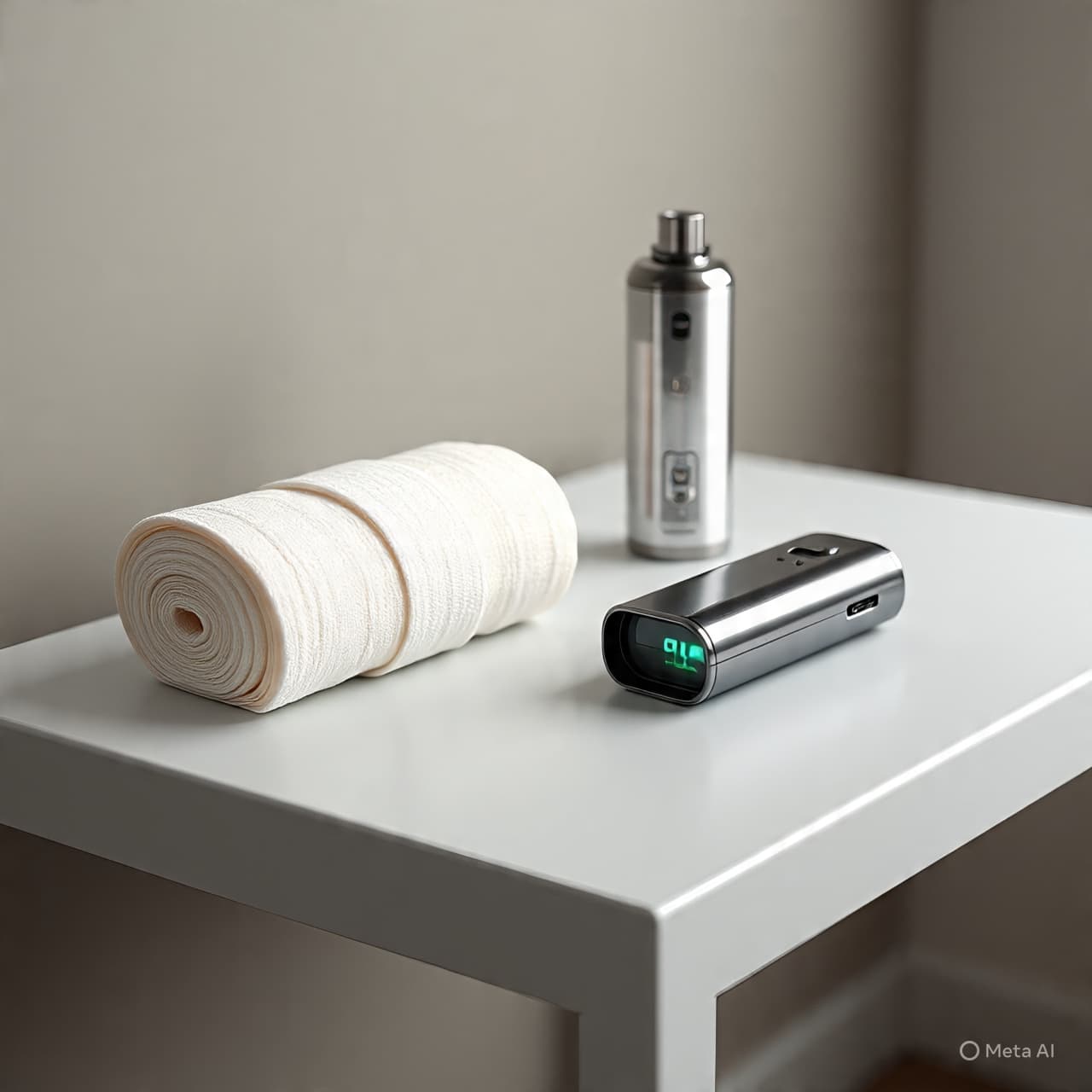
There are moments when a small everyday object quietly sits in our pockets, unnoticed, like a harmless companion. A vape device—sleek, modern, and often marketed as a gentler alternative to cigarettes—has become one such presence in many lives. It hums softly with technology and promise, as if it carries a cleaner chapter for those who once lived under the cloud of tobacco smoke.
Yet sometimes the quietest tools hold unpredictable stories.
For one man, what began as a simple step away from traditional smoking turned into a frightening encounter with fire. The vape device he carried—meant to deliver flavored vapor rather than burning tobacco—suddenly exploded. In a moment that lasted only seconds but felt far longer, flames and heat erupted violently, leaving him with severe burns that changed both his body and his perspective.
The injuries were serious. Burns spread across his arm and skin, and the wounds took on an unsettling appearance as they healed. At one point, parts of the burned skin turned green, a troubling sign often associated with infection in damaged tissue. Recovery became a slow and painful process, filled with treatment, dressing changes, and the quiet anxiety that accompanies severe burn injuries.
Stories like this are not entirely unheard of. Investigations into similar incidents have often pointed toward the lithium-ion batteries used in many vape devices. When damaged, overheated, or improperly handled, these batteries can undergo a rapid chemical reaction sometimes described as “thermal runaway,” releasing energy and heat suddenly and violently. In several reported cases around the world, such failures have caused fires, burns, and emergency hospitalizations.
For the injured man, however, the technical explanations arrived only after the shock of the moment had passed. What remained more vivid was the memory of how quickly ordinary routine had turned into danger. A device meant to replace cigarettes had instead delivered a painful lesson about hidden risks.
Yet the aftermath of such an experience can be complex. Despite the trauma, the man eventually returned to smoking traditional cigarettes—something he had once hoped to leave behind. The decision was less about preference than familiarity, a return to a habit that, despite its well-known dangers, felt predictable compared with the sudden violence of the explosion he had endured.
His story reflects a broader reality about habits and human behavior. When people attempt to change long-standing routines—especially those tied to addiction or stress—the path rarely unfolds in a straight line. Sometimes it circles back through old patterns before moving forward again.
Medical professionals and safety experts continue to emphasize caution with electronic devices that rely on lithium-ion batteries. Ensuring that batteries are undamaged, using proper chargers, and avoiding overheating are among the recommendations commonly shared with users. These steps cannot erase every risk, but they may reduce the chances of rare but serious failures.
For the man who once feared he might lose his arm, the experience remains etched into memory like a scar. His burns have healed gradually, though the emotional imprint of that moment still lingers. The device that promised a smoother transition away from cigarettes became instead a reminder of how technology and human habits can sometimes collide in unexpected ways.
And so his story settles into a quieter conclusion—not a declaration of victory or defeat, but simply a reflection. In the long conversation between health, technology, and human choice, each person continues to search for a safer path through the smoke.
AI Image Disclaimer Visuals are created with AI tools and are not real photographs.
Sources The Sun WOWT CBS News ITV News Gulf News
Published by Banx Network. This article is part of the Banx decentralized media programme, powered by the BXE token on the XRP Ledger.