The United Nations’ humanitarian chief delivered a stark message to the world, one sharpened by months of relentless violence across Sudan: global attention has drifted, and the consequences are now written in ruined cities, displaced families, and communities caught between armed groups. His warning was not framed as rhetoric but as an urgent reminder that the crisis has entered a phase where silence becomes complicity.
In his remarks, he described conditions that continue to deteriorate as fighting encircles civilians with few routes to safety. Aid corridors have collapsed under the pressure of shifting front lines, and humanitarian workers often find themselves navigating landscapes where assurances and agreements dissolve faster than they can be negotiated. Food, medicine, and basic supplies reach fewer people each week, leaving millions exposed to hunger and disease.
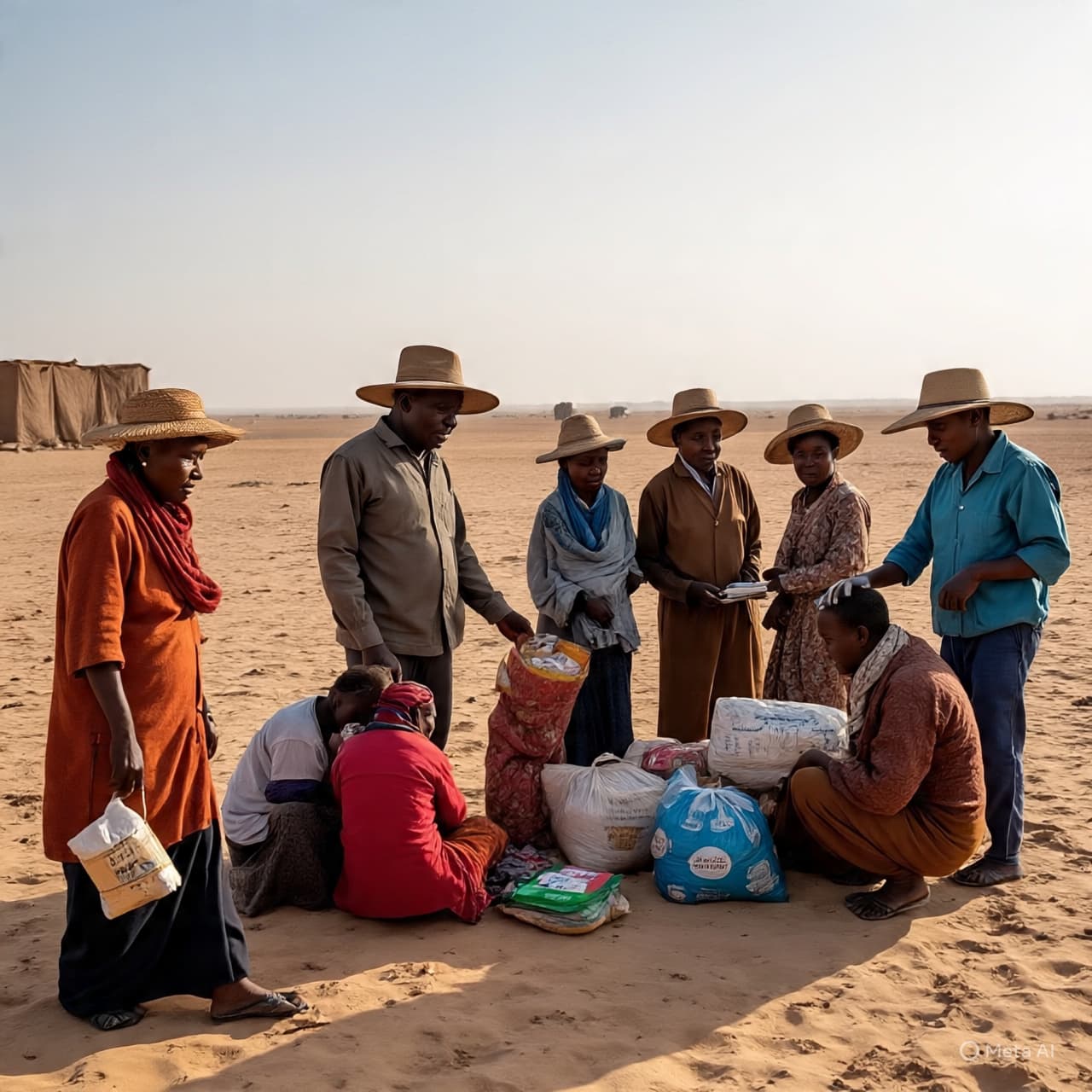
What troubled him most, he said, was the growing disconnect between the gravity of the crisis and the level of international response. He pointed to overcrowded displacement camps, hospitals operating on dwindling reserves, and communities facing the daily calculation of risk as conflict expands across regions once considered relatively stable. These are not isolated tragedies, he stressed, but signs of a conflict pulling an entire nation toward collapse.
The humanitarian chief urged countries with influence to reinvigorate diplomatic efforts, insisting that pressure, coordination, and sustained engagement remain the only tools capable of slowing the violence. Without them, he warned, the humanitarian system will continue to be overwhelmed by needs that outpace its capacity at every turn.
For Sudanese civilians, the crisis has become a pattern of constant uprooting — villages emptied overnight, families scattered across borders, and urban neighborhoods hollowed out by shelling. In quieter moments, aid workers speak of how the human toll rarely captures global headlines, even as the suffering grows more severe. The UN’s warning was aimed at breaking that cycle of neglect, transforming distant awareness into meaningful action.
As the world balances competing emergencies, the message carried an uncomfortable truth: Sudan’s conflict persists not only because of the actors on the ground, but because the international community has not yet summoned the collective resolve to confront it. The call to “wake up,” as the humanitarian chief put it, was both a moral appeal and a test — one that will reveal whether global compassion can stretch far enough to reach a nation fighting for its survival.
Published by Banx Network. This article is part of the Banx decentralized media programme, powered by the BXE token on the XRP Ledger.