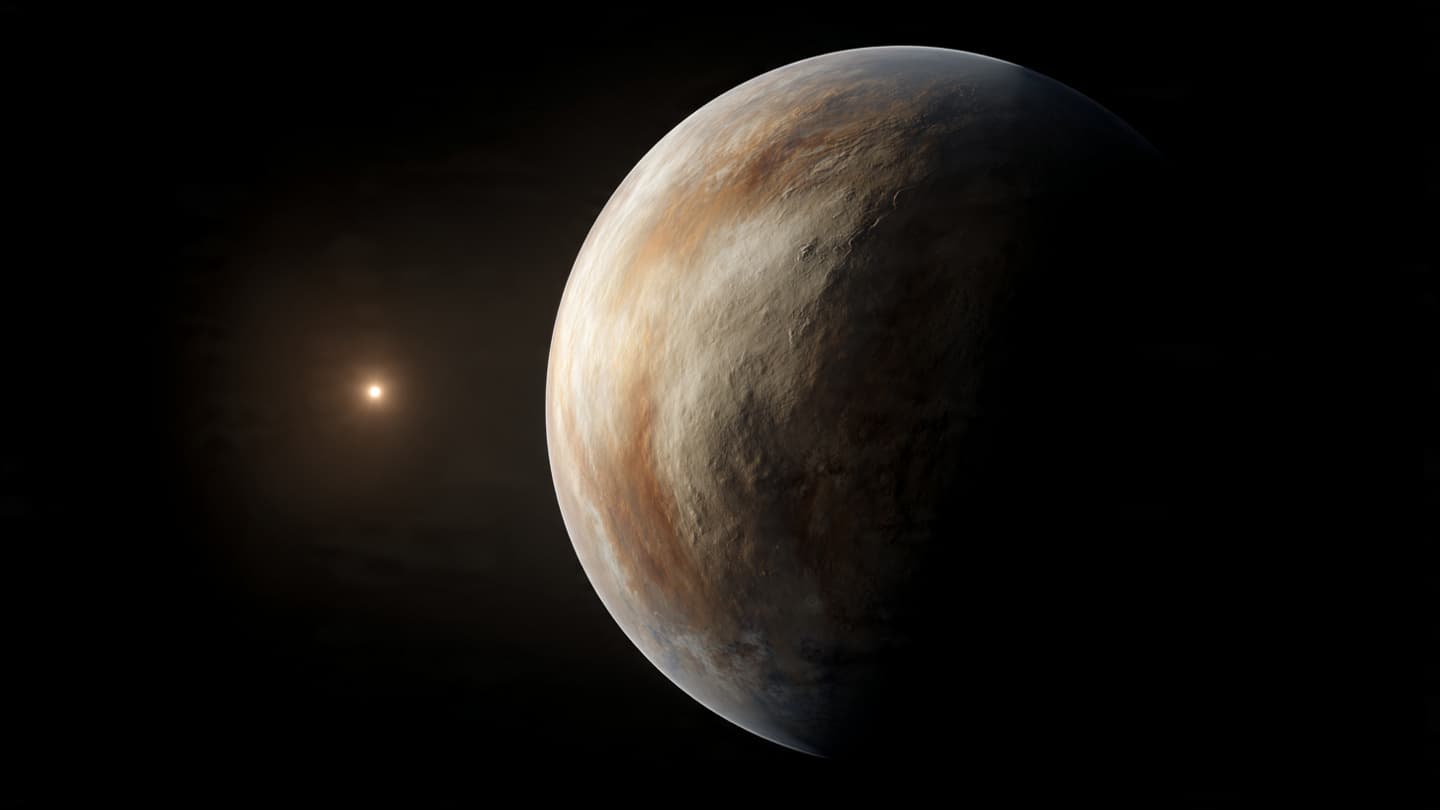
There are places in our solar system that feel almost like half-told stories, where light and darkness do not behave quite as expected. Venus, often described as Earth’s twin in size but very different in character, continues to hold such quiet mysteries. Among them is a faint glow detected on its night side, a subtle illumination that invites curiosity rather than immediate answers.
Body: Scientists have observed a weak radiance coming from the nightside atmosphere of Venus for decades, captured through spacecraft imaging and telescopic studies. Unlike sunlight reflecting from clouds, this glow appears to emerge from within the planet’s upper atmosphere, suggesting complex chemical and physical interactions high above the surface.
One leading explanation points to a process called airglow, where ultraviolet radiation from the Sun interacts with atmospheric gases. On Venus, this interaction can excite oxygen molecules, which then release light as they return to their normal state. Yet the intensity and structure of the glow remain difficult to fully match with existing models.
Space missions such as NASA’s orbiters and ESA’s observational programs have contributed valuable data, but Venus continues to challenge simple interpretations. The planet’s dense carbon dioxide atmosphere and thick sulfuric acid clouds create conditions that are not easily replicated in Earth-based laboratories.
Researchers also consider the role of atmospheric circulation. Venus has powerful winds that move heat and gases around the planet at extreme speeds, potentially influencing how and where faint emissions appear. This dynamic system may contribute to variations in brightness across the night side.
At the same time, some measurements suggest that additional chemical pathways may still be undiscovered. These could involve trace compounds reacting in ways not yet fully understood, especially under Venus’s high-pressure and high-temperature environment.
While no single explanation has fully resolved the mystery, scientists emphasize that the glow is not unusual in itself for planetary atmospheres. What makes Venus compelling is the persistence of uncertainty, even after decades of observation and increasingly sophisticated instruments.
Closing: For now, the faint glow on Venus remains an open question in planetary science, encouraging continued exploration rather than final conclusions. It is a reminder that even nearby worlds can still hold subtle phenomena waiting for clearer understanding.
AI Image Disclaimer: Some visuals accompanying this article are AI-generated representations created for illustrative scientific purposes.
Source Verification Check: NASA, European Space Agency (ESA), Nature Astronomy, Science, Journal of Geophysical Research: Planets
Published by Banx Network. This article is part of the Banx decentralized media programme, powered by the BXE token on the XRP Ledger.