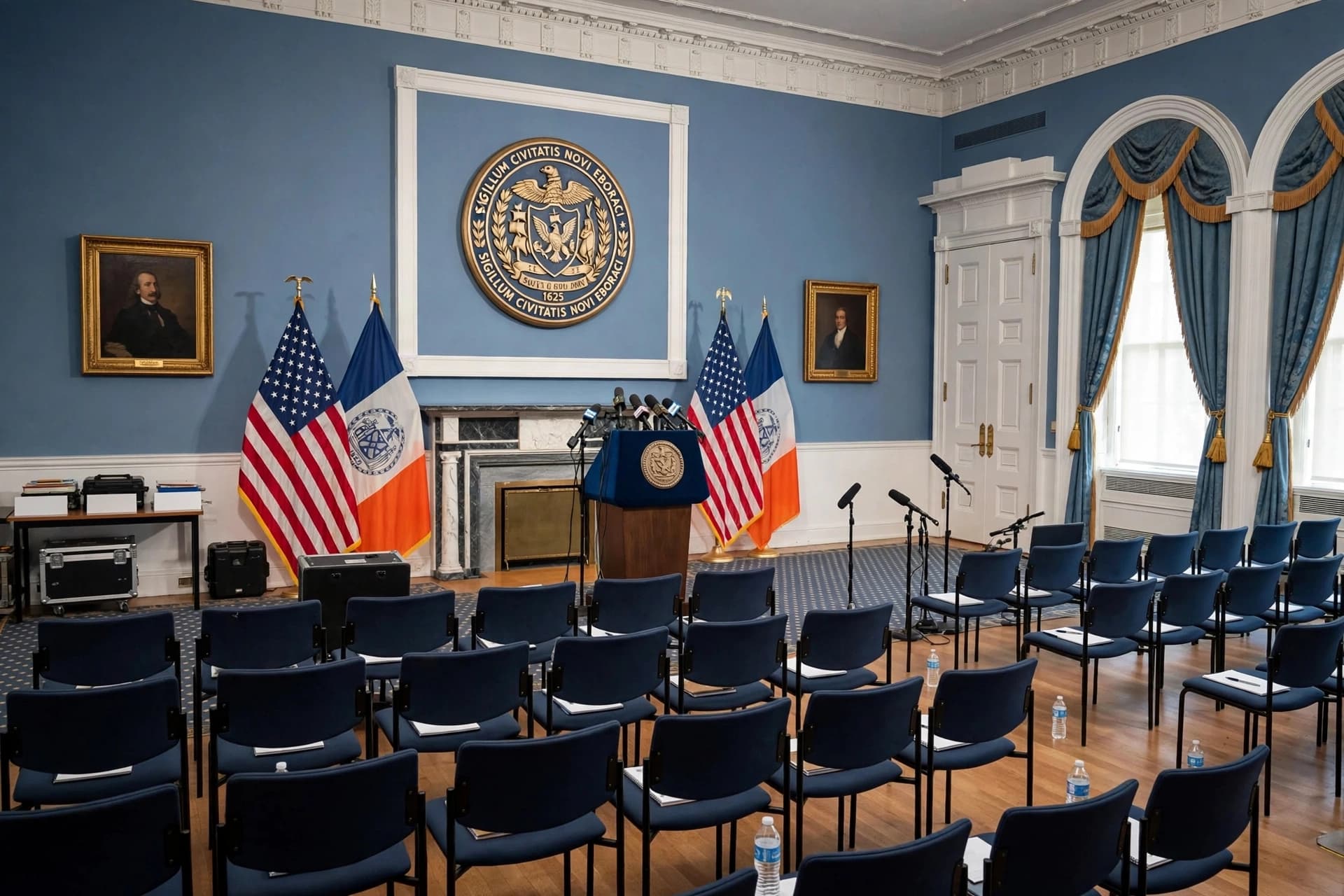
There is a particular kind of difficulty that arises when a leader must address a wound while avoiding the question of its cause. New York City Mayor Zohran Mamdani stepped into that difficulty on Tuesday, releasing a 33-page strategy to combat antisemitism that promised funding, education, and protection for Jewish institutions—while deliberately sidestepping any discussion of Israel, Zionism, or the definitions that have divided the city’s Jewish community for months.
The plan arrives at a moment of heightened tension. Jewish New Yorkers make up roughly 10 to 12 percent of the city’s population but are victims of about half of all reported hate crimes. Antisemitic hate crimes have risen approximately 8 percent since Mamdani took office. And just last week, Israeli Prime Minister Benjamin Netanyahu used his United Nations address to call Mamdani “the antisemitic mayor of New York”. The context is not incidental to the plan. It is the atmosphere in which it was written.
The strategy itself is concrete. It pledges $26 million for the Office to Prevent Hate Crimes and an additional $6.4 million in Partners Against the Hate grants. A K-12 Title VI coordinator has been hired to manage discrimination complaints in public schools. The city will increase student trips to the Museum of Jewish Heritage and launch a LinkNYC campaign highlighting Jewish contributions to the city. Two million dollars is designated for the Queens Holocaust Memorial Garden and $2.5 million for Brooklyn’s Center for New Jewish Culture. One million dollars will go toward security at synagogues and other houses of worship.
What the plan does not do is equally deliberate. It does not adopt a formal definition of antisemitism—Mamdani scrapped the previous administration’s endorsement of the International Holocaust Remembrance Alliance definition on his first day in office. It does not address anti-Zionism as a distinct form of hatred. It does not mention Israel at all. The report states that the city can “combat antisemitism effectively without needing to adopt a definition” and frames the effort within a broader struggle against all forms of bigotry.
The omissions drew immediate criticism from mainstream Jewish organizations. The UJA-Federation of New York, the Jewish Community Relations Council, the American Jewish Committee’s New York office, and the New York Board of Rabbis issued a joint statement praising the plan’s “positive elements” but saying it “fails to address a central issue that the Mayor himself has perpetuated: rhetoric that demonizes and delegitimizes Israel inevitably leads to the targeting of Jewish New Yorkers”. City Councilmember Eric Dinowitz said the strategy “misses an opportunity to confront the reality of the intersection between anti-Zionism and antisemitism”. One lawmaker described the $1 million in security funding as “a negligible drop in the bucket”.
Leftist Jewish groups offered a different assessment. Jonathan Jacoby, head of the Nexus Project, praised the plan as “rooted in an important recognition that confronting antisemitism is a critical part of the wider struggle against bigotry”. The divide reflects a broader disagreement within the Jewish community about whether anti-Zionism and antisemitism are separable, and whether a mayor who has called Israel’s actions in Gaza “genocide” can credibly lead an effort to protect Jewish New Yorkers.
Mamdani, the city’s first Muslim mayor, has said his criticism of Israel does not amount to antisemitism. His plan attempts to translate that position into policy: protect Jewish people without endorsing a political framework that he and his allies view as conflating legitimate criticism of Israel with hate. Whether that balance is sustainable will be tested in the months ahead, as hate crimes are tracked and a community watches to see whether the strategy’s omissions prove to be a bridge or a barrier.
AI Image Disclaimer: The visuals accompanying this article were generated using artificial intelligence and are for illustrative purposes only.
Sources: The Times of Israel, The Canadian Press, New York Post, O Globo, Folha de S.Paulo
Published by Banx Network. This article is part of the Banx decentralized media programme, powered by the BXE token on the XRP Ledger.