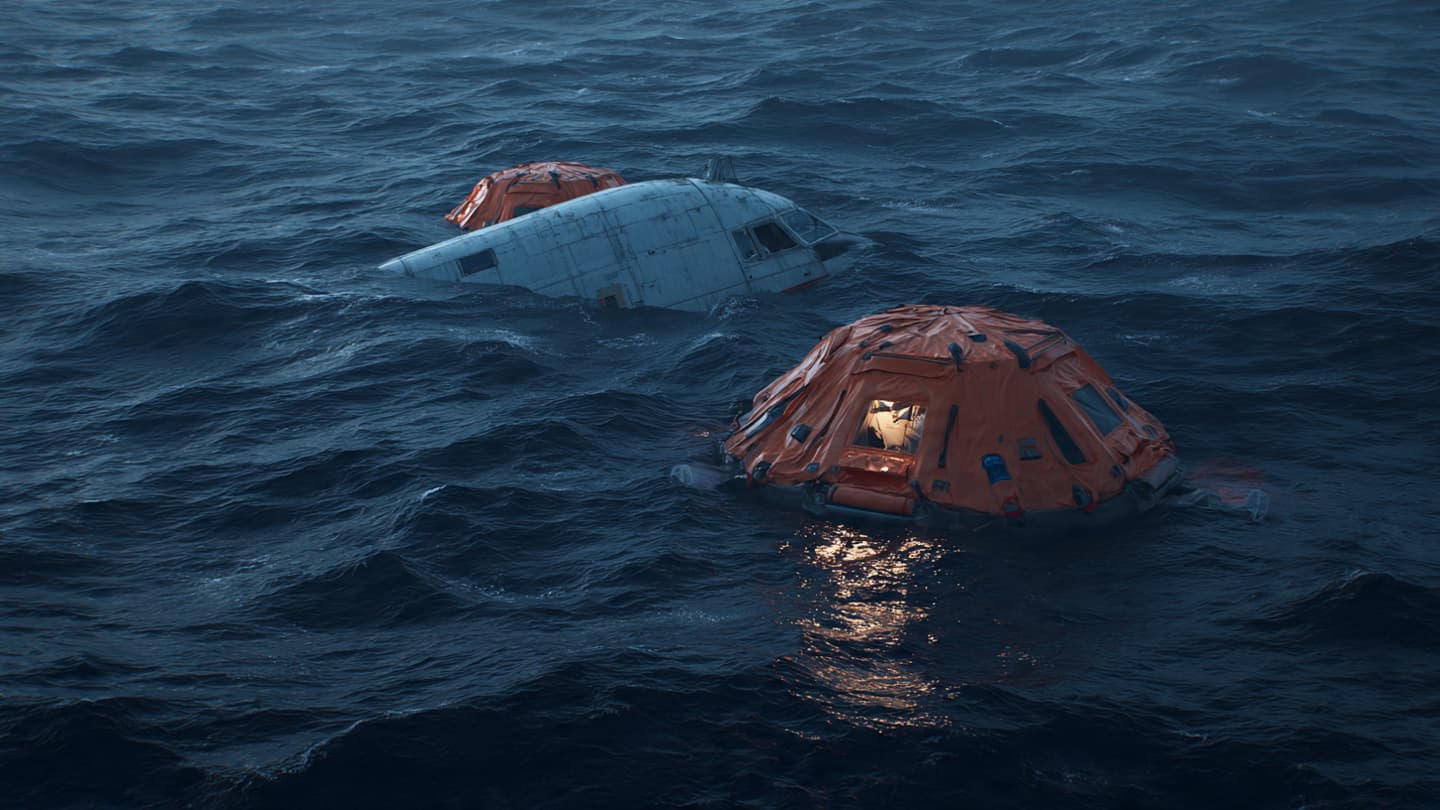
Far above the open Atlantic, where the horizon often feels endless and time moves with the rhythm of engines and clouds, a sudden emergency transformed an ordinary flight into a moment suspended between fear and survival. In the aftermath of the crash landing, the pilot’s first reflection was remarkably simple and human: gratitude for life itself.
The pilot, speaking publicly after the incident, described the tense moments leading to the emergency water landing. Mechanical trouble reportedly forced the crew to make rapid decisions while attempting to maintain calm communication with passengers and rescue teams. Though the aircraft eventually struck the ocean, those onboard survived and awaited assistance in difficult conditions.
Witness accounts and rescue reports painted a scene shaped by urgency but also discipline. Emergency responders moved quickly across rough waters, coordinating efforts to reach survivors floating in life rafts and safety equipment. Maritime crews, aviation officials, and nearby responders became part of a rescue operation that unfolded against the vast and unpredictable backdrop of the Atlantic Ocean.
The pilot later recalled that training and procedure became essential anchors during the crisis. Aviation experts often note that emergency drills are designed precisely for moments when instinct alone is not enough. In situations where seconds matter, rehearsed coordination can create clarity amid confusion.
Passengers reportedly experienced a mixture of shock, disbelief, and relief once rescue teams arrived. Survivors spoke about the emotional silence that followed impact — a silence interrupted only by waves, emergency instructions, and the growing realization that many lives had narrowly escaped tragedy.
Aviation investigators have since begun examining the technical and operational circumstances surrounding the incident. Officials are expected to review aircraft systems, maintenance records, communication logs, and weather conditions as part of the inquiry. Such investigations often move carefully, balancing technical precision with public transparency.
The event also renewed broader conversations about aviation safety and emergency preparedness. While commercial and charter aviation remain statistically safe forms of transportation, rare emergencies continue to remind the public of the complex systems and human judgment supporting every flight. Pilots, flight crews, and rescue personnel often operate within demanding environments that remain largely invisible during routine travel.
Beyond technical analysis, the story resonated emotionally because of its deeply human dimensions. The pilot’s statement — centered not on heroism but survival — reflected the fragile simplicity that often emerges after crisis. In moments when machinery fails and uncertainty takes hold, survival itself becomes the clearest measure of relief.
Authorities continue reviewing the incident while survivors recover and investigators gather additional findings. Rescue teams and aviation officials have received recognition for their coordinated response, and the investigation is expected to continue in the weeks ahead.
AI Image Disclaimer: Some visuals accompanying this article were produced using AI-generated imagery for illustrative presentation.
Sources CBS News Associated Press Reuters Federal Aviation Administration CNN
Published by Banx Network. This article is part of the Banx decentralized media programme, powered by the BXE token on the XRP Ledger.