In a country whose skyline still remembers explosions and whose streets recall years of hardship, Pope Leo arrived not as a distant diplomat but as a pilgrim bearing a simple gesture: presence. His first trip to the Middle East took him to Lebanon at a moment when the country’s wounds felt raw and public life had been narrowed to survival — payments and supplies, generator hours, the slow work of funerals and counting what remains. In that weary landscape, the pontiff’s steps looked less like ceremony and more like company.
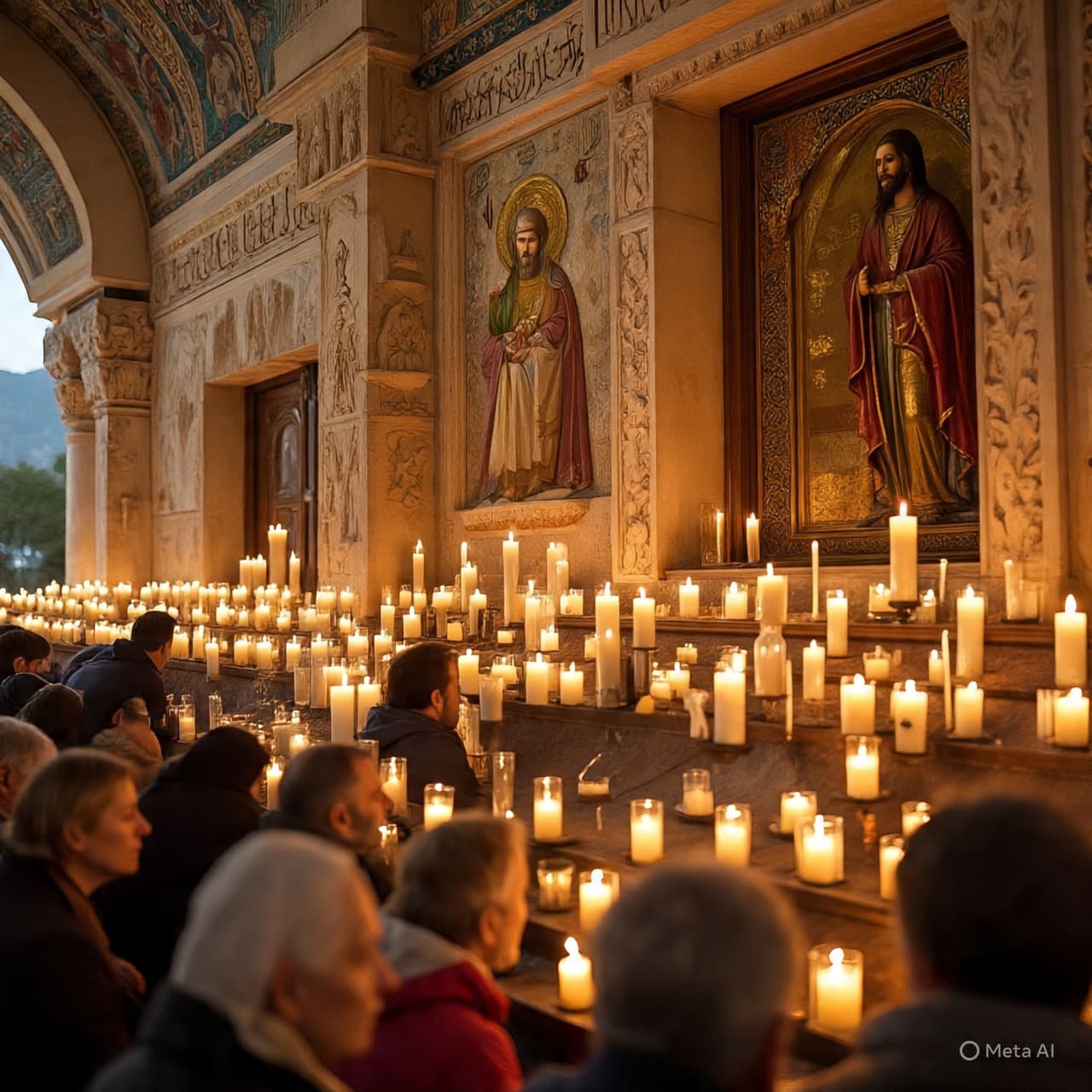
He moved through places that carry memory as if it were a physical thing — the tombs of saints, the battered neighborhoods along the waterfront, the shelters where families wake to a world rearranged by crisis. His language was spare and pastoral: calls for unity, for mutual care, for a politics shaped less by division than by the small practices of rebuilding. For many who watched him pass, the act of being seen mattered as much as any promise. It was a moral witness, a way to hold open the possibility that grief could be named and that naming might become the first step toward repair.
The scenes were intimate and public at once. In basilicas and open squares, prayers braided with the practicalities of aid and recovery; in private meetings, the pontiff listened to clergy and ordinary citizens who spoke of shortages, of insecurity near borderlands, and of the quiet erosion of trust that comes when institutions fail repeatedly. There was no mistaking the tone: this was pastoral consolation, but also a subtle insistence that faith be turned into civic courage — that religious leaders and laypeople alike bear responsibility for the common good.
Yet the visit did not erase sorrow. Lebanon’s burdens — economic collapse, displaced communities, and the lingering trauma of past catastrophes — remained visible in the faces gathered to greet him. The pontiff’s prayers at sites of loss were not symbolic theater so much as shared testimony: small rituals that acknowledge grief while refusing to let it fossilize into despair.
What lingers after such a journey is a paradox: a leader’s brief presence cannot rebuild a collapsed economy or repair frayed institutions, but it can seed moral claim and public attention. If anything, the visit asked of Lebanon’s citizens and leaders a modest but demanding task — to translate solidarity into steady work: to restore services, to protect minorities, to fashion public spaces where trust can slowly return.
In the short arc of a papal visit, hope is fragile; it is also contagious. In a country that has learned how to endure, the power of those few days will be measured not by speeches but by the small, persistent acts that follow: reopening a clinic, keeping a school running, answering the names called in a shelter. The pope’s journey leaves Lebanon with a reminder that faith, like governance, requires practice — and that presence, when paired with steady action, can be the first labor of recovery.
Published by Banx Network. This article is part of the Banx decentralized media programme, powered by the BXE token on the XRP Ledger.