The Sun has always spoken in many languages — light, heat, magnetic storms, and invisible waves traveling silently across space. Most of these solar rhythms unfold unnoticed by daily life on Earth, hidden behind blue skies and ordinary weather. Yet scientists monitoring solar activity recently observed an unusually persistent burst of radio emissions lasting for 19 continuous days, drawing attention from astronomers and space weather experts around the world.
Solar radio emissions occur when energetic particles and magnetic activity within the Sun generate bursts of electromagnetic radiation. These signals can sometimes interfere with communication systems, satellite operations, navigation equipment, and radio transmissions on Earth. While solar bursts are not uncommon, the duration and consistency of this recent event made it especially notable to researchers.
According to scientists, the emissions were linked to active regions on the Sun’s surface where magnetic fields became highly concentrated and unstable. As solar plasma shifted and twisted, radio frequencies continued streaming outward over an extended period. Researchers monitored the phenomenon using ground-based observatories and space weather tracking systems.
Experts say solar activity follows approximately 11-year cycles that alternate between quieter and more active phases. During periods of heightened activity, sunspots, flares, and coronal mass ejections become more frequent. The current solar cycle has already produced several significant solar events, leading scientists to closely monitor potential impacts on Earth-based infrastructure.
Most of the recent radio emissions did not create severe disruptions, though scientists noted temporary interference risks for high-frequency communications and aviation systems. Space weather agencies continue coordinating with satellite operators, airlines, and telecommunications providers during periods of elevated solar activity.
The event also highlights how deeply modern society depends on technologies vulnerable to space weather. Satellites guide navigation systems, support financial transactions, connect communication networks, and assist weather forecasting. Even moderate solar disturbances can sometimes produce noticeable operational challenges.
Researchers stress that solar monitoring has improved dramatically over recent decades. Modern observatories can track magnetic changes on the Sun with remarkable precision, allowing earlier warnings for potentially disruptive events. International cooperation between scientific agencies also helps improve forecasting capabilities.
Beyond practical concerns, the prolonged radio burst serves as another reminder that Earth exists within a constantly changing cosmic environment. The Sun, often perceived as stable and familiar, remains a dynamic star shaped by immense magnetic forces that scientists are still working to fully understand.
Astronomers say continued observation of the ongoing solar cycle will help researchers better understand long-duration radio emissions and their broader implications for space weather forecasting. The Sun’s recent activity adds another chapter to humanity’s evolving relationship with the star that sustains life on Earth.
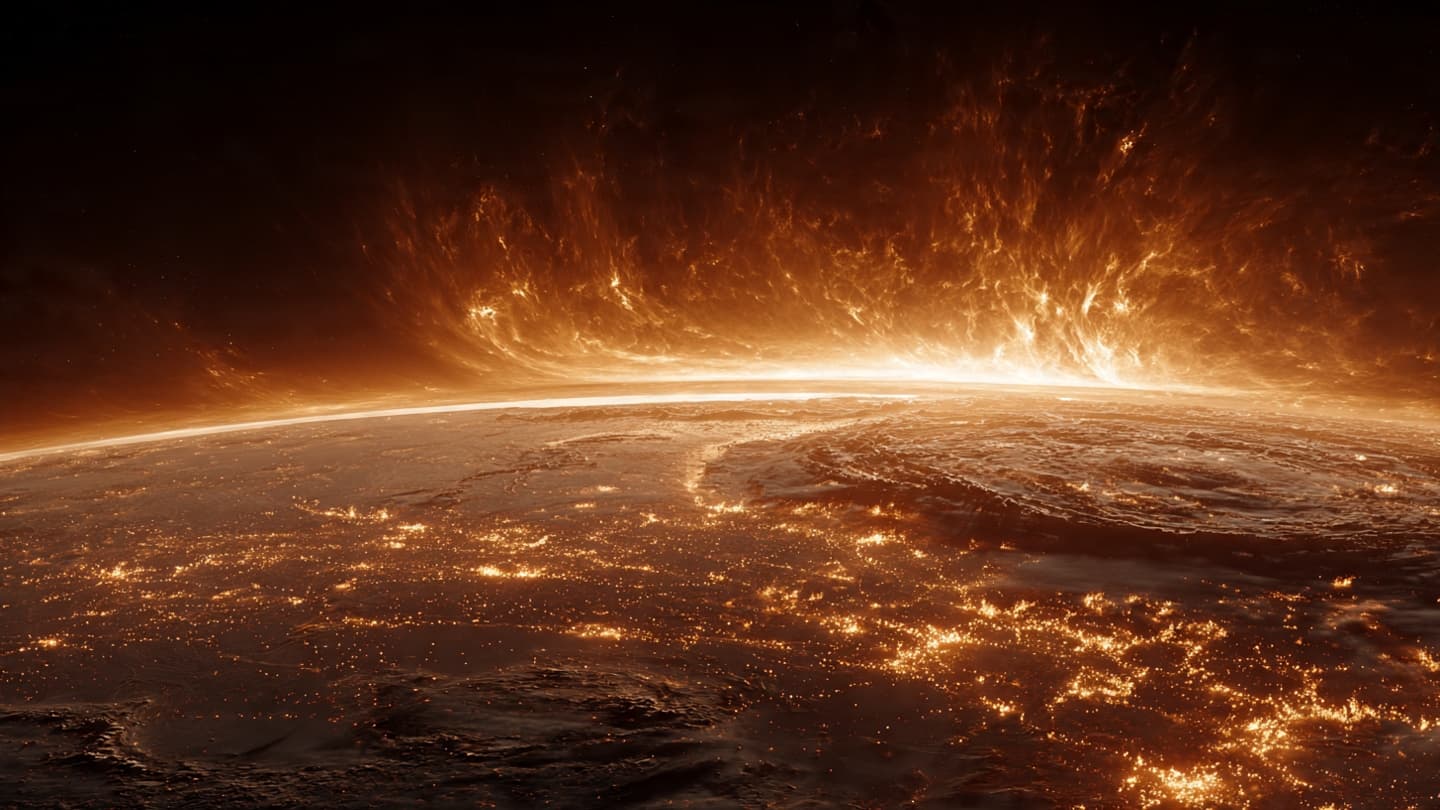
AI Image Disclaimer: Some accompanying images may be AI-generated visual interpretations inspired by solar observation data.
Sources: NASA, NOAA Space Weather Prediction Center, Space.com, ESA, Live Science
Published by Banx Network. This article is part of the Banx decentralized media programme, powered by the BXE token on the XRP Ledger.