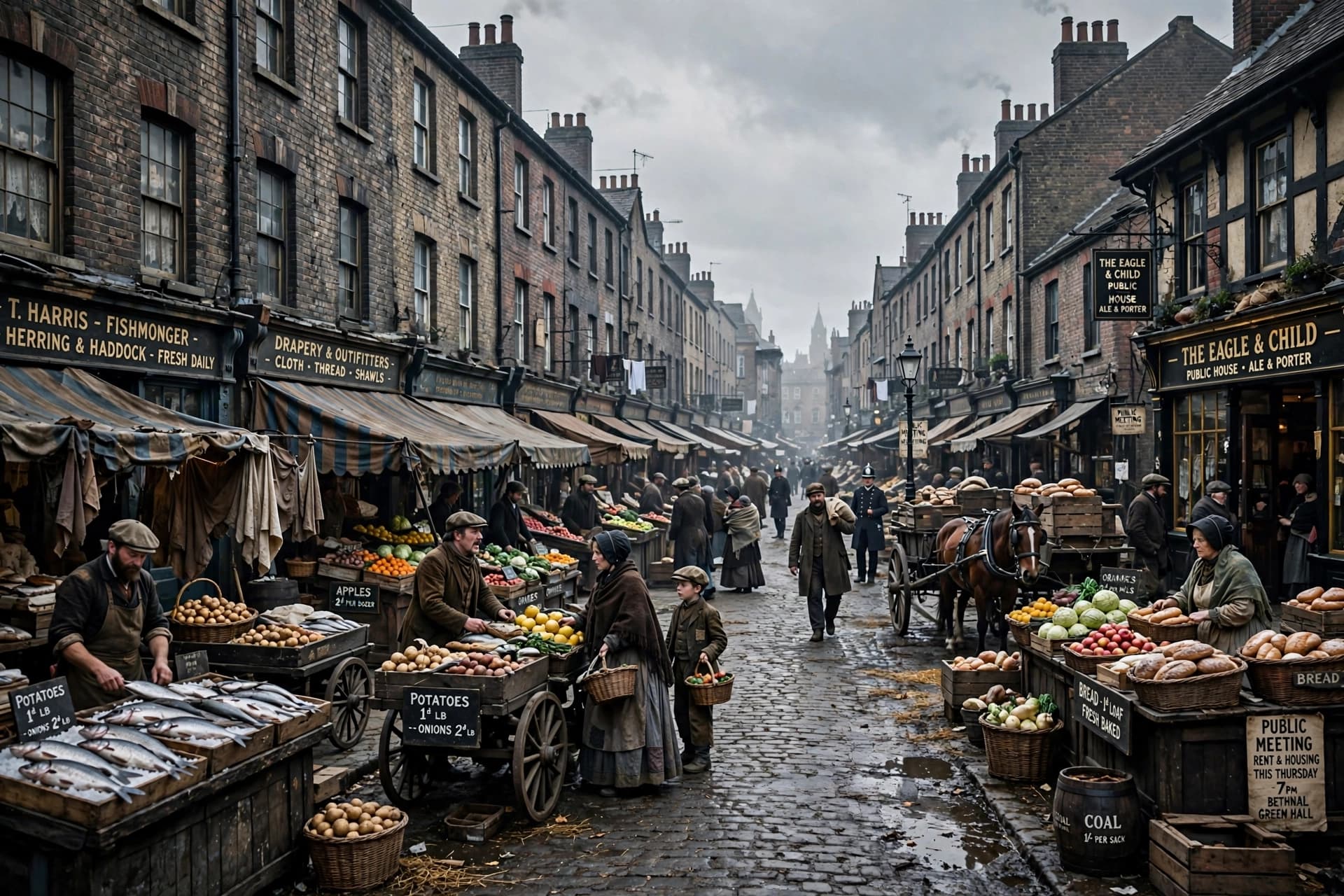
Sometimes a city keeps its history not in museums or monuments, but in the way people dress, speak and tell stories. In London's East End, few figures embodied that living tradition more vividly than George Major, the Pearly King of Peckham, whose elaborate suit and unmistakable Cockney vocabulary became part of a disappearing chapter of working-class London.
Major, who died in August at the age of 88, was remembered as one of the best-known custodians of the Pearly King tradition. Journalist Lauren Frayer first met him in 2016 while reporting in London, when his combination of mother-of-pearl clothing, colorful personality and Cockney expressions proved almost impossible for an American visitor to decipher.
The Pearly tradition dates back to Victorian London. According to NPR's reporting, Henry Croft, an orphaned street sweeper in the 1870s, began decorating his clothing with mother-of-pearl buttons gathered around the textile factories of the East End. The distinctive clothing eventually became associated with Pearly Kings and Queens, who developed a tradition of community representation and charitable fundraising.
Major carried that tradition for more than six decades. Born in 1938 and raised in difficult circumstances, he eventually became a market trader and one of the most recognizable Pearly Kings of his generation. His family recalled how he would take his children around the neighborhood in matching pearly clothing to collect money for charity, connecting the costume with a broader tradition of community responsibility.
The clothing itself tells a story. Black suits covered in elaborate patterns of mother-of-pearl buttons became a kind of visual language, with designs carrying meanings connected to family, friendship and the passage of life. Major's family continued wearing versions of his distinctive pattern after his death, keeping a connection between generations visible through the costume.
Then there was the language. Cockney rhyming slang replaces ordinary words with phrases whose final word rhymes with the intended meaning. "Frog and toad," for example, means road, while "apples and pears" means stairs. "Porky pies" means lies, and "whistle and flute" means suit. The expressions became closely associated with London's working-class communities and remain recognizable far beyond the neighborhoods where they developed.
Major also used what he called "backspeak," or backslang, which involves reversing words. One familiar example is "yob," derived from reversing "boy." The combination of backslang and rhyming slang helped make Major's speech particularly difficult for outsiders to follow, but it also illustrated how language can preserve a community's character long after the original circumstances that produced it have changed.
Major was buried on September 14 near the Cockney Museum he founded. His funeral brought together several generations of Pearly Kings, Queens, Princes and Princesses, with family members wearing the distinctive decorated suits. His death therefore became more than the passing of one colorful London personality; it offered another moment to consider how East London's older working-class traditions survive as the neighborhoods around them continue to change.
AI Image Disclaimer: The accompanying cultural illustration is AI-generated and does not portray an actual photograph of George Major or his family.
Sources: NPR, ITV News, Getty Images, Modern Cockney Festival
Published by Banx Network. This article is part of the Banx decentralized media programme, powered by the BXE token on the XRP Ledger.