There are moments when even the most connected places in the world seem to pause—as if the invisible threads that bind movement, travel, and routine are suddenly pulled taut. Airports, usually symbols of motion and possibility, can become something else entirely: quiet witnesses to events unfolding far beyond their runways.
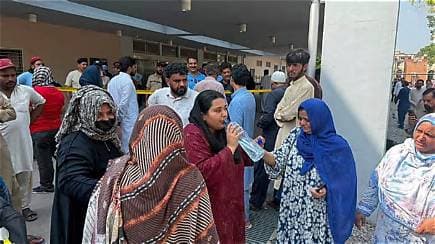
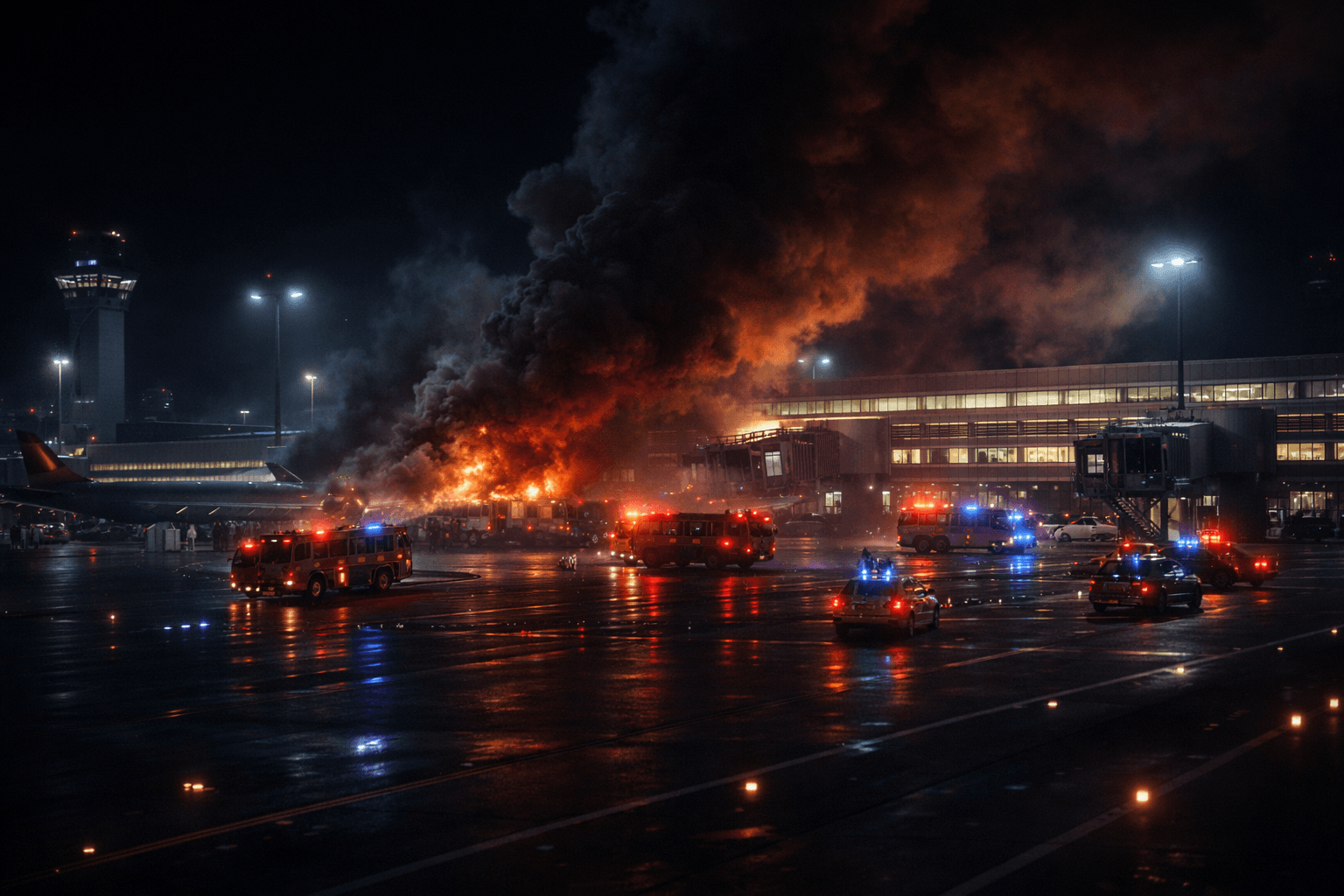
In Dubai, that shift has arrived abruptly. Dubai International Airport—one of the busiest aviation hubs in the world—sustained damage following a wave of Iranian retaliatory strikes across the Gulf. The incident, described by authorities as contained, affected part of the airport’s infrastructure and left four people injured.
The damage appears to have been limited to a concourse area, with officials emphasizing that emergency teams responded quickly and the situation was brought under control. Yet even limited damage carries weight when it occurs in a place designed for constant flow. The interruption itself becomes the story.
These strikes are part of a broader escalation following U.S. and Israeli military actions targeting Iran. In response, Iran launched missiles and drones toward multiple countries in the region—including the United Arab Emirates, Qatar, Bahrain, and Kuwait—expanding the conflict’s reach beyond its initial boundaries.
What makes this moment particularly striking is not only the damage, but where it occurred. Airports are not just infrastructure; they are intersections of global movement. When they are affected, the consequences ripple outward. Flights were suspended across large parts of the Middle East, with thousands of passengers stranded and major airlines halting operations.
Flight-tracking data showed something rarely seen: vast stretches of normally crowded airspace left nearly empty. Aircraft were diverted, grounded, or turned back mid-journey. What is usually a network of constant motion became, for a time, a landscape of interruption.
There is also uncertainty surrounding how the damage occurred. Some reports suggest direct impact from missiles, while others indicate debris falling after air-defense interceptions may have caused the damage. In modern conflicts, even defense can carry unintended consequences, as intercepted threats leave fragments that fall back to earth.
Beyond Dubai, the effects have been felt across the region. Infrastructure in Abu Dhabi, Doha, and other cities has also been affected, with explosions reported and additional injuries confirmed. The pattern suggests a widening field of impact—one that touches not only military targets but also the systems that support daily life.
And yet, even within disruption, there is a measured response. Authorities have moved to secure facilities, airlines have issued advisories, and contingency plans have been activated. The aim, for now, is not resolution, but stability—to hold systems in place while events continue to unfold.
For travelers, the experience is immediate: delays, cancellations, uncertainty. For the region, the implications are broader. Aviation, trade, and movement—all central to the Gulf’s role in the global economy—are now temporarily reshaped by a conflict that continues to evolve.
For now, Dubai’s airport remains operational in part, though disruptions persist. The damage has been described as limited, but the moment itself feels larger—an indication of how far-reaching the current escalation has become.
What happens next is not yet clear. But in a place built on connection, even a brief interruption can echo far beyond the runway.
AI Image Disclaimer Illustrations were produced with AI and serve as conceptual depictions.
Source Check Reuters Associated Press BBC News Al Jazeera The Guardian
Published by Banx Network. This article is part of the Banx decentralized media programme, powered by the BXE token on the XRP Ledger.