As the night sky prepares for a celestial spectacle, the moon is set to perform a delicate dance with Earth’s shadow. A near-total lunar eclipse is approaching, with the Americas positioned for an optimal view. This event, occurring on August 27–28, 2026, will see Earth’s umbra cover approximately 96% of the lunar surface, creating a dramatic visual effect that mimics a total eclipse. It is a moment for stargazers to pause, look up, and marvel at the precision of cosmic mechanics.
For observers in North and South America, the timing is particularly favorable. The eclipse will be visible during the evening hours, allowing for comfortable viewing without the need for late-night vigils. The moon will rise already partially eclipsed in some regions, offering a stunning start to the show. In other areas, viewers will witness the gradual darkening of the moon as it moves deeper into Earth’s shadow, culminating in a deep, reddish hue known as a "blood moon."
The phenomenon occurs when the sun, Earth, and moon align in a straight line, with Earth blocking direct sunlight from reaching the moon. However, some sunlight still filters through Earth’s atmosphere, bending around the planet and casting a soft, coppery glow on the lunar surface. This scattering of light, similar to what causes sunsets, is what gives the eclipsed moon its distinctive color. It is a beautiful demonstration of atmospheric physics in action.
While not technically a total eclipse, the depth of this partial eclipse means that only a small sliver of the moon will remain brightly illuminated. To the naked eye, it may appear almost total, creating a striking contrast between the darkened portion and the bright edge. This visual drama makes it a compelling event for both amateur astronomers and casual observers. Binoculars or telescopes can enhance the experience, revealing details of the lunar surface in the shadowed regions.
The eclipse also offers an opportunity for educational engagement. Schools and planetariums may host viewing events, using the occasion to teach about orbital dynamics, light, and shadow. It is a practical example of scientific concepts, making astronomy accessible and engaging for students. By sharing this experience, communities can foster a greater appreciation for science and the natural world.
Weather permitting, millions of people across the Americas will have the chance to witness this event. Clear skies are essential for optimal viewing, so observers are encouraged to check local forecasts. Finding a location with an unobstructed view of the eastern horizon will provide the best perspective. Patience and preparation can reward viewers with a memorable night under the stars.
For photographers, the eclipse presents a creative challenge. Capturing the changing colors and shadows requires careful planning and technique. Many will share their images online, creating a global gallery of the event. This shared visual record connects people across distances, united by a common wonder at the beauty of the cosmos. It is a celebration of both art and science.
In the end, the near-total lunar eclipse is a gift of time and space. It invites us to step away from our daily routines and connect with the rhythms of the universe. For the Americas, it is a night of shared awe and reflection. Whether viewed from a backyard or a park, the moon’s journey through the shadow is a testament to the enduring magic of the night sky.
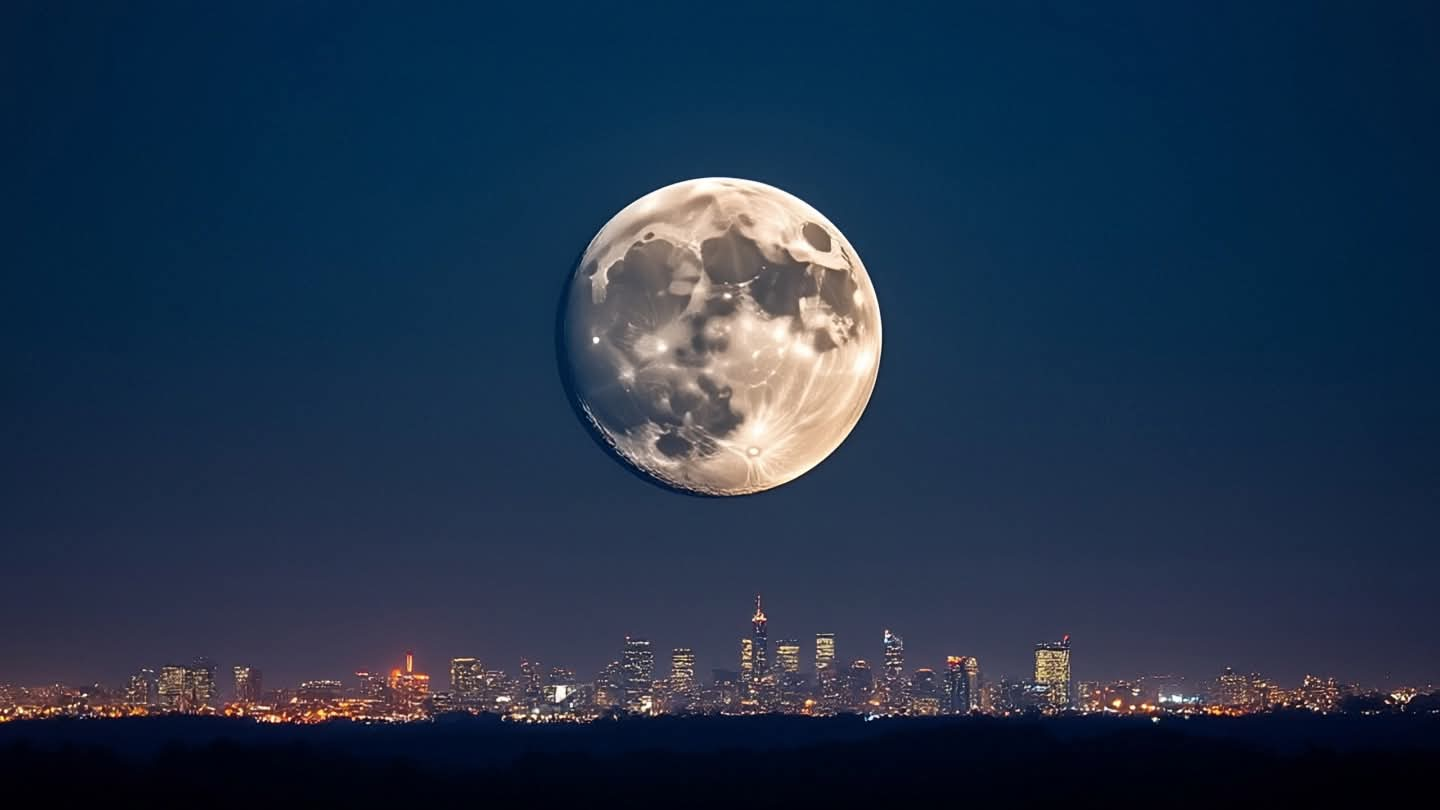
AI Image Disclaimer: Visuals in this article are AI-generated illustrations of lunar phases and night skies, designed to reflect the themes of astronomy and observation without showing real proprietary telescope imagery or specific location data.
Sources: ABC News, EarthSky, NASA, TimeandDate.com
Published by Banx Network. This article is part of the Banx decentralized media programme, powered by the BXE token on the XRP Ledger.