In the background of modern industry, heat often escapes unnoticed, drifting into the air as a silent byproduct of progress. Yet within that overlooked energy lies a possibility that scientists are beginning to reimagine in practical and transformative ways.
Recent research in materials science has explored advanced alloys capable of converting waste heat into usable electrical energy. These materials, often described as shape-memory metals, respond to temperature changes in controlled and repeatable ways.
The principle behind this innovation lies in thermodynamic cycles, where heat energy is not discarded but redirected through mechanical or electrical transformation processes. This approach could allow industrial systems to recover energy that would otherwise be lost.
Laboratory experiments suggest that these materials can maintain structural stability while undergoing repeated heating and cooling cycles. This durability is essential for real-world applications in manufacturing and energy production.
Industries such as steel production, chemical processing, and large-scale manufacturing generate significant amounts of excess heat. Capturing even a portion of this energy could improve overall efficiency and reduce energy waste.
Researchers emphasize that the technology is still in developmental stages, with challenges related to scalability and cost-effectiveness. However, the underlying physics has already demonstrated promising results in controlled environments.
Energy systems globally are increasingly focused on efficiency improvements, and waste heat recovery is considered one of the most underutilized areas in sustainability research. This makes the development particularly relevant in broader energy transition discussions.
As research continues, the possibility of turning industrial heat into electricity represents a shift in how energy systems are understood—not as linear flows, but as cycles where even waste may have purpose.
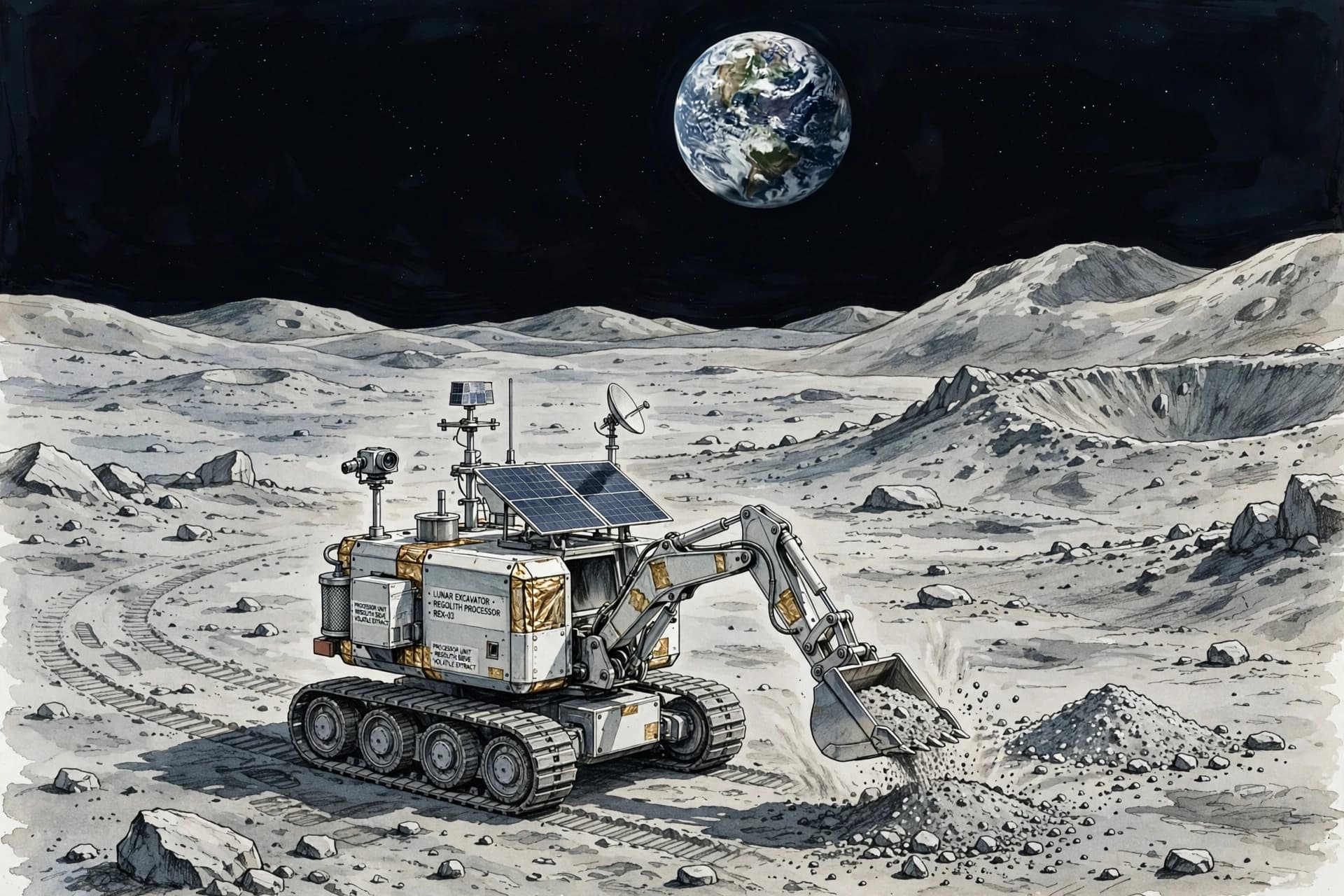
AI Image Disclaimer: Images are AI-generated conceptual illustrations of energy systems and scientific materials research.
Sources: ScienceDaily, Nature Materials, MIT Energy Initiative, BBC Science, IEEE Spectrum
Published by Banx Network. This article is part of the Banx decentralized media programme, powered by the BXE token on the XRP Ledger.