
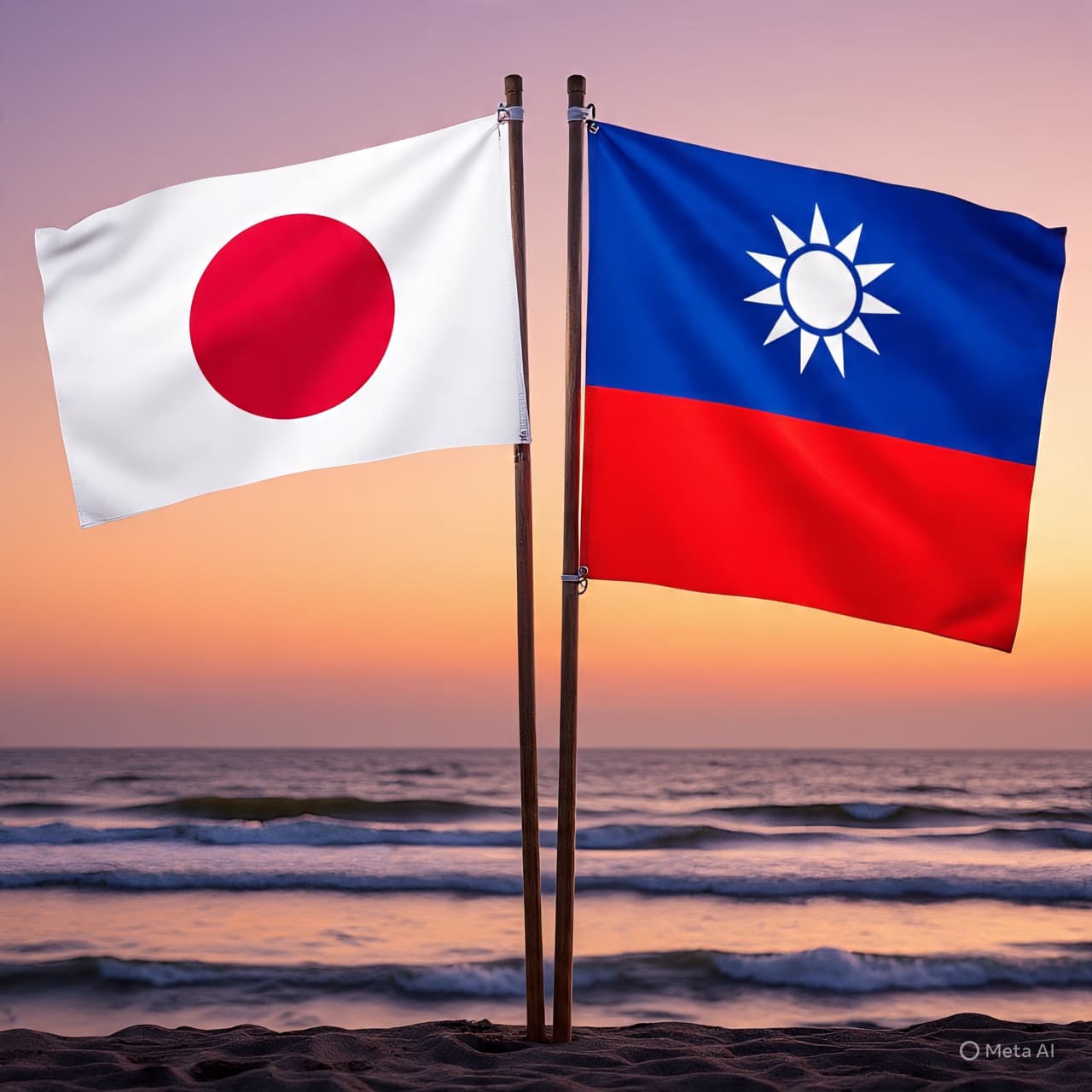
Key Highlights
- Japan's Prime Minister Sanae Takaichi declares Taiwan's fate a national security issue.
- Polls indicate 75% of Japanese citizens feel close to Taiwan.
- China's response includes halting seafood imports and issuing travel warnings.
Japan's recent shift in its stance on Taiwan marks a significant evolution in its national security doctrine. Under the leadership of Prime Minister Sanae Takaichi, Japan has explicitly stated that a Chinese attack on Taiwan would be considered a "survival-threatening situation" for Japan. This declaration breaks decades of strategic ambiguity and signals a new era in Japan's foreign policy, where Taiwan is no longer viewed as a distant concern but as a critical component of Japan's own security and sovereignty.
The implications of this shift are profound. Recent polls reveal that approximately 75% of the Japanese populace now views Taiwan as a democratic ally and a trustworthy partner. This growing sentiment reflects a significant change in public perception, transforming Taiwan from an abstract geopolitical entity into a vital neighbor with shared democratic values. The emotional and strategic ties between Japan and Taiwan are strengthening, suggesting a potential for deeper cooperation in various sectors, including defense and trade.
However, this newfound clarity in Japan's position has provoked a strong reaction from Beijing. In response to Takaichi's remarks, China has halted imports of Japanese seafood and issued travel warnings, accusing Japan of escalating tensions in the region. This escalation raises the stakes in an already volatile situation, as the potential for conflict increases with Japan's commitment to collective defense.
For international observers, Japan's redefined stance necessitates a reevaluation of existing alliance systems and security calculations in the Indo-Pacific. The notion that threats to Taiwan are now perceived as threats to Japan alters the strategic landscape, compelling nations to reconsider their diplomatic and military strategies in the region. Taiwan, once a variable in regional dynamics, is now positioned as a constant factor in the security calculus of East Asia.
As Japan moves forward with its collective-defense promises, the potential consequences could reshape alliances across Asia. While deterrence may strengthen, the risk of instability could also rise, particularly for countries with vested interests in trade, democracy, and regional stability. This evolution in Japan's foreign policy may signal a turning point, where Taiwan's fate becomes a global concern rather than merely a regional dispute.
In this shifting geopolitical landscape, the world must reassess its understanding of Taiwan and its implications for the future of Asia. The dynamics of power, security, and cooperation in the region are evolving, and how nations respond to these changes will be crucial in shaping the future of East Asia.
Published by Banx Network. This article is part of the Banx decentralized media programme, powered by the BXE token on the XRP Ledger.



