There is a quiet revolution underway in the materials that power our devices, one that rarely makes headlines but shapes everything from the speed of a laptop to the battery life of a phone. For decades, silicon has been the faithful servant of the digital age, the semiconductor that made modern computing possible. But silicon has limits—physical boundaries that constrain how small, how fast, and how efficient a transistor can become. Now, researchers are exploring a different path, one that uses magnetism rather than mere electricity to control the flow of information.
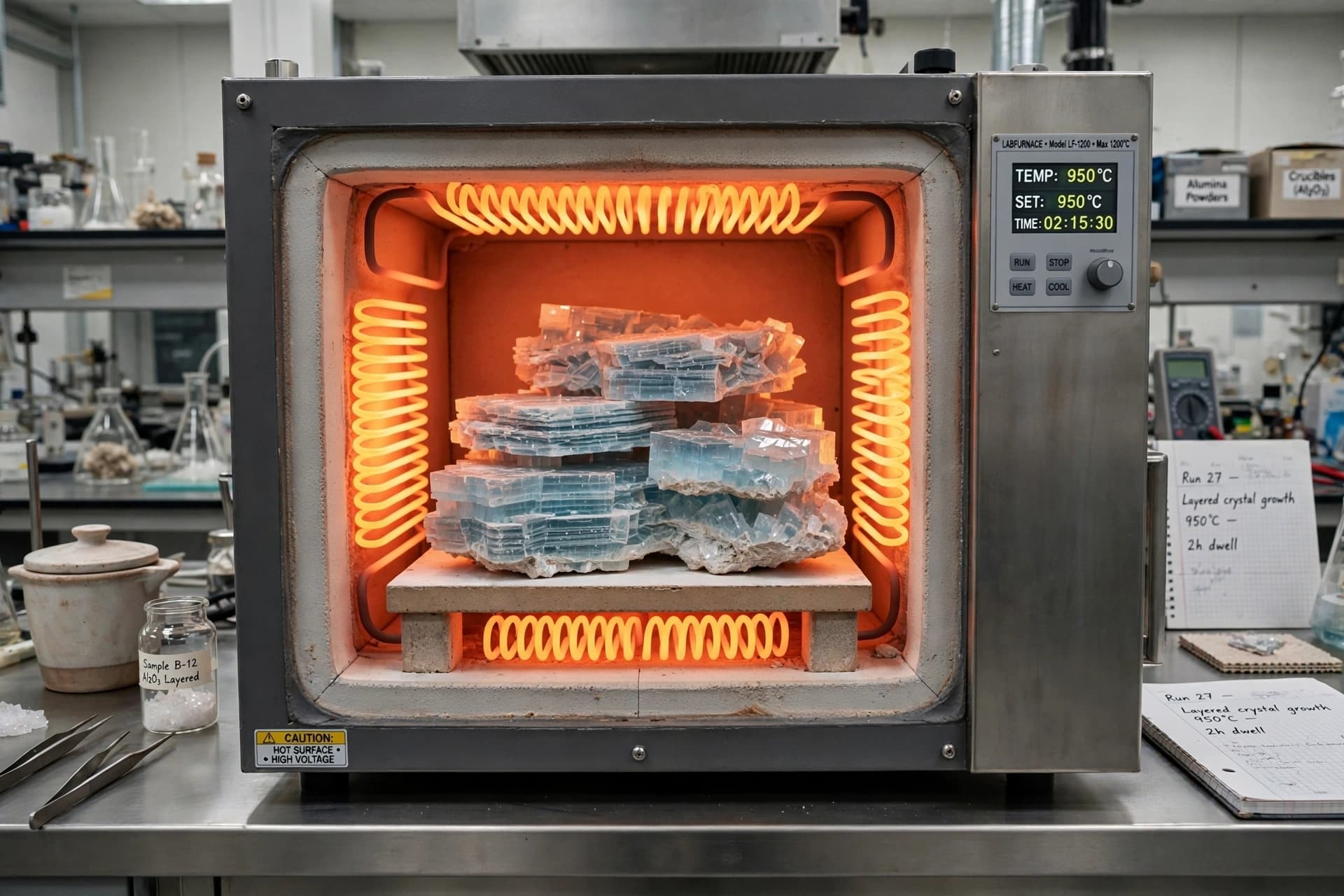
A team at the University of Central Florida has reported the first experimental evidence of altermagnetism in a layered material called Co₁/₄TaSe₂, a compound of cobalt, tantalum, and selenium . Altermagnetism is a newly confirmed type of magnetism that combines the best features of two familiar forms: ferromagnets, which are strongly magnetic but produce stray fields that interfere with nearby electronics, and antiferromagnets, which have no stray fields but are difficult to manipulate . The new material, created by heating the elements to more than 900 degrees Celsius over two weeks, appears to achieve a rare balance .
The significance lies in how electrons behave within this material. Using a technique called angle-resolved photoemission spectroscopy, researchers mapped the material's electronic band structure and found that its electrons are split by their spin—a quantum property that can be thought of as a tiny magnetic orientation . This spin-splitting is the key to spintronics, a field that seeks to use electron spin rather than charge to store and process information. Because the material's magnetic moments cancel out overall, it produces no interfering stray fields, making it potentially ideal for densely packed memory and logic circuits .
Separately, engineers at MIT have demonstrated a magnetic transistor that replaces silicon with a two-dimensional magnetic semiconductor called chromium sulfur bromide . Their device can switch or amplify electric current by a factor of ten, far exceeding the few percent achieved by previous magnetic transistors . The material also allows control of its magnetic state using electric current, which is essential for practical devices—engineers cannot apply magnetic fields to individual transistors in a chip .
The MIT transistor has another advantage: it can store information as well as switch it. A typical memory cell requires a magnetic element to hold data and a separate transistor to read it out; the magnetic transistor combines both functions in one device . This built-in memory could simplify circuit design and enable new architectures for high-performance electronics. As graduate student Chung-Tao Chou observed, "People have known about magnets for thousands of years, but there are very limited ways to incorporate magnetism into electronics" .
Both advances remain experimental, and neither has yet been scaled into commercial production. The MIT team is working to fabricate arrays of transistors, while the UCF researchers suggest that hundreds of related compounds could host similar altermagnetic structures . The path from laboratory demonstration to consumer device is long and uncertain, but the direction is clear: magnetism, long confined to storage media and sensors, is moving toward the heart of computation itself.
The implications extend beyond speed and efficiency. Modern computing consumes vast amounts of energy, much of it lost as heat, and spintronic devices could potentially process information with far less power . If these materials can be manufactured reliably and at scale, they may help address the thermal and energy constraints that increasingly limit conventional electronics. The work is a reminder that progress in computing is not only about smaller transistors but about rethinking the physical principles on which they operate.
AI Image Disclaimer: The images accompanying this article were generated by artificial intelligence and are intended for illustrative purposes only.
Sources:
· University of Central Florida · MIT Department of Materials Science and Engineering · Nature Communications · Physical Review Letters
Published by Banx Network. This article is part of the Banx decentralized media programme, powered by the BXE token on the XRP Ledger.