In the vast theater of the cosmos, exoplanets are the elusive actors, often hiding in the glare of their host stars. To understand them, we must look not just at the planets themselves, but at the stars they orbit. NASA’s Pandora mission, a small satellite with a big ambition, is designed to do exactly that. By studying both exoplanets and their host stars simultaneously, Pandora aims to untangle the complex signals that reveal the nature of distant worlds. It is a mission of precision, patience, and profound curiosity.
Pandora is part of NASA’s Pioneers program, which focuses on low-cost, high-impact astrophysics missions. The satellite is equipped with a small telescope capable of observing in both visible and near-infrared light. This multi-wavelength approach allows it to detect subtle changes in starlight as a planet passes in front of its star, a phenomenon known as a transit. By measuring these transits over long periods, Pandora can characterize the atmospheres of exoplanets with unprecedented accuracy.
One of the main challenges in exoplanet research is "stellar contamination." Stars are not static; they have spots, flares, and other activity that can mimic or mask the signals from planets. Pandora’s unique design allows it to monitor the star’s activity at the same time it observes the planet, helping scientists distinguish between stellar noise and planetary signals. This capability is crucial for identifying true atmospheric features, such as water vapor or methane.
The mission is slated to observe at least 20 different exoplanet systems during its initial year. These targets include a variety of worlds, from rocky super-Earths to gas giants. By studying a diverse sample, Pandora will help build a more comprehensive understanding of planetary formation and evolution. It will also provide valuable data for future missions, such as the James Webb Space Telescope, which can then focus on the most promising candidates for habitability.
Pandora’s compact size and cost-effective design demonstrate the potential of small satellites in space exploration. Unlike large observatories, which require years of planning and billions of dollars, Pandora can be developed and launched relatively quickly. This agility allows NASA to test new technologies and address specific scientific questions with greater flexibility.
The data from Pandora will be made available to the broader scientific community, fostering collaboration and discovery. Astronomers around the world will be able to use the observations to refine their models and theories about exoplanets. It is a mission that belongs not just to NASA, but to everyone who looks up at the night sky and wonders what lies beyond.
As the mission prepares for launch, excitement is building among scientists and enthusiasts alike. Pandora represents a new chapter in the search for other worlds, one that emphasizes careful observation and detailed analysis. It is a reminder that even small steps can lead to giant leaps in our understanding of the universe.
NASA’s Pandora mission is poised to shed new light on the mysteries of exoplanets. By probing both planets and their stars, it offers a clearer view of the cosmos, bringing us one step closer to answering the age-old question: Are we alone?
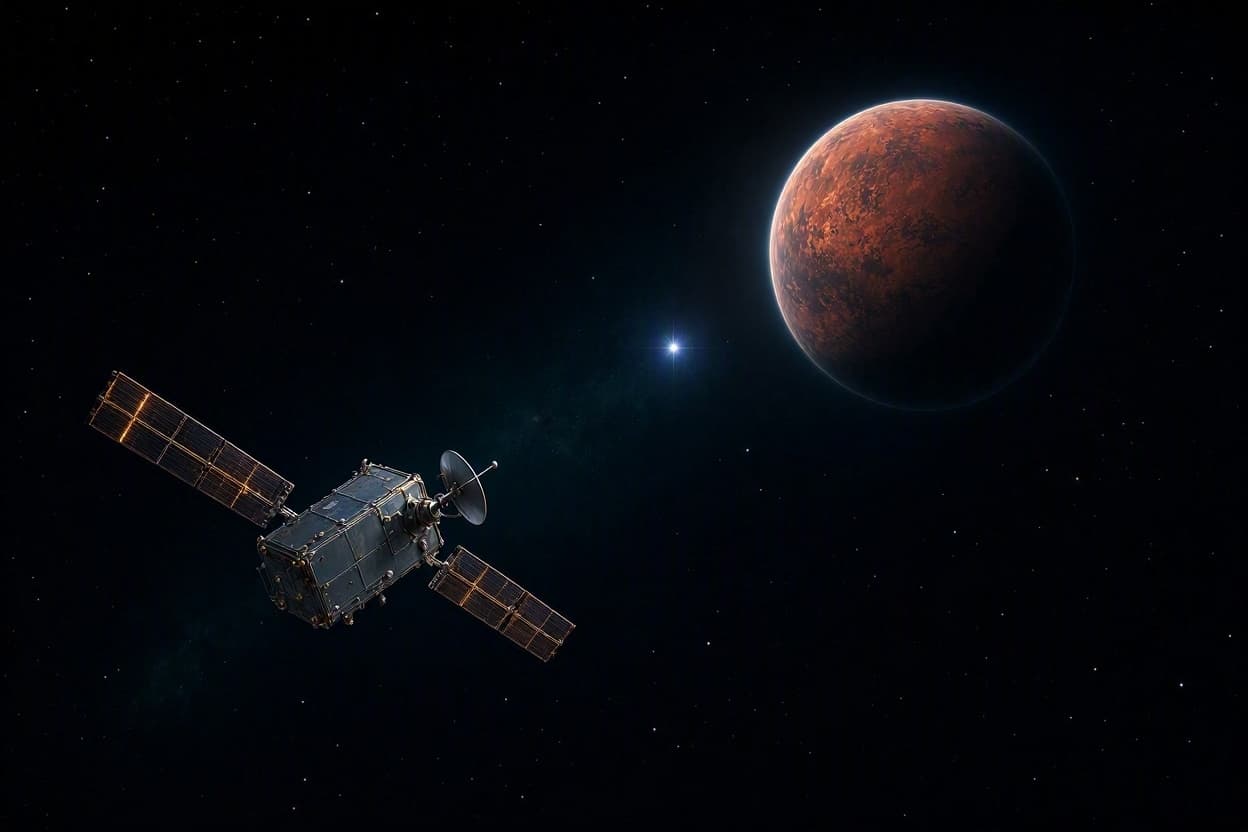
AI Image Disclaimer: Please be aware that images used in this context are AI-generated and are intended for illustrative purposes only.
Sources: NASA Science University of Arizona News IPAC Caltech ArXiv
Published by Banx Network. This article is part of the Banx decentralized media programme, powered by the BXE token on the XRP Ledger.