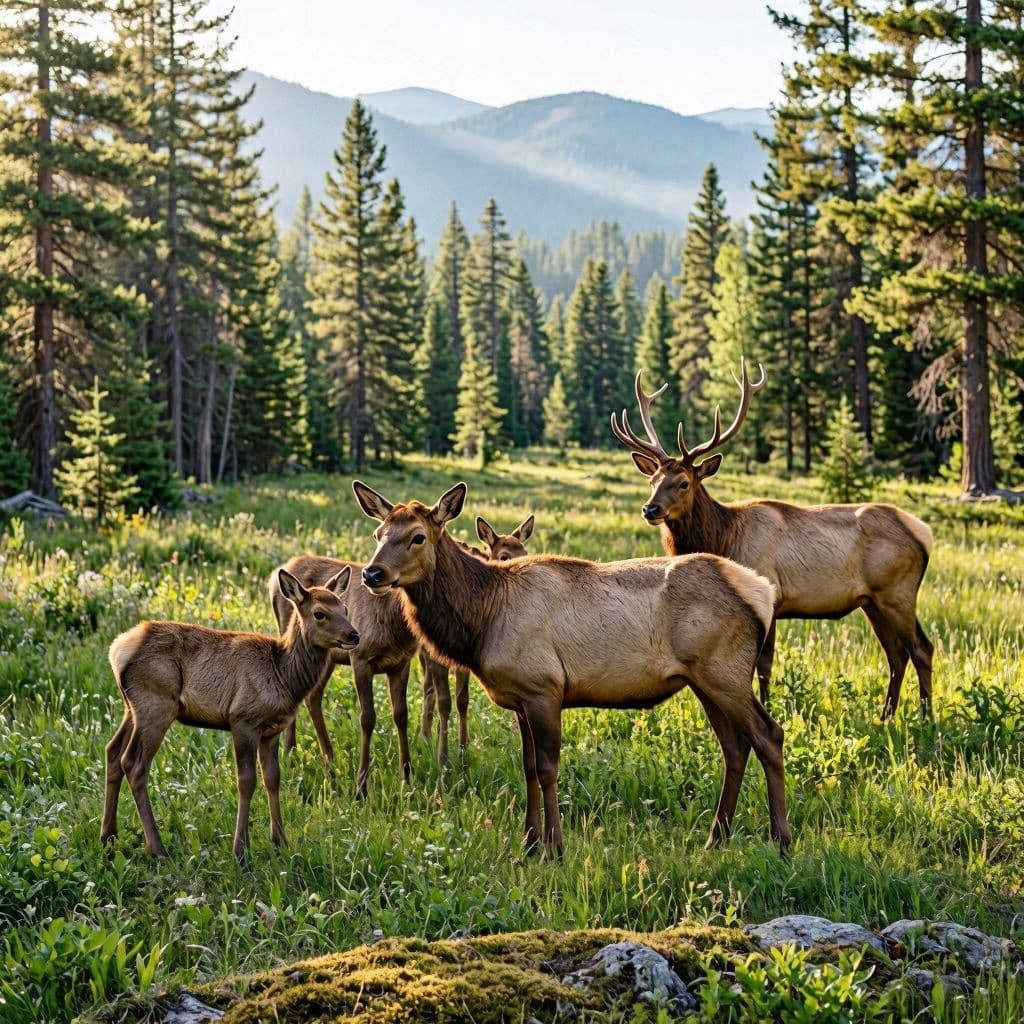
Across the forests and open landscapes of West Virginia, the arrival of spring and early summer brings a familiar rhythm of renewal. Among the hills of Tomblin Wildlife Management Area, a new generation of elk is beginning to appear, offering a gentle reminder of how wildlife populations grow through seasons of patience, protection, and careful conservation.
New elk calves are being observed at Tomblin Wildlife Management Area, marking another important moment for the region’s elk restoration efforts. The sight of young calves moving through their habitat represents the continuation of a population that has been carefully supported through years of wildlife management and monitoring.
Wildlife officials closely watch elk activity during calving season to better understand population health and habitat conditions. The arrival of calves provides valuable information about reproduction rates, survival challenges, and the overall progress of conservation programs.
Elk restoration in West Virginia has been a long-term effort involving state wildlife agencies, conservation groups, and local communities. After elk disappeared from the state more than a century ago, restoration programs worked to carefully reintroduce and establish sustainable herds in suitable areas.
Tomblin Wildlife Management Area has become one of the places where these efforts can be observed. The protected landscape provides space for elk to feed, move, and raise their young while wildlife managers continue tracking population trends and environmental conditions.
The appearance of calves also brings attention to the delicate balance between wildlife and human activity. Visitors to natural areas are encouraged to observe animals from a respectful distance, especially during sensitive periods when young wildlife depend on their surroundings for safety.
For conservationists, each new calf represents more than a single animal. It reflects years of planning, habitat management, and cooperation aimed at restoring a species while preserving the natural character of the region.
Wildlife recovery stories often unfold slowly, measured not in days but in generations. The young elk appearing at Tomblin WMA are part of a broader conservation journey shaped by science, dedication, and the understanding that healthy ecosystems require long-term care.
As the calves continue to grow, they will become part of the changing landscape of West Virginia’s wildlife heritage. Their presence reflects the ongoing connection between conservation efforts and the natural cycles that continue across the forests and mountains.
AI Image Disclaimer: The images included with this article are AI-generated illustrations designed to represent elk conservation and wildlife scenes. They are not actual photographs of the calves mentioned.
Sources:
West Virginia Division of Natural Resources National Wildlife Federation Rocky Mountain Elk Foundation U.S. Fish and Wildlife Service
Published by Banx Network. This article is part of the Banx decentralized media programme, powered by the BXE token on the XRP Ledger.