The Sun appears constant from Earth’s surface, a steady presence that marks time and seasons. Yet beyond the visible calm lies a dynamic system of radiation, magnetic fields, and charged particles that continuously interact with our planet.
A new satellite mission equipped with Belgian-developed technology has been launched or prepared to study these interactions in greater detail, focusing on how solar activity influences Earth’s upper atmosphere and space environment. The mission reflects growing scientific interest in understanding space weather and its practical effects on modern technology.
Institutions such as the Royal Belgian Institute for Space Aeronomy (BIRA-IASB), alongside European partners including the European Space Agency (ESA), have contributed instruments designed to measure solar radiation and atmospheric response. These instruments help researchers observe how variations in solar output affect Earth’s ionosphere and magnetosphere.
Space-based observations are critical because Earth’s atmosphere filters much of the Sun’s radiation. Satellites positioned above this protective layer can detect ultraviolet and X-ray emissions that are otherwise invisible from the ground, offering a more complete picture of solar dynamics.
The mission is expected to contribute to long-term studies of space weather, which can influence satellite operations, navigation systems, and power grids. Even relatively small solar events can produce measurable effects when interacting with Earth’s magnetic field.
Scientific teams emphasize that understanding the Sun-Earth relationship is not only about academic curiosity but also about practical resilience. As global reliance on satellite infrastructure increases, so does the importance of predicting solar disturbances.
Early data from similar missions has already shown that solar activity follows complex cycles, with variations that are still being actively studied. This new satellite is expected to refine those observations and improve forecasting models.
As the satellite begins or continues its mission, it represents another step in a long scientific effort to better understand the Sun’s influence on our planet, translating distant solar activity into meaningful insight for life on Earth.
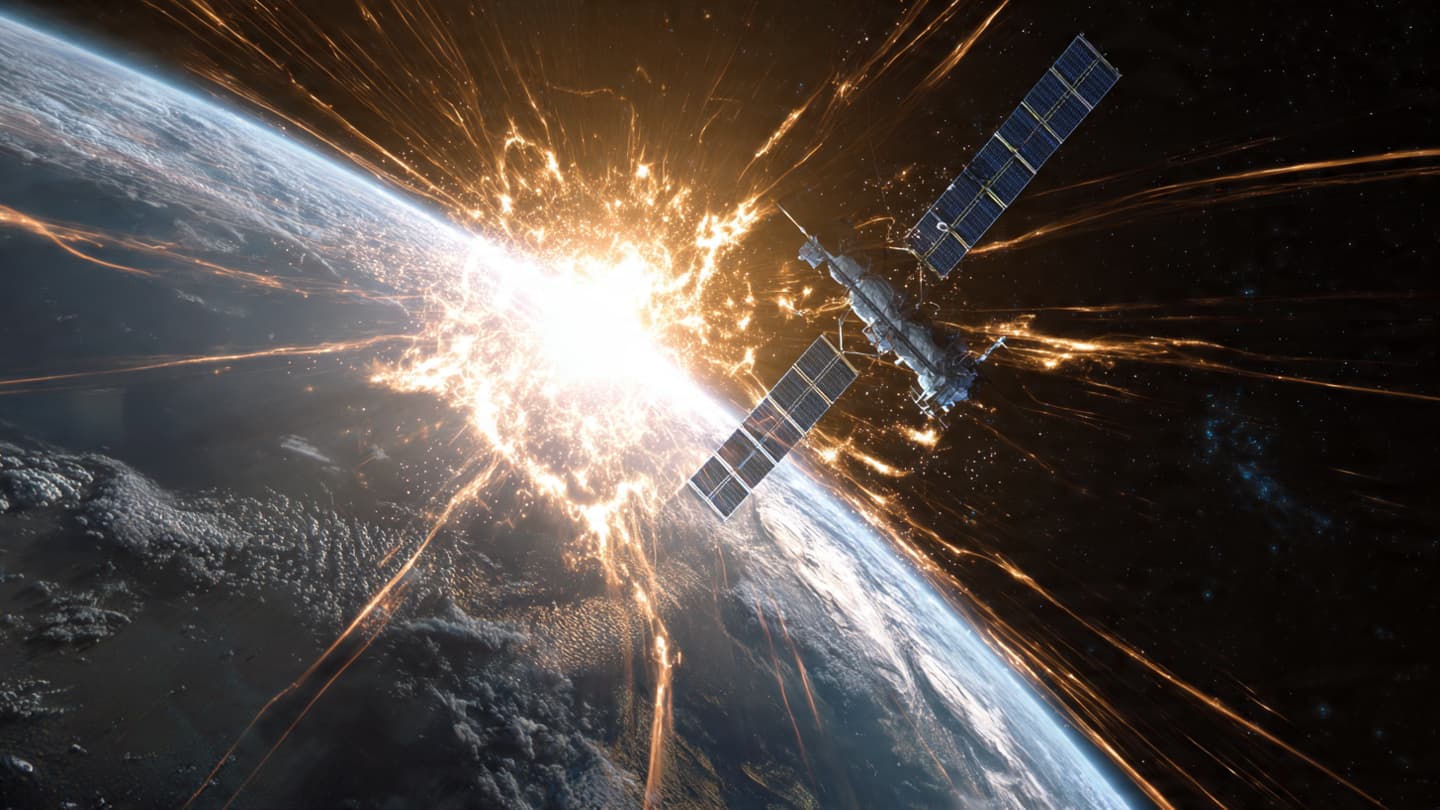
AI Image Disclaimer: All images accompanying this article are AI-generated for illustrative editorial purposes only.
Sources: European Space Agency (ESA), Royal Belgian Institute for Space Aeronomy (BIRA-IASB), NASA, Space science journal reports
Published by Banx Network. This article is part of the Banx decentralized media programme, powered by the BXE token on the XRP Ledger.