
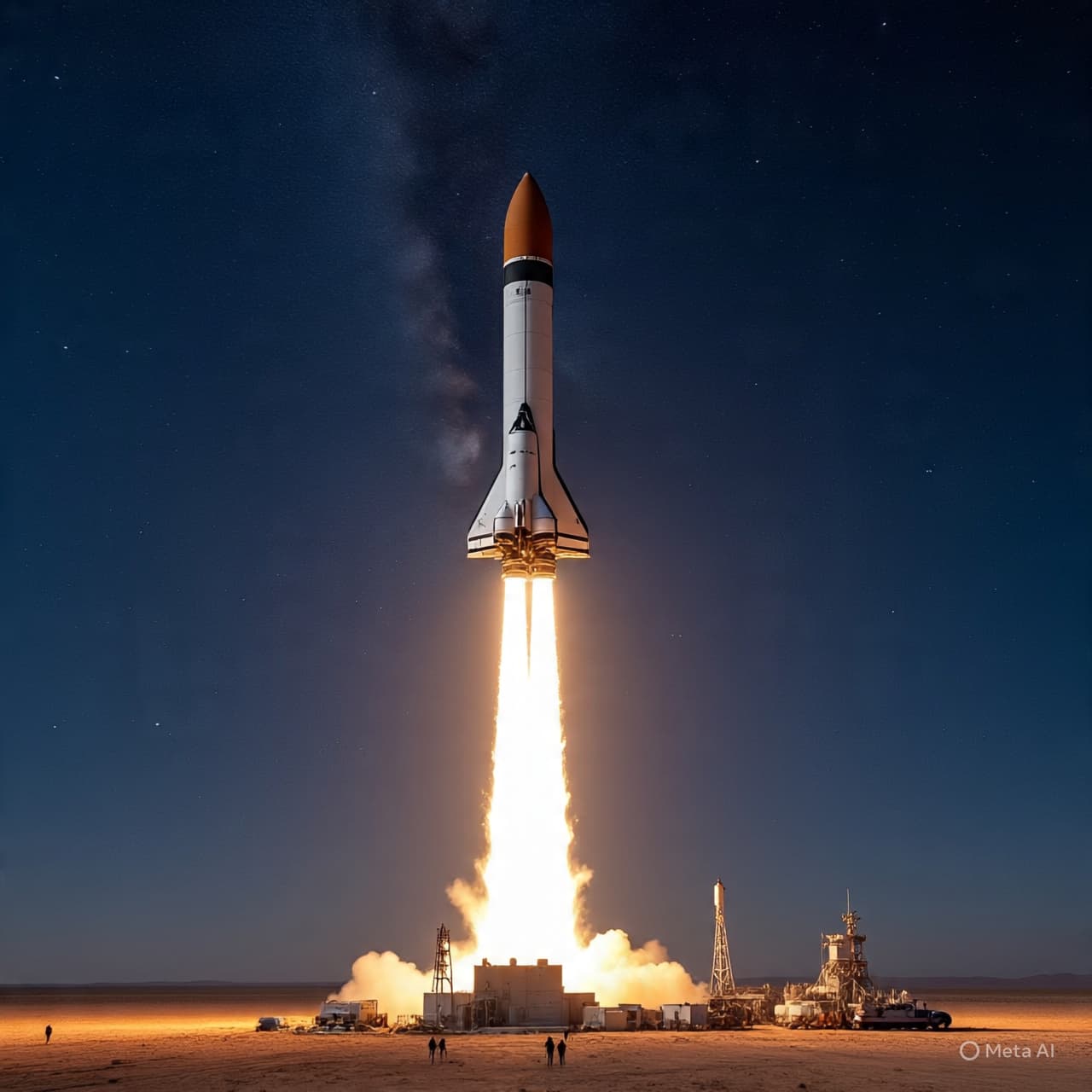
Above the silent plains of the Gobi, as twilight surrendered to night and the desert wind carried ancient stones and modern ambitions alike, a rocket stood poised — a testament to human curiosity and the next step in a journey that began long ago. In the quiet hush before ignition, one might have imagined the world as it is, and as it could become, when humanity turns its gaze upward, beyond the horizon we know.
When the engines finally roared to life, a mark was made not just by metal and fuel but by time and opportunity: for within that steel shell ascended a young engineer turned astronaut whose ascent symbolised more than altitude. At age 32, Wu Fei became the youngest person ever chosen by China for a mission into orbit. Alongside him rode two colleagues — a seasoned commander and a payload specialist, each bringing their own narrative thread to this tapestry of space exploration.
Their destination: the orbital outpost known as Tiangong, the “Heavenly Palace,” a name that evokes both aspiration and grace. With each docking and every experiment, the station becomes more than metal and circuits; it becomes a floating vessel of human possibility. The mission carries four mice — two male and two female — to roam a weightless world for several days, a subtle but meaningful step in the biology of space travel.
In the body of this mission lies the unfolding story of youth meeting challenge, of the next generation stepping into roles once reserved for elders. Wu Fei’s selection reflects not just personal accomplishment but a shift in the rhythm of China’s space programme. The veteran on board, commanding the mission, brings experience; the youngest brings fresh perspective, ambition and the weight of expectation. Together they form a bridge between what has been and what may be.
The mice, meanwhile, serve as humble companions to this effort, reminders that the leap into space is not merely about humans, but about life itself — how it adapts, survives, evolves beyond Earth’s gentle gravity. Their micro-journey may feel subtle, but it is meaningful, supplying data and hope for what human-flanked life can achieve in the infinite beyond.
And there is broader terrain underfoot: the programme signals ambition not just to orbit but perhaps to land on the Moon and beyond. The Heavenly Palace floats in low Earth orbit, but the vision stretches farther — to lunar bases and international cooperations, futures that once belonged only to science fiction.
Yet as the rocket climbed, as the station hummed alive with new inhabitants, one recalls that the measure of progress is not solely distance travelled but the questions asked, the doors opened, the imaginations stirred. In the hush of space, when Earth’s horizon curves gently below, the silent truth is this: we are still learning what it means to go up, to leave something behind, and to explore not just new frontiers of place but of being.
AI Image Disclaimer: Illustrations were produced with AI and serve as conceptual depictions. Sources: Associated Press, Space.com, Reuters, Anadolu Agency, LiveMint.
Published by Banx Network. This article is part of the Banx decentralized media programme, powered by the BXE token on the XRP Ledger.


