

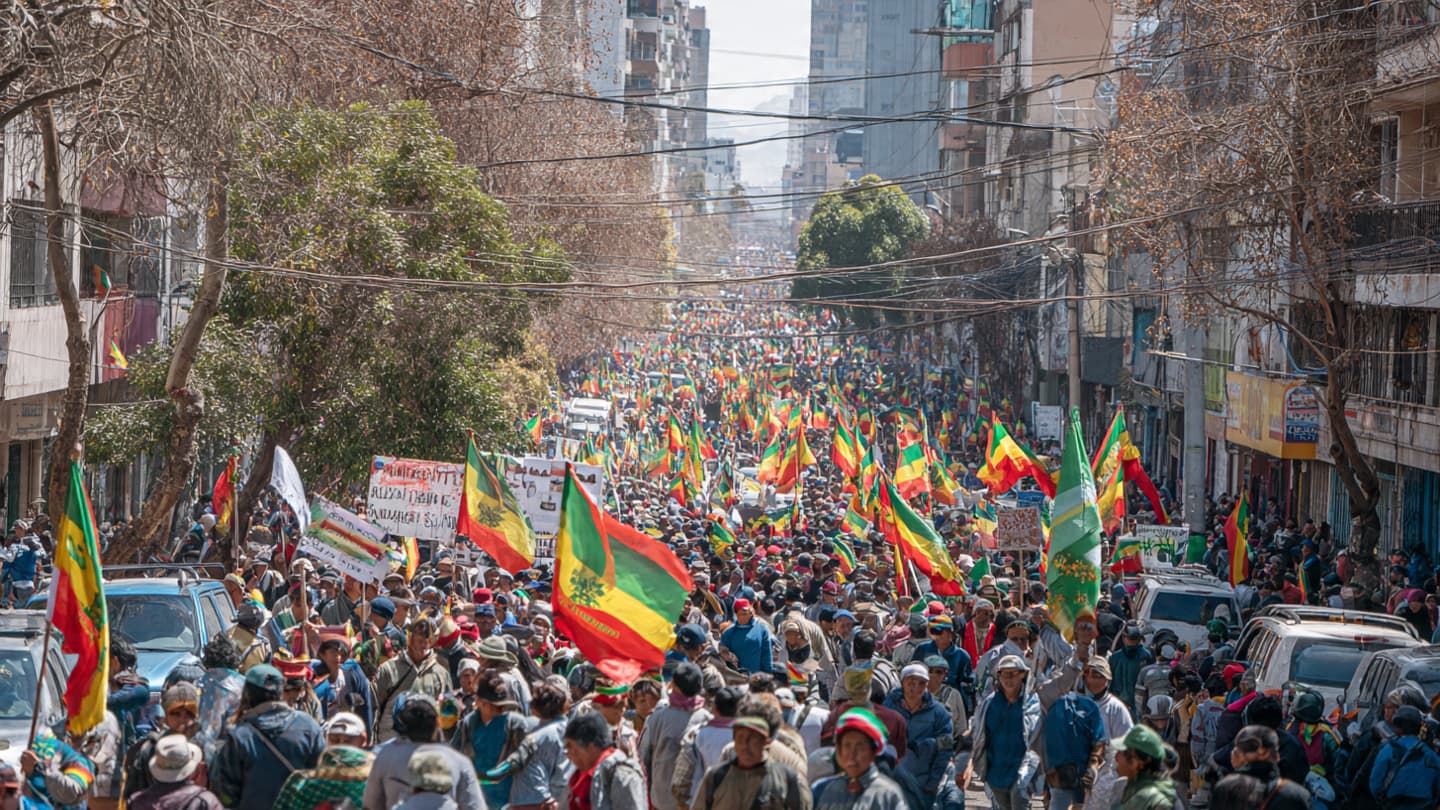
Key Highlights
- Nationwide Shutdown:Bolivia witnesses a significant shutdown involving diverse social movements.
- Civic Engagement:Workers, students, and Indigenous groups unite to voice their grievances.
- Historical Context:Bolivia's rich history of social mobilization shapes current protests.
Bolivia is currently experiencing a nationwide shutdown, a significant event driven by a coalition of workers, students, and Indigenous movements. This collective action, described by organizers and media as a form of popular rebellion, underscores the urgency of various social issues that have prompted widespread civic engagement across the country.
The roots of this mobilization can be traced back to Bolivia's long history of social activism, where labor unions, student organizations, and Indigenous groups have played pivotal roles in shaping political and economic discourse. The current protests reflect a convergence of these groups, each bringing their unique concerns to the forefront of national dialogue. Reports indicate that the shutdown has involved strikes, road blockades, and protests, all aimed at drawing attention to pressing political grievances and economic conditions.
Indigenous movements in Bolivia have historically been at the center of discussions surrounding land rights, cultural recognition, and resource governance. These issues are not merely contemporary grievances but are deeply embedded in the structural challenges that the country faces. The current protests highlight the ongoing struggle for recognition and rights among Indigenous populations, who have often found themselves marginalized in national policy discussions.
In addition to Indigenous groups, student and labor organizations have also played a crucial role in the current mobilizations. Concerns over employment opportunities, educational access, and public policy have converged, leading to a unified front demanding change. The solidarity among these groups illustrates the interconnectedness of their struggles and the broader implications for Bolivian society.
Government responses to such large-scale shutdowns can vary significantly. In the past, authorities have opted for dialogue and negotiation, while at other times, they have resorted to enforcement measures to quell disruptions. The nature of the response often depends on the duration and intensity of the protests, as well as the specific demands being made by the demonstrators.
Observers note that these movements not only reflect immediate policy disputes but also highlight longer-term tensions within Bolivia's national development framework. The current shutdown serves as a reminder of the power of civic engagement and the potential for collective action to influence political discourse. As various social sectors converge in public demonstration, the implications for Bolivia's future remain significant and uncertain.
The reported shutdown emphasizes the scale of civic engagement in Bolivia, showcasing how diverse groups can unite in pursuit of common goals. As the situation evolves, the outcomes of these protests will likely shape the political landscape and influence future policy decisions.
Published by Banx Network. This article is part of the Banx decentralized media programme, powered by the BXE token on the XRP Ledger.




