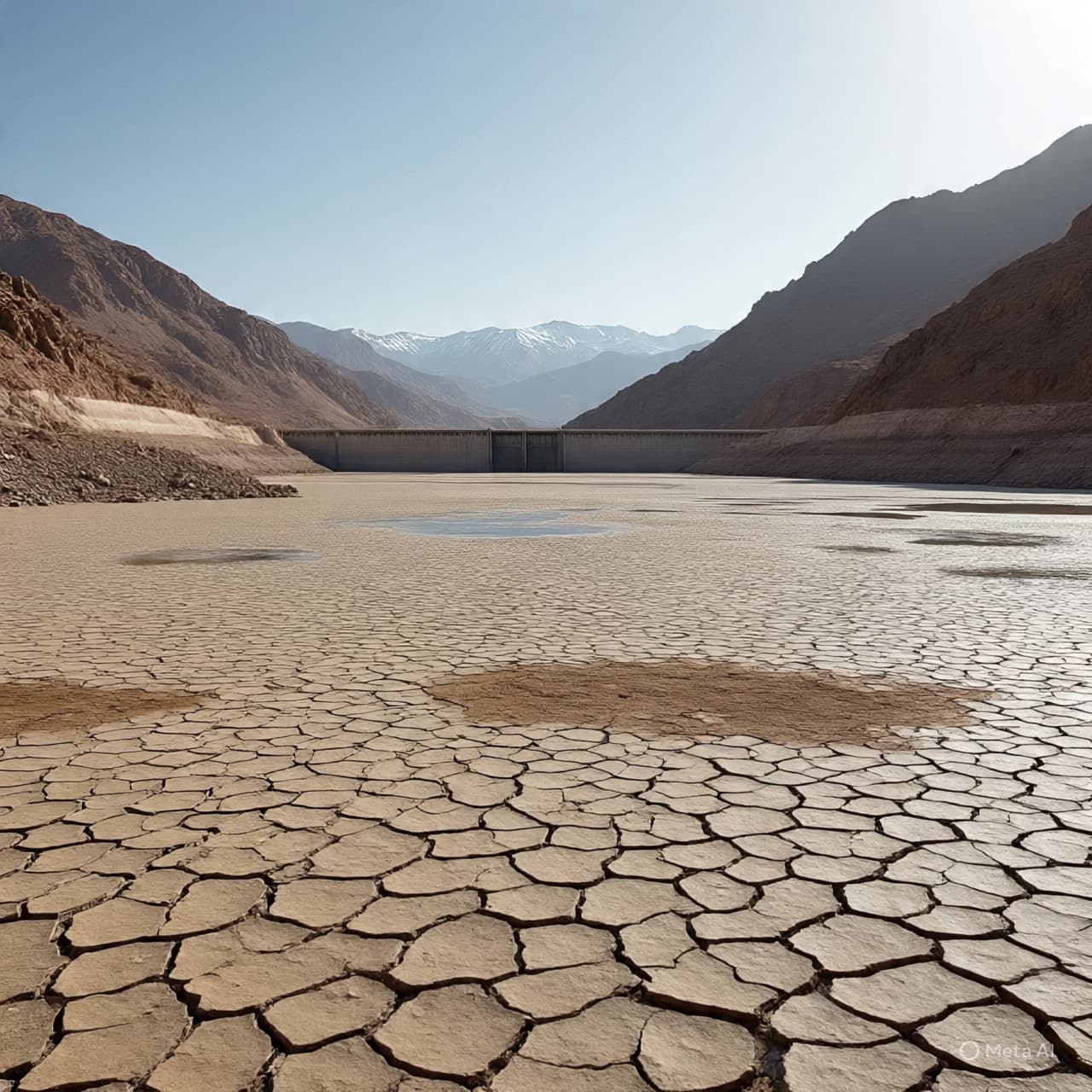
Iran is enduring one of its worst droughts in generations. For six years now, dry skies and searing heat have plagued the country, pushing dam reservoirs to critically low levels. In Tehran, several of the main dams that once supplied much of the city’s water are now at single-digit capacities. The seasonal rainfall that might have offered some relief barely arrived, and when it did, it was far below long-term averages.
But the crisis is not just climate-driven. Years of mismanagement have deeply eroded Iran’s water resilience. Agriculture, which gobbles up more than ninety percent of the country’s freshwater, relies on outdated irrigation methods and inefficient systems. Illegal and unregulated extraction of groundwater is rampant. The effect? The very land beneath Iran’s cities is sinking. In Tehran and Isfahan, excessive pumping is triggering subsidence — the ground compacts because aquifers are being emptied faster than they can recharge.
This is not simply an environmental issue; it touches social, economic, and strategic fault lines. As the INSS warns, the water scarcity in Iran is morphing into a national-security risk. In some regions, agricultural disruption and failing water systems are fueling internal migration. Meanwhile, the country’s governance structure appears fragmented: ministries, politicians, local authorities all have overlapping responsibility for water, but little coordinated accountability.
Some efforts are underway. Experts argue for a shift in water management: away from purely large-scale engineering projects toward sustainable strategies like aquifer recharge, restoration of groundwater, and demand-side reforms. However, the path forward is narrow. Sanctions make infrastructure investment difficult. And reform may face resistance: deeply entrenched political and economic interests benefit from current water-intensive agriculture and poorly regulated extraction.
AI Image Disclaimer “Images in this article are AI-generated illustrations, meant for concept only.”
Sources DW (Deutsche Welle) Al Jazeera The Guardian Foreign Policy INSS (Israel) Strategic Assessment
Published by Banx Network. This article is part of the Banx decentralized media programme, powered by the BXE token on the XRP Ledger.