

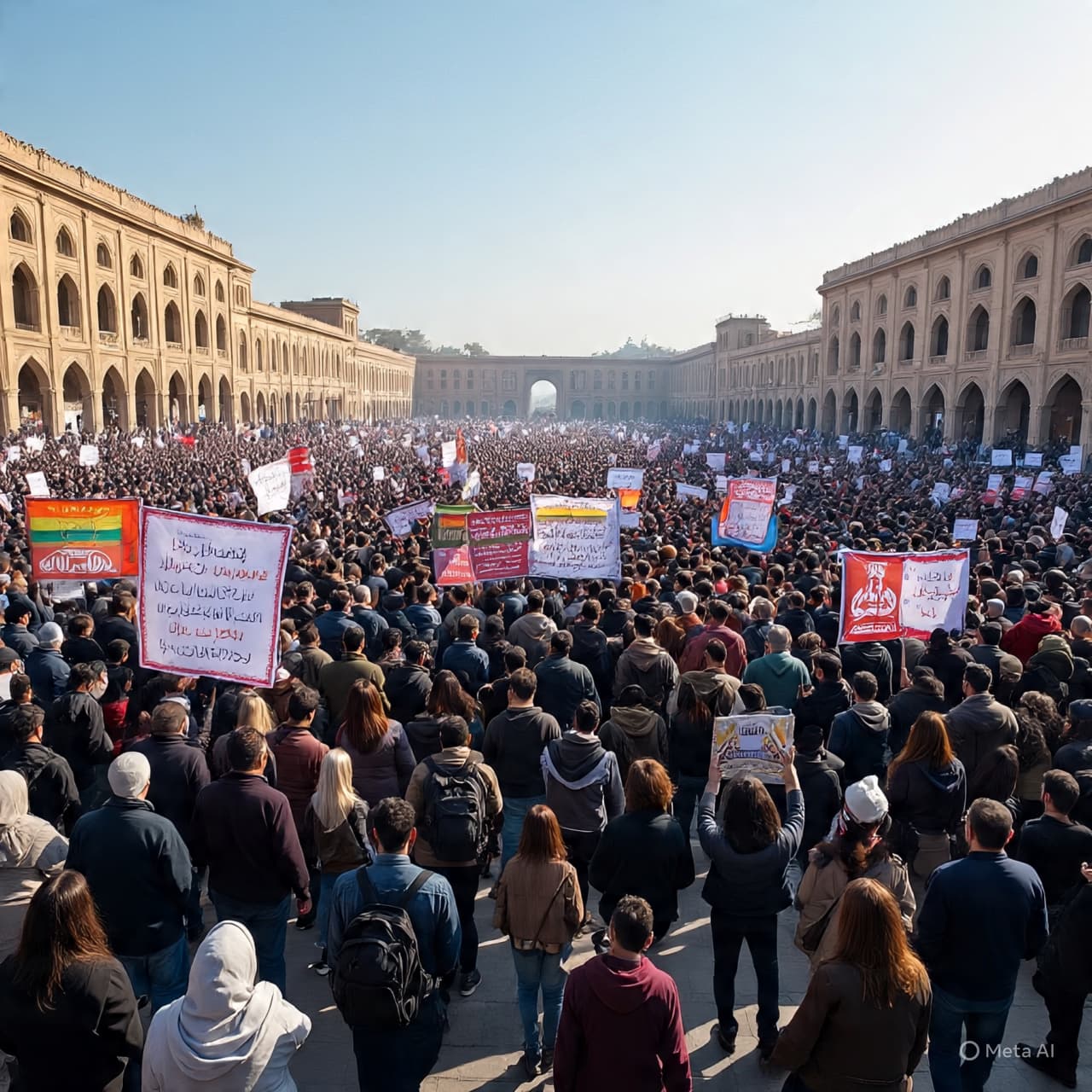
Key Highlights
- Economic Strain:Iran's currency collapse and inflation fuel protests.
- Widespread Unrest:Protests spread from Tehran to cities nationwide.
- Human Cost:Reports indicate hundreds of casualties and thousands of arrests.
Iran stands at a critical juncture, where the echoes of discontent resonate through its streets and skies. The recent wave of protests, ignited by economic hardships, has transformed into a broader call for political change, reflecting the frustrations of a populace weary of sanctions and inflation. As the sun rises over cities like Tehran and Shiraz, the nation grapples with the implications of this unrest.
What began as a response to soaring prices and a collapsing currency has morphed into a collective outcry for justice and reform. The protests, which initially centered around economic grievances, have expanded to encompass a wide array of demands, from political freedoms to social justice. This evolution highlights the interconnectedness of economic and political issues in Iran, where citizens are increasingly unwilling to accept the status quo.
The streets of Iran have become a canvas for diverse voices, from merchants in bustling bazaars to students rallying for change. Each participant brings their own narrative, contributing to a rich tapestry of dissent that underscores the urgency of the moment. The protests are not merely a reaction to economic conditions; they represent a deeper yearning for dignity and respect in a society that has long been stifled by authoritarian governance.
However, the cost of this civic awakening has been steep. Human rights organizations report that hundreds have died and thousands have been arrested in the crackdown on dissent. These figures serve as a stark reminder of the human toll of unrest, where each casualty represents a life disrupted and a family left to mourn. The government's response has been marked by attempts to quell the protests through communication blackouts and calls for national unity, revealing the delicate balance of power in a time of upheaval.
As the Iranian leadership navigates this turbulent landscape, the future remains uncertain. The government's rhetoric of stability contrasts sharply with the reality of widespread dissatisfaction. Observers note that the current unrest could either fizzle out or catalyze significant change, depending on how both the authorities and the protesters respond to the evolving situation.
In this moment of tension, the world watches closely. The international community is keenly aware that the outcome of these protests could reshape not only Iran's internal dynamics but also its relationships with neighboring countries and global powers. The stakes are high, and the potential for change is palpable.
As dawn breaks over Iran, the streets are filled with a mix of hope and trepidation. The resilience of the Iranian people is evident, as they continue to push for a future that reflects their aspirations. Whether this unrest will lead to a turning point in Iran's history remains to be seen, but one thing is clear: the voices of the people can no longer be ignored.
Published by Banx Network. This article is part of the Banx decentralized media programme, powered by the BXE token on the XRP Ledger.




