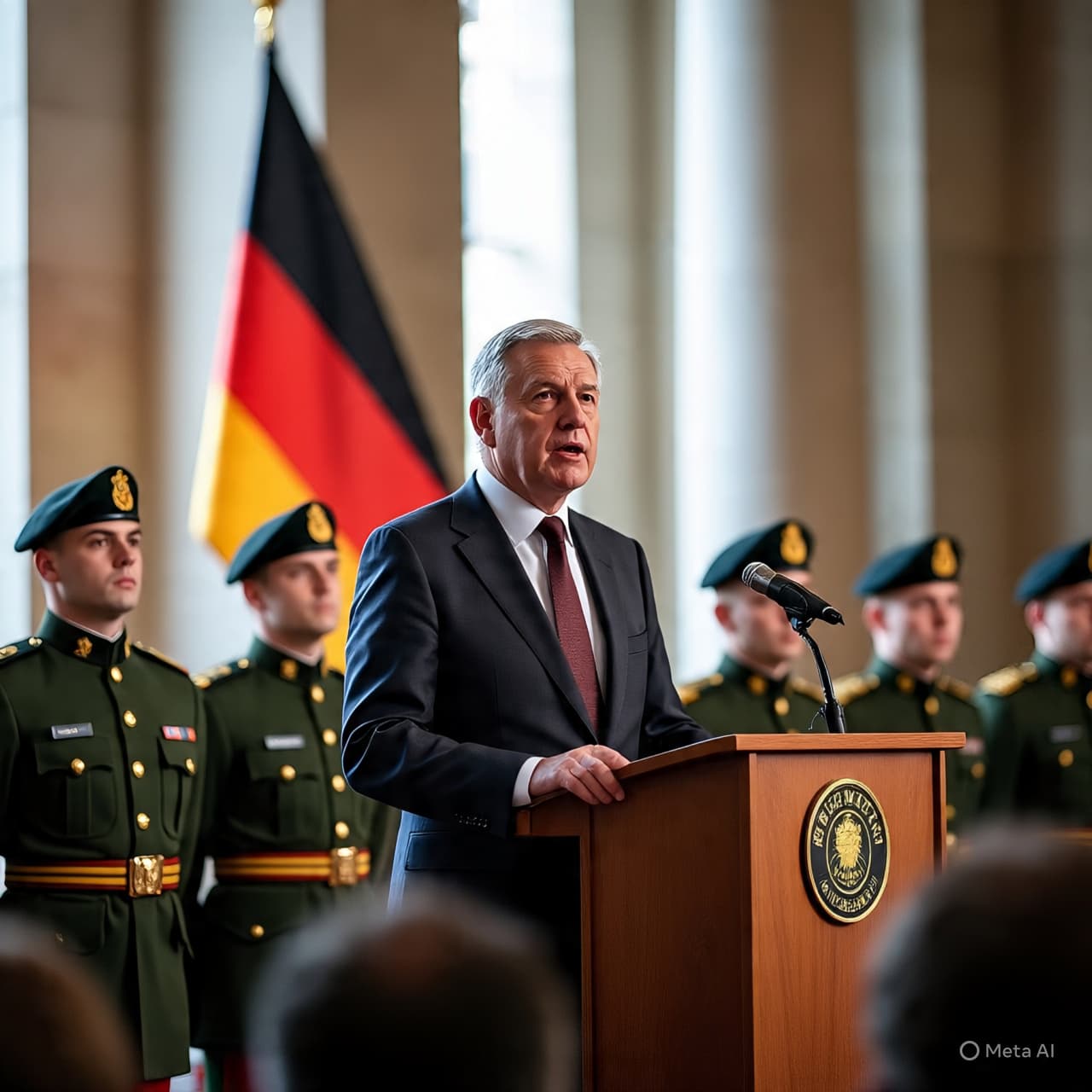
In the quiet corridors of Berlin’s ministries, a subtle tectonic shift is underway — one that seeks to chart a new path for a country once defined by caution. The metaphorical gears are turning in the office of Boris Pistorius, Germany’s defence minister, as he sets out to remake his nation’s armed forces and perhaps, in the process, reshape the national psyche.
Germany’s journey from the post-Cold War era to today has been marked by long stretches of military restraint and internal debate. Now, faced with changes in the wider European security landscape, Pistorius insists that the country must become “war-ready”. His words carry weight because they reflect a deeper shift: not just in policy, but in the foundational assumptions about what Germany must be prepared for. He told the Bundestag that “We must be ready for war by 2029,” pointing to the need for personnel, materials and finances to reflect more than just symbolic commitment.
In practical terms, the plan is sweeping. The Bundeswehr — Germany’s armed forces — is to be reorganised under a single operational command, reducing duplication and accelerating decision-making. A fourth branch — the “Cyber and Information Service” — is being elevated to a status equal to army, navy and air force, emphasising that future conflicts will not only be fought with tanks and jets but with data, networks and signals.
This push also reflects Germany’s changing fiscal and strategic commitments. After years of falling short of its NATO defence-spending target, Germany now aims higher. Chancellor Friedrich Merz has set the goal of turning the country’s armed forces into Europe’s strongest conventional army. But the minister remains frank about the challenges: decades of neglect can’t be undone overnight. “Everything that has been screwed up in 30 years … cannot be made up for in 19 months,” he told the media.
Despite the urgency, there remains a tension between ambition and reality. Reports indicate that readiness in parts of the Bundeswehr has fallen to around 50 %, down from about 65 % before the Russian invasion of Ukraine. There are shortfalls in key areas such as air defence, drones, artillery and manpower. The funding programme is substantial — including a €100 billion special fund — yet questions remain about how to sustain it long-term.
For ordinary Germans, this shift demands a recalibration of perception. Pistorius has said that society, as well as the armed forces, must prepare. It’s not merely soldiers in barracks but readiness at a societal level — infrastructure, logistics, training, and the willingness to perceive defence as a part of civic responsibility.
At its heart, this transition is about deterrence. The underlying idea is that a Germany confident in its ability to defend itself — and its allies — might make war less likely. But transforming years of caution into actionable capability is no small task. The budgetary pledges, organisational reforms and public debates are only the first steps.
AI Image Disclaimer “Images are created with AI tools and are serving as conceptual depictions, not real photographs.”
Sources : The Washington Post Deutsche Welle (DW) Reuters Politico The Indian Express
Published by Banx Network. This article is part of the Banx decentralized media programme, powered by the BXE token on the XRP Ledger.