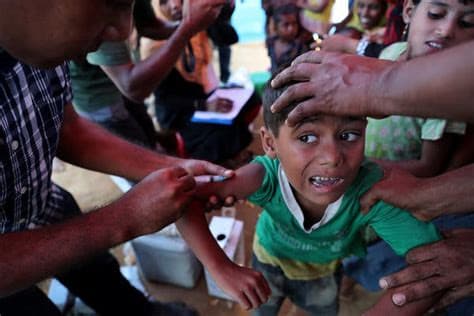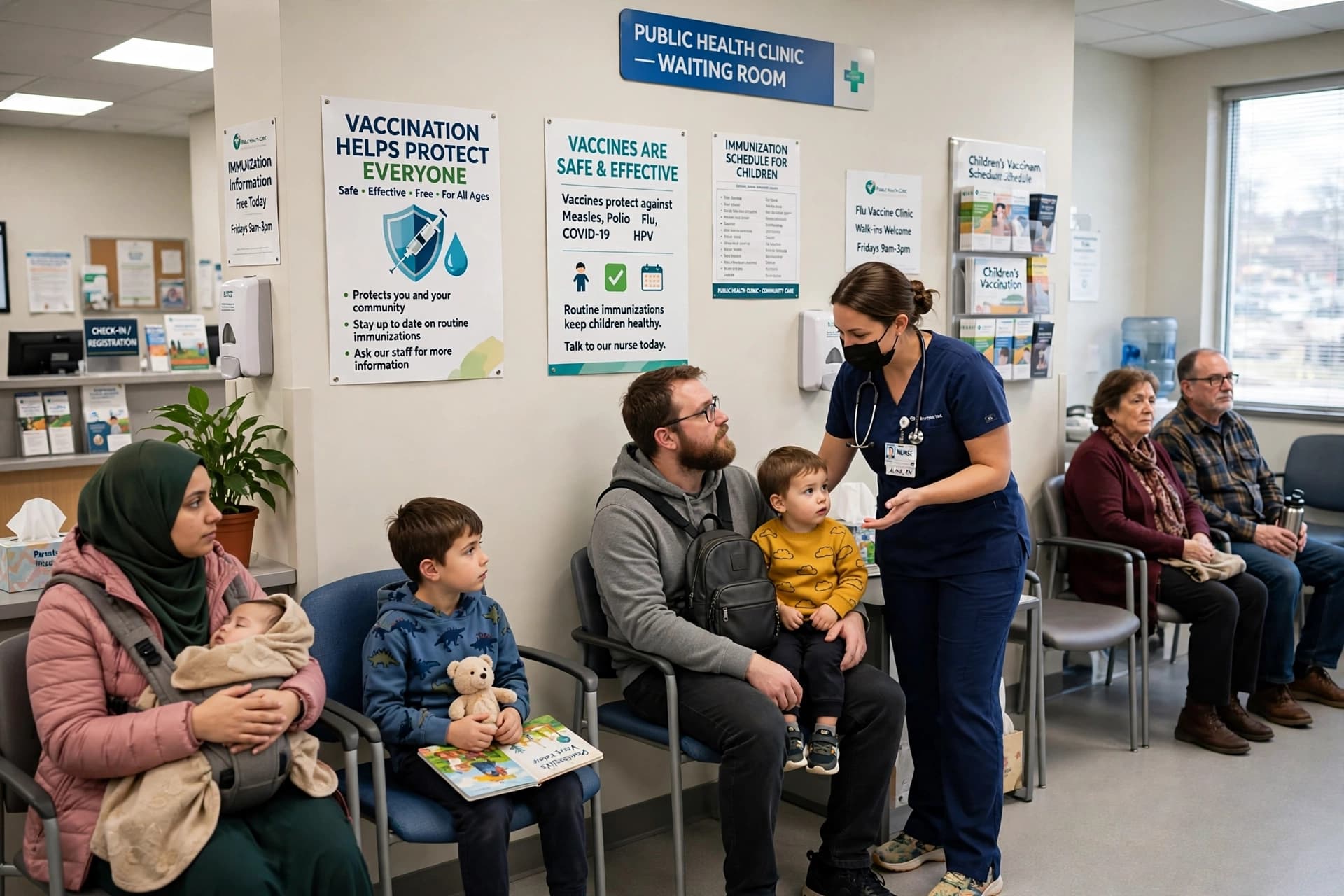
There is a particular kind of silence that becomes louder the longer it lasts. In the midst of a measles outbreak that has surpassed four thousand cases and doubled last year's death toll, the voices that usually guide a nation through a public health crisis—the calm, authoritative reassurances from federal officials, the clear explanations of why vaccination matters—have been notably absent. Money has flowed. Support has been deployed. But the message, infectious disease veterans say, has not.
The numbers are stark. The United States has recorded more than 4,000 measles cases this year, with the death toll appearing to have already doubled last year's figure . Forty-two outbreaks have been reported, and local health departments describe themselves as overwhelmed by the sheer scale of transmission. "There's so much measles out there that the chances of it popping up in different communities is really high," said Adriane Casalotti of the National Association of County and City Health Officials . The Centers for Disease Control and Prevention has responded with roughly $100 million in additional funds to state, local, and tribal health departments, directed toward vaccination, prevention, and detection .
But funding, while necessary, is not sufficient. What has not flowed as readily from federal authorities is a sustained, vocal endorsement of measles vaccination and a clear explanation of why it matters now. CDC Director Erica Schwartz, two months into the job, has said little publicly about the outbreak beyond a September interview in which she called measles "the most contagious disease" and reiterated that the MMR vaccine is "safe and effective" . Jeanne Marrazzo, CEO of the Infectious Diseases Society of America and former director of the National Institute of Allergy and Infectious Diseases, argued that a national message could be crafted to acknowledge vaccine hesitancy while still making the case for vaccination. "We just haven't really seen that because, again, I don't think we've seen a full-throated endorsement or explanation of why the vaccine right now is so critical," she said .
The complications run deeper than reticence. Federal health leaders, including HHS Secretary Robert F. Kennedy Jr., questioned whether the measles deaths reported in Pennsylvania—six in total—had actually occurred, creating friction with state officials who had adjudicated those deaths . The CDC's official tally does not currently reflect Pennsylvania's deaths because the agency switched to a different database for verifying measles fatalities, one that does not include real-time case information from local jurisdictions . Demetre Daskalakis, former director of the CDC's immunization center, described the second-guessing as "atypical" and said the conflicting messages have hindered the response .
For local health departments, the inconsistency creates a practical problem. Casalotti noted that conflicting messages from different levels of the healthcare system complicate the work of local officials and leave the public uncertain about what to do . In a measles outbreak, where herd immunity thresholds are high and the virus spreads with extraordinary efficiency through unvaccinated populations, clarity is not a luxury. It is a tool of containment. When parents hear mixed signals about vaccine safety or about whether deaths are being counted accurately, the space for hesitation widens.
The veterans who spoke to The Hill were careful not to frame their criticism as partisan. Their concern is professional, rooted in decades of experience with outbreaks and the knowledge that public health messaging works best when it is consistent, calm, and unambiguous. Marrazzo's suggestion that a national message could "encompass a more broad kind of acceptance of people's vaccine hesitancy" is not a call for confrontation but for understanding—an acknowledgment that persuasion requires listening as well as speaking . Daskalakis's sharper words reflect frustration accumulated over a career spent in agencies now navigating political crosscurrents.
The measles outbreak will not resolve on its own. It will recede when enough people are immune, and that requires vaccination, which requires trust, which requires a message that the public can hear and believe. The question is whether that message will come from the top, or whether local health departments will continue to carry the weight alone.
AI Image Disclaimer: This article includes AI-generated imagery intended solely for illustrative purposes.
Sources: The Hill, UA.News
Published by Banx Network. This article is part of the Banx decentralized media programme, powered by the BXE token on the XRP Ledger.