
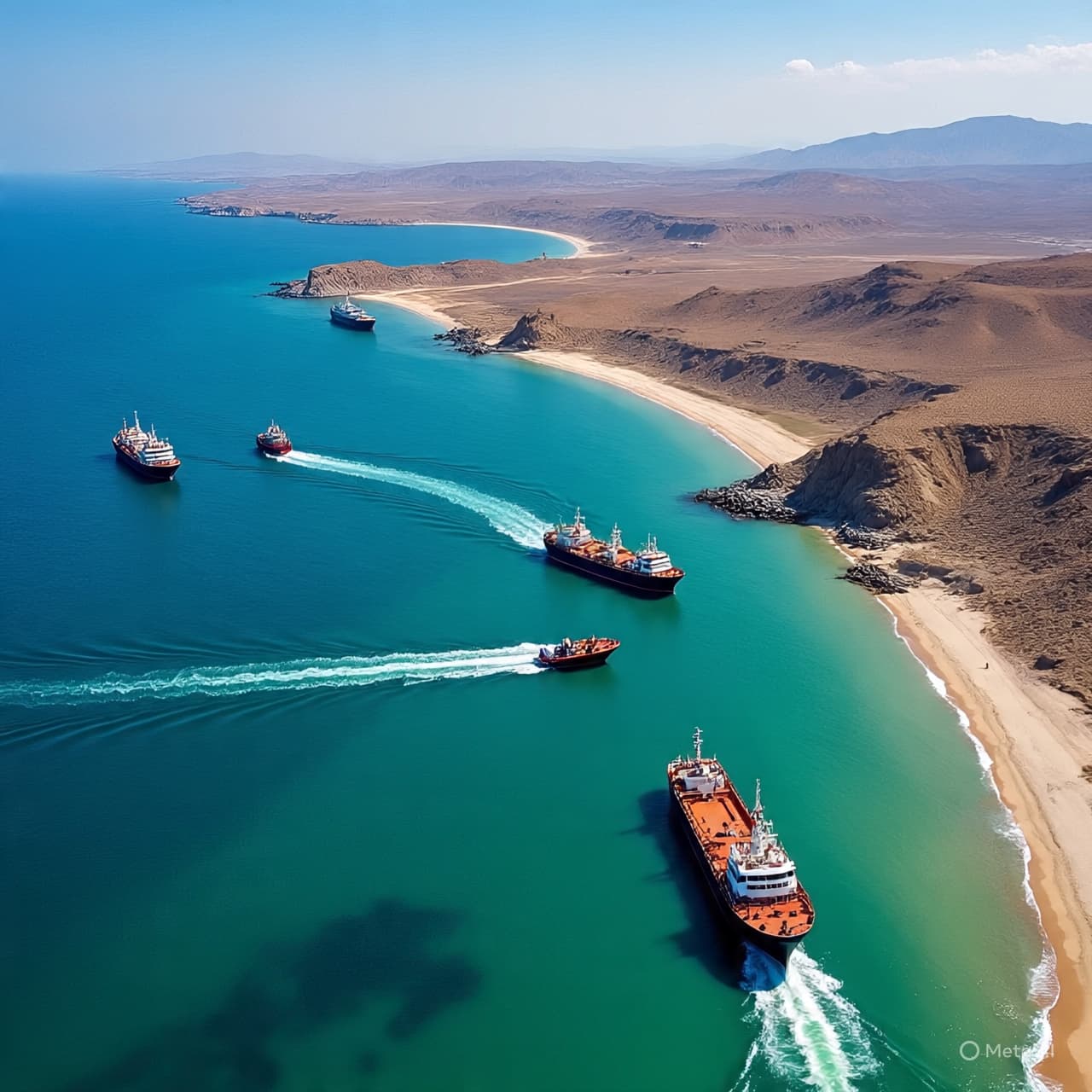
Key Highlights
- Strategic Importance:The Strait of Hormuz is crucial for global oil supply, with about 20% passing through.
- Iran's Position: Tehran is asserting boundaries in diplomatic discussions, complicating regional stability.
- Shipping Traffic:Recent caution among shipping companies reflects the geopolitical climate.
The Strait of Hormuz, a narrow waterway connecting the Persian Gulf to the Gulf of Oman, serves as a critical artery for global commerce, particularly in oil transportation. Approximately one-fifth of the world's oil supply traverses this strait, making it one of the most strategically significant maritime passages. However, its importance extends beyond mere economics; it is a focal point of geopolitical tension, particularly between Iran and the United States.
In recent months, Iran has adopted a more cautious diplomatic stance, signaling its unwillingness to compromise on issues of sovereignty and regional influence. Iranian officials have made it clear that while they are open to discussions, certain red lines will not be crossed. This approach has introduced a new layer of complexity to the already fraught dynamics in the region, as the strait remains a symbol of broader geopolitical struggles.
The current climate has led to a noticeable reduction in shipping traffic through the strait. Although there has been no formal closure, the atmosphere of uncertainty has prompted shipping companies to exercise caution. Each decision to navigate the strait is now a calculated risk, balancing operational needs against the potential for geopolitical fallout. This careful navigation reflects the dual reality of the strait's significance as both a physical passage and a political battleground.
For the United States and its allies, ensuring the free flow of commerce through the Strait of Hormuz has historically involved a combination of diplomatic engagement and military presence. However, the current preference for dialogue suggests a shift in strategy, recognizing that sustainable stability is more likely to arise from negotiation rather than confrontation. This delicate balance, however, remains challenging, as the alignment between diplomatic and military approaches is not yet fully realized.
The notion of a ceasefire, often discussed in relation to ongoing tensions, does not address the underlying issues that contribute to instability in the region. While direct hostilities may have subsided, the structural dynamics that foster uncertainty persist. Iran's insistence on clearly defined limits to its cooperation underscores the reality that any lasting resolution will require more than temporary agreements.
The implications of the situation extend beyond the immediate actors involved. Global energy markets remain sensitive to developments in the Strait of Hormuz, with countries reliant on Gulf oil flows closely monitoring the situation. Even minor fluctuations in activity within the strait can have significant repercussions for global supply chains, reinforcing its role as a critical nexus between local events and international outcomes.
Despite the tensions, there is a concerted effort among global stakeholders to avoid escalation. Governments have issued statements emphasizing restraint and the importance of maintaining open channels for dialogue. While these efforts do not eliminate the underlying tensions, they contribute to an environment where diplomatic options remain viable.
As the situation continues to evolve, the Strait of Hormuz remains a vital passage, with its waters carrying not only ships but also the weight of geopolitical significance. Observers note that the dynamics are fluid, and the strait's role as both a physical corridor and a political symbol ensures that it will remain a focal point of international attention in the foreseeable future.
Published by Banx Network. This article is part of the Banx decentralized media programme, powered by the BXE token on the XRP Ledger.



