The Sun, our closest star, is a volatile engine of energy, constantly erupting with flares and coronal mass ejections that ripple through the solar system. For decades, observing these events was like trying to understand a storm by looking at it through a single keyhole. But recently, a coordinated fleet of seventeen spacecraft changed the perspective entirely. By viewing a single solar eruption from multiple angles simultaneously, scientists uncovered a surprising truth about the structure and behavior of these cosmic explosions, revealing a complexity that had previously been hidden in plain sight.
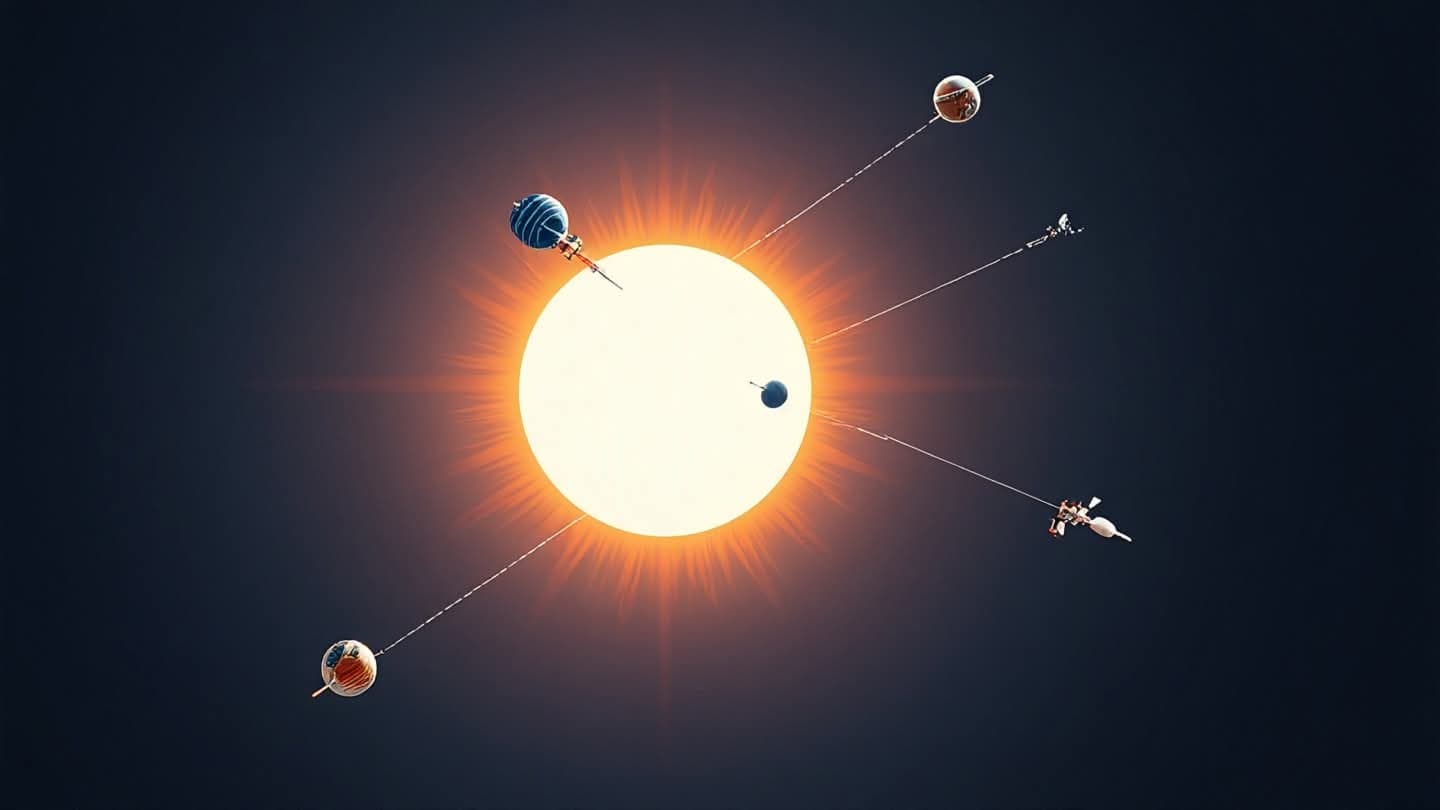
The event in question was a massive coronal mass ejection (CME) that occurred in early 2026. Unlike previous observations, which relied on data from one or two satellites, this eruption was tracked by a diverse array of missions, including NASA’s Solar Dynamics Observatory, the European Space Agency’s Solar Orbiter, and several others positioned at different points in space. This multi-point observation allowed researchers to construct a three-dimensional model of the eruption in real-time, offering an unprecedented view of its evolution.
What they found was unexpected. The CME did not expand uniformly as a simple bubble, as many models had predicted. Instead, it exhibited a complex, twisted structure, resembling a knotted rope unraveling in space. This "magnetic avalanche" suggested that the eruption was driven by a cascading failure of magnetic fields, rather than a single explosive release. The twist in the structure had significant implications for how the ejection would interact with Earth’s magnetic field.
The surprise lay in the predictability of the impact. Traditional models often struggle to forecast the severity of geomagnetic storms because they lack detailed information about the internal structure of CMEs. With the 3D data from the 17-spacecraft fleet, scientists could see exactly how the magnetic fields were oriented. This allowed for a much more accurate prediction of the storm’s intensity, providing valuable lead time for protecting satellites and power grids.
The collaboration behind this achievement was as impressive as the science. It involved agencies from around the world, sharing data in real-time to create a cohesive picture. This level of international cooperation is essential for understanding space weather, which affects all nations. The success of the fleet demonstrates the power of distributed sensing, where many small eyes see more than one large one.
For the scientists involved, the discovery was a vindication of long-held theories about magnetic reconnection. The "avalanche" model suggests that solar eruptions are more chaotic and interconnected than previously thought. This insight helps refine our understanding of stellar physics, not just for our Sun but for other stars in the galaxy. It opens new questions about how magnetic energy is stored and released in plasma environments.
The implications for future space exploration are profound. As humans plan missions to Mars and beyond, understanding space weather becomes critical for astronaut safety. The ability to predict the structure and impact of solar eruptions with greater accuracy will be vital for designing shielding and planning launch windows. The fleet’s discovery is a step toward making deep space travel safer and more predictable.
The coordinated effort of seventeen spacecraft has transformed our view of solar eruptions, revealing a hidden complexity that improves our ability to predict space weather. This achievement highlights the importance of multi-angle observation and international collaboration in unlocking the secrets of our star. As we continue to monitor the Sun, we do so with clearer eyes and a deeper understanding.
AI Image Disclaimer: Visuals accompanying this article are AI-generated illustrations designed to complement the narrative and do not depict real-time events.
Sources: Space.com NASA Goddard Space Flight Center ESA Science Daily Live Science
Published by Banx Network. This article is part of the Banx decentralized media programme, powered by the BXE token on the XRP Ledger.