
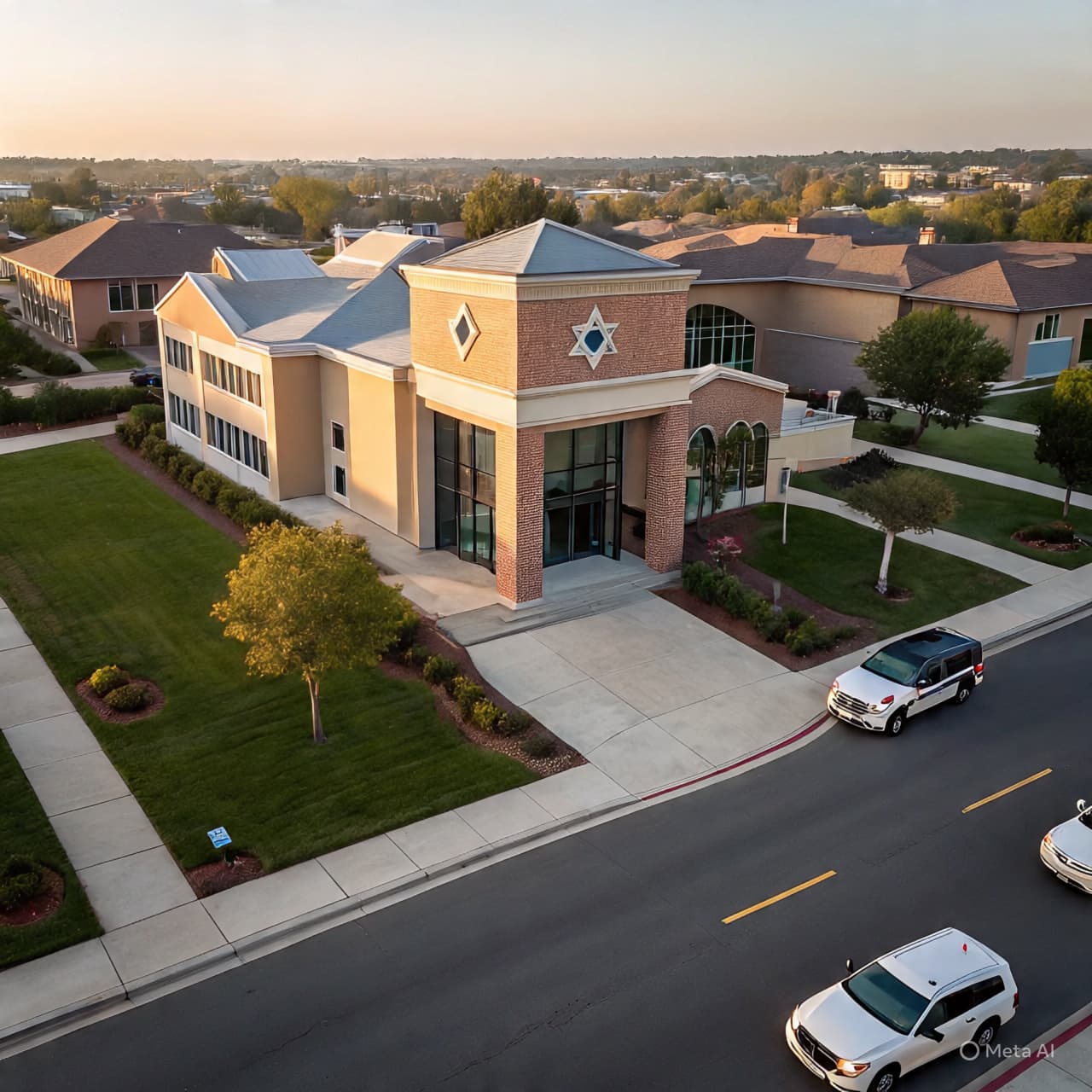
Morning in the suburbs often unfolds gently. Streets wake slowly beneath pale light, school buses appear at corners, and the quiet rhythm of community life begins again. In places of worship, doors open as they have for decades—spaces built for reflection, prayer, and the quiet weaving together of lives that share a neighborhood.
In West Bloomfield Township, Michigan, that rhythm was interrupted when a man drove into a synagogue complex, an act that turned a place of calm into the center of a tense and frightening moment. Security personnel confronted the attacker quickly, and the incident ended before a greater tragedy could unfold. Yet the shock of the event lingered across the community, raising difficult questions about how distant conflicts and personal grief can sometimes collide in unexpected places.
Authorities later identified the attacker as a 41-year-old man who had been living in the Detroit area for several years. Investigators say he attempted to force his way into the synagogue after crashing a vehicle into the building. Security staff responded rapidly, and the confrontation ended with the attacker dead at the scene. One guard was injured during the incident, and emergency responders were called as smoke from the burning vehicle spread across the property.
Inside the complex that day were children and staff connected to the synagogue’s school programs. Officials said roughly 140 children were present in classrooms and childcare spaces. They were evacuated safely as security protocols moved quickly into effect, the building’s safety measures quietly doing the work they had been designed to do long before anyone expected they might be needed.
As investigators pieced together the background of the attacker, another layer of the story began to emerge from far beyond Michigan. Officials in Lebanon said the man had recently lost several relatives in an Israeli airstrike that struck a home in the town of Mashgharah. According to those officials, the victims included two of his brothers as well as a niece and nephew.
The strike occurred during a period of heightened military tension between Israel and armed groups operating in Lebanon. Airstrikes and cross-border attacks had already become part of a broader regional confrontation, one that has stretched across months and drawn in multiple actors. For families living in the region, the conflict has brought sudden losses that ripple outward through communities and across continents.
Investigators in the United States are examining whether the deaths of the man’s relatives played a role in the attack in Michigan. Officials caution that determining motive can take time, and federal authorities continue to analyze evidence and communications connected to the case. Still, the revelation has added a complicated dimension to the story, suggesting how personal grief tied to distant violence can sometimes become entangled with events far from the original battlefield.
For the Jewish community in West Bloomfield and the wider Detroit area, the incident was a reminder of the vulnerability that religious institutions sometimes face. Synagogues, churches, mosques, and temples across the United States have spent years strengthening security measures while trying to preserve their openness as spaces meant for gathering and reflection.
Community leaders emphasized that the quick actions of trained security staff prevented a potentially more devastating outcome. The evacuation of children and staff unfolded rapidly, and authorities later praised the preparedness that had been put in place long before the attack occurred.
Yet even after the immediate danger passed, the echoes of the moment remained. In many ways, the story reflects a modern reality in which events in one part of the world rarely remain contained there. News, grief, anger, and fear can travel across borders with remarkable speed, carried through family ties, digital networks, and the complicated emotions that bind people to places far from where they live.
The synagogue in West Bloomfield has since returned to its ordinary routines—classes resuming, families gathering again, and the quiet rituals of community continuing. But the incident stands as a reminder that in a connected world, the distance between conflict and calm can sometimes be thinner than it appears.
AI Image Disclaimer
Illustrations are AI-generated and intended as visual interpretations rather than real photographs.
Sources
Associated Press
Reuters
BBC News
PBS NewsHour
The Washington Post
Published by Banx Network. This article is part of the Banx decentralized media programme, powered by the BXE token on the XRP Ledger.

.jpg&w=3840&q=75 "US Declares Drought Disaster for Parts of Puerto Rico as Dry Conditions Persist")