
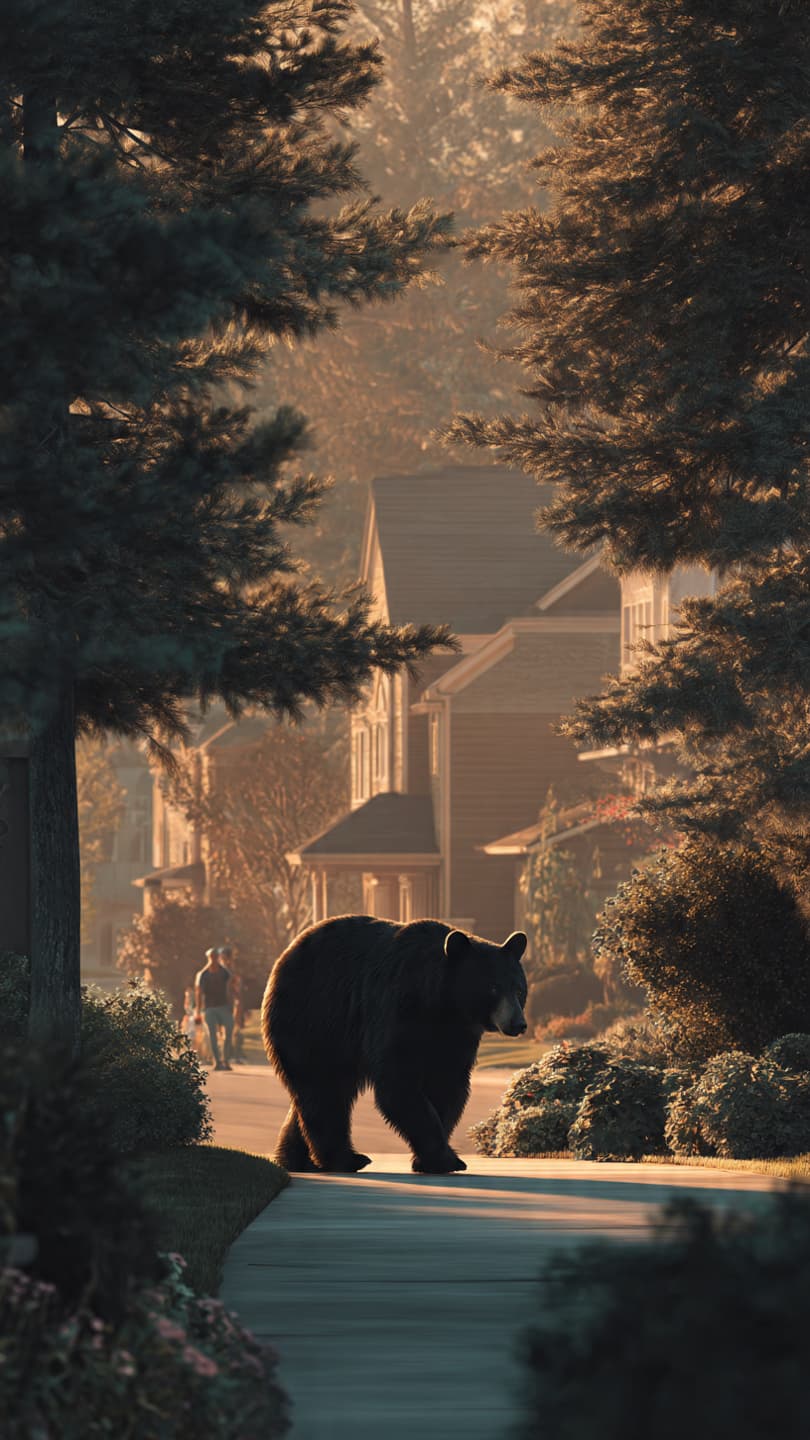
There are moments when the boundary between city and wilderness softens—not dramatically, but quietly, as if nature briefly forgets where it is expected to stop. In a place like Hansen Dam Recreation Area, that boundary can feel especially thin.
This week, it became visible.
A 275-pound black bear wandered into the park and nearby neighborhoods in the San Fernando Valley, drawing crowds, prompting evacuations, and briefly turning an ordinary weekend into something closer to a spectacle. The animal moved through open spaces and residential backyards, at times climbing trees and pausing near onlookers who gathered—some cautiously, others curiously.
The encounter unfolded in stages rather than a single moment.
Authorities, including the California Department of Fish and Wildlife, tracked the bear as it moved through the area. At one point, schools were placed on lockdown as a precaution, reflecting how quickly a wildlife sighting can ripple through an urban setting.
Eventually, the pursuit narrowed.
Wildlife officers used a tranquilizer dart, and the bear—after running from rangers—succumbed to the sedative in an almost surreal position: draped across a wall, suspended between two sides of a backyard boundary.
From urgency, the scene shifted to stillness.
Officials examined the animal, confirming it was healthy, tagged it, and fitted it with a tracking collar before relocating it back to the nearby Angeles National Forest—its more natural range.
In the end, no injuries were reported, and authorities described the incident as a “no harm, no foul” situation.
A Wider Pattern While the moment felt unusual, it is not entirely isolated.
As urban areas expand into natural habitats, encounters like this become more frequent. Bears, drawn by food sources or simply following instinctive routes, sometimes descend from surrounding forests into neighborhoods where the landscape shifts from wild to domestic in only a few miles.
At Hansen Dam, a space designed both for infrastructure and recreation, that overlap becomes especially visible—a place where hiking trails, picnic grounds, and wildlife corridors quietly intersect.
AI Image Disclaimer Images are AI-generated illustrations and not real photographs.
Source Check The topic is supported by credible coverage and analysis from:
Los Angeles Times ABC7 Los Angeles NBC Los Angeles
Published by Banx Network. This article is part of the Banx decentralized media programme, powered by the BXE token on the XRP Ledger.



