Plastic has become an indelible mark of the modern age, a material of convenience that has outlasted its utility to become a persistent shadow on the landscape. For decades, humanity has searched for a way to undo this accumulation, looking to nature for clues on how to break down what we have built. Now, scientists have discovered a new type of enzyme in bacteria capable of degrading plastic, offering a glimmer of hope in the fight against pollution. This discovery invites reflection on the resilience of life and the potential for biological solutions to human-made problems.
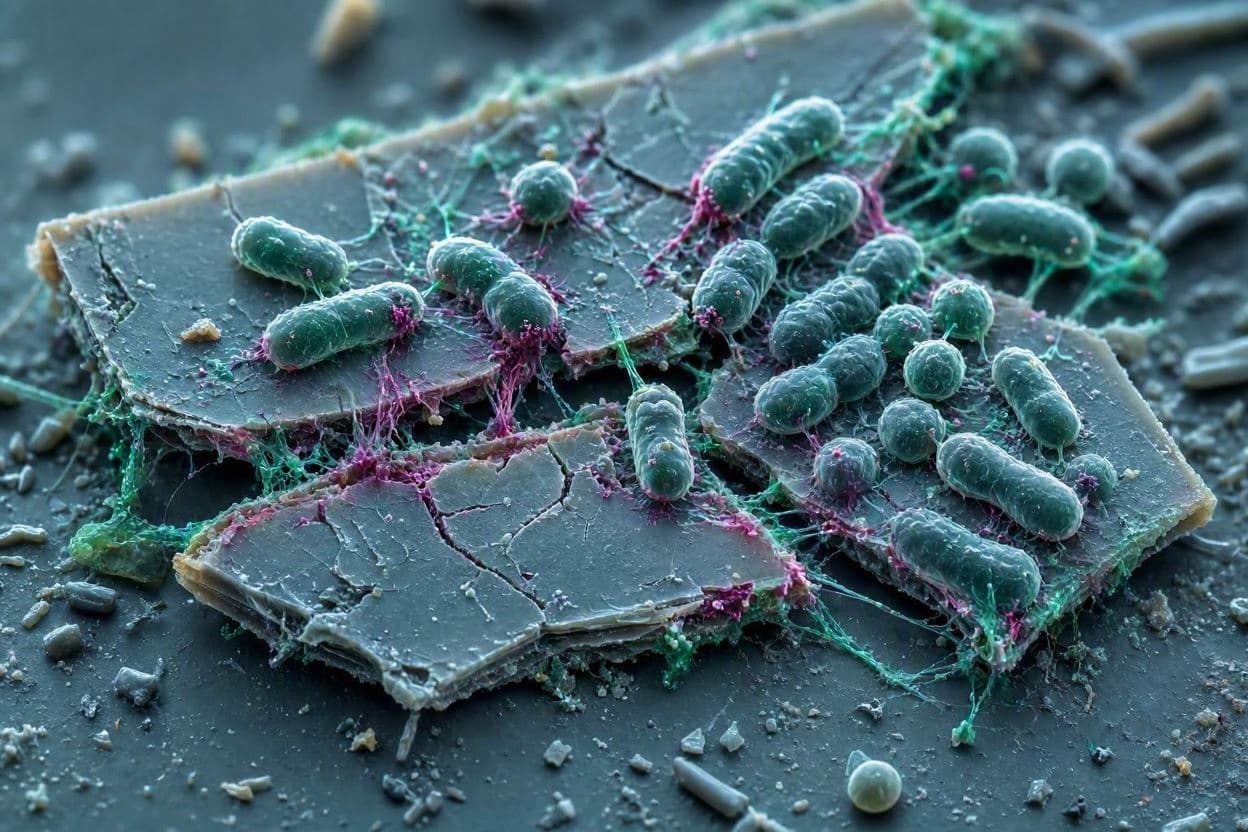
The enzyme was identified in a specific strain of bacteria found in environments rich in plastic waste. Unlike previous discoveries, this enzyme shows a unique ability to target and break down complex polymer chains more efficiently. It acts as a molecular scissors, cutting the long chains of plastic into smaller, manageable units that can be further processed or absorbed by microorganisms. This specificity is crucial, as it suggests a targeted approach rather than a broad, indiscriminate breakdown.
Researchers emphasize that while the discovery is promising, it is not an immediate panacea. The enzyme works best under specific laboratory conditions, and scaling it up for industrial application presents significant challenges. Factors such as temperature, pH levels, and the presence of other contaminants can affect its efficiency. Therefore, further study is needed to optimize its performance in real-world settings.
The environmental implications are profound. If successfully deployed, this enzyme could help reduce the volume of plastic waste in landfills and oceans. It offers a pathway to circular economy models, where plastic is not just discarded but broken down and reused. This shift from linear consumption to cyclical reuse is essential for sustainable development and environmental health.
However, the introduction of biological agents into waste management requires careful consideration. Ecologists warn about the potential unintended consequences of releasing engineered enzymes into the environment. Rigorous safety assessments are necessary to ensure that the enzyme does not disrupt existing ecosystems or degrade useful plastic materials inadvertently. Balance is key to responsible innovation.
The discovery also highlights the importance of biodiversity. Microorganisms, often overlooked, hold vast untapped potential for solving global challenges. By studying these tiny life forms, scientists can uncover mechanisms that have evolved over millions of years to handle complex organic materials. It is a reminder that nature often holds the keys to our most pressing problems.
Public interest in biodegradable solutions is growing, driven by increasing awareness of plastic pollution. This enzyme adds to the toolkit of strategies available to communities and industries. It complements efforts to reduce plastic use and improve recycling infrastructure, offering a multi-faceted approach to waste management. Collaboration between scientists, policymakers, and the public is essential for success.
As research continues, the focus remains on understanding the enzyme’s full capabilities and limitations. Each step forward brings us closer to a future where plastic waste is no longer a burden but a resource. The journey is long, but the direction is clear, guided by the quiet power of microscopic life.
A newly discovered enzyme in bacteria shows promise for degrading plastic, offering a potential biological solution to pollution. While further research is needed for practical application, the finding highlights the role of microbiology in addressing environmental challenges and advancing sustainable waste management.
AI Image Disclaimer: The visual representations accompanying this article are AI-generated interpretations designed to symbolize the interaction between biology and synthetic materials, using abstract imagery of molecular structures and natural elements.
Sources: Nature Biotechnology Science Daily Environmental Science Journals
Published by Banx Network. This article is part of the Banx decentralized media programme, powered by the BXE token on the XRP Ledger.