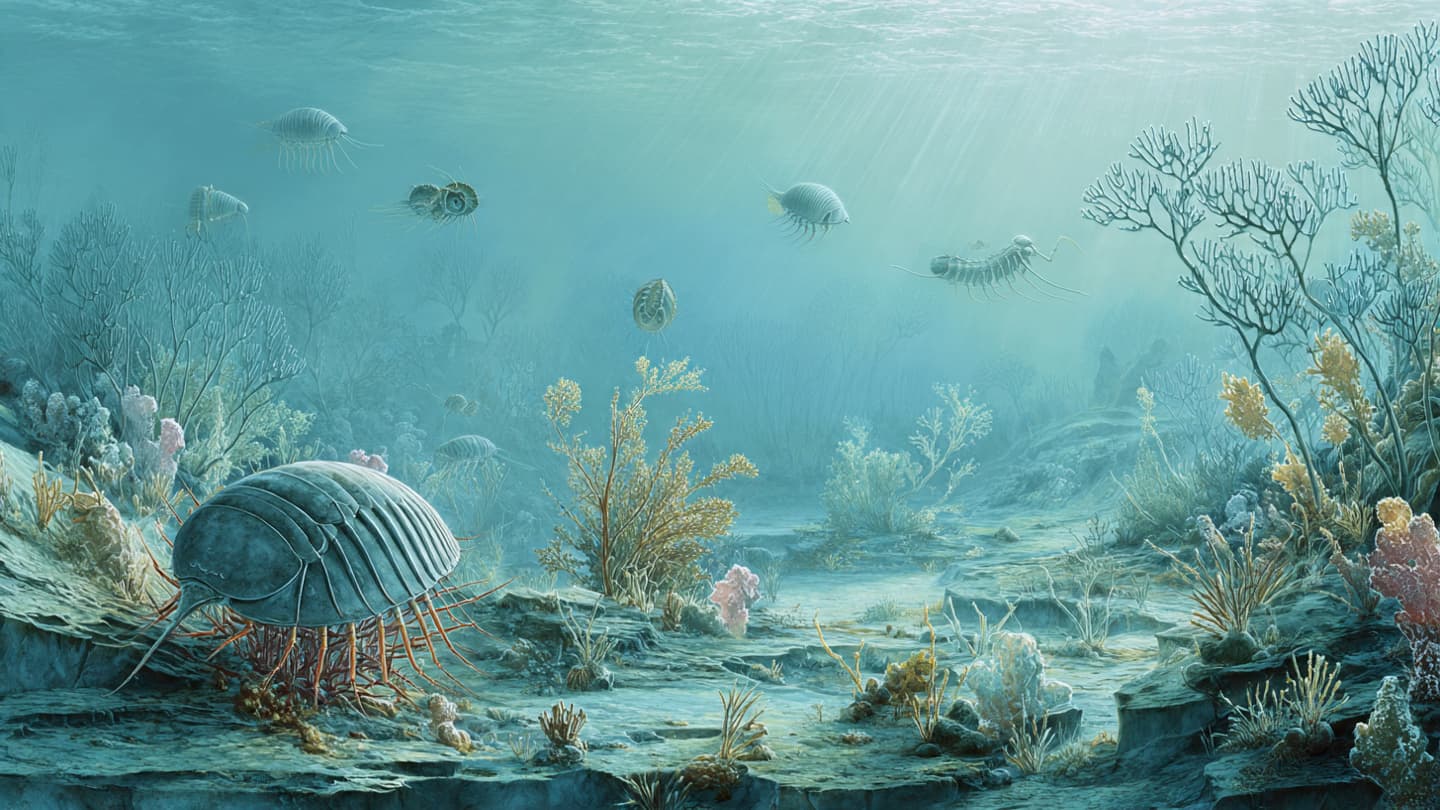
The history of life is often compared to a vast library, with many of its earliest chapters missing or damaged by time. Occasionally, a fossil discovery acts like a recovered page, offering scientists a clearer view of ancient worlds. New research has now provided evidence that bryozoans—small colonial animals still found in oceans today—may have existed far earlier than previously confirmed.
Bryozoans are tiny aquatic creatures that live in interconnected colonies, forming intricate structures on rocks, reefs, and seabeds. Despite their abundance in modern marine ecosystems, their early evolutionary history has remained uncertain for decades.
The mystery stems from the fossil record. While genetic studies suggested that bryozoans likely evolved hundreds of millions of years ago, definitive fossil evidence from the Cambrian Period remained elusive. This gap created a long-standing debate among paleontologists regarding when the group first appeared.
Researchers studying exceptionally preserved fossils from Cambrian-aged deposits have now identified structures that closely resemble ancient bryozoan colonies. The fossils date back roughly 500 million years, placing them near the beginning of a major evolutionary expansion often referred to as the Cambrian Explosion.
Detailed microscopic analysis revealed repeating skeletal patterns consistent with colonial growth. Scientists argue that these features distinguish the fossils from other marine organisms and strengthen the case that bryozoans were already present during this formative period of animal evolution.
The finding helps reconcile differences between fossil evidence and molecular clock estimates. Genetic studies had long indicated an earlier origin for bryozoans than the fossil record appeared to support. The new fossils bring both lines of evidence into closer agreement.
Beyond solving a specific evolutionary puzzle, the discovery offers insight into how marine ecosystems developed during Earth's distant past. Colonial organisms played important ecological roles by creating habitat structures and contributing to increasingly complex underwater environments.
The research also highlights the importance of exceptional fossil preservation. Many delicate organisms leave little trace after death, meaning critical evolutionary evidence can remain hidden for hundreds of millions of years before being recognized.
Scientists caution that further study will continue, but the fossils represent one of the strongest indications yet that bryozoans were indeed part of the early diversification of animal life. In doing so, they help fill another gap in the long story of life on Earth.
AI Image Disclaimer: Images associated with this article are AI-generated representations designed to visualize scientific concepts and prehistoric environments.
Sources Verified:
Nature Proceedings of the Royal Society B Live Science New Scientist Science News
Published by Banx Network. This article is part of the Banx decentralized media programme, powered by the BXE token on the XRP Ledger.