There is a certain rhythm to life in the Philippine archipelago: the sun, the water, and the storms that carve memory into the coastline. Every year, the Pacific tests the country with meteorological precision. Every year, Filipinos become students of the sky once again.
Now it is happening again.
As typhoon Fung-wong approaches, more than one million people across vulnerable provinces are being evacuated. It is not panic. It is choreography. The Philippines knows how to read the early signs — the pressure drop, the path modeling, the silent tone of the government bulletins. Evacuation, here, is not a dramatic act. It is a discipline. It is a habit of survival.
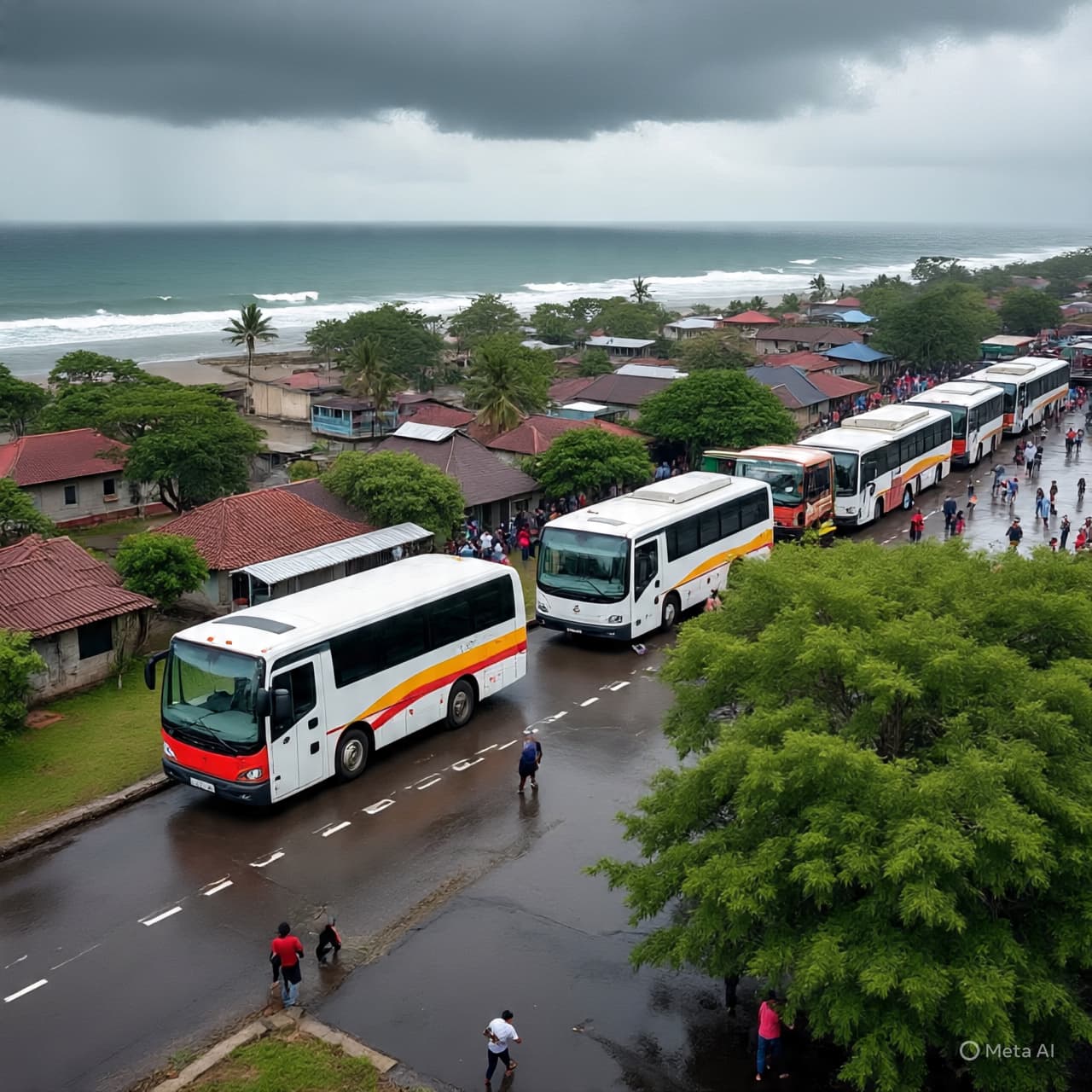
Officials are not waiting for impact photos. They are moving buses. They are opening shelters. They are preparing for potential storm surge — which is always the real violence of these Pacific cyclones.
And yet, the world rarely pauses to consider the emotional weight of these movements. A million people leaving homes, farms, small stores, unfinished laundry — all because a weather system has decided to write its own geometry across the Philippine Sea.
Storms in this part of the world are not just meteorological events. They are generational data. They shape policy. They shape architecture. They shape culture.
But the most striking aspect of Fung-wong is not the wind speed, or the rainfall projections, or the satellite spirals. It is the professionalism of the country’s disaster reflex — the idea that pre-emptive evacuation is not an admission of fear, but the expression of respect for nature’s scale.
When the Pacific breathes deeply, a million people stand up and go.
Published by Banx Network. This article is part of the Banx decentralized media programme, powered by the BXE token on the XRP Ledger.