The human bloodstream is rarely still. Cells drift through branching vessels in constant circulation, each performing its quiet task in the maintenance of life. Among them move the white blood cells—watchful sentinels of the immune system—ready to recognize and respond to signs of disease.
In recent years, scientists have learned how to reshape some of these cells into powerful therapeutic tools. The approach, known as CAR T cell therapy, involves modifying a patient’s own T cells so that they can recognize and destroy specific targets, often cancerous cells. Yet the process, for all its promise, has remained complex: immune cells must be removed from the body, genetically altered in specialized laboratories, and then infused back into the patient.
Now researchers are exploring a quieter, more direct possibility—one that unfolds entirely within the body itself.
A new study describes how nanoparticles can deliver genetic instructions directly to T cells circulating in the bloodstream, prompting them to transform into CAR T cells without ever leaving the patient. Instead of laboratory manipulation, the reprogramming occurs in vivo, guided by microscopic carriers designed to seek out immune cells and deliver the necessary molecular blueprint.
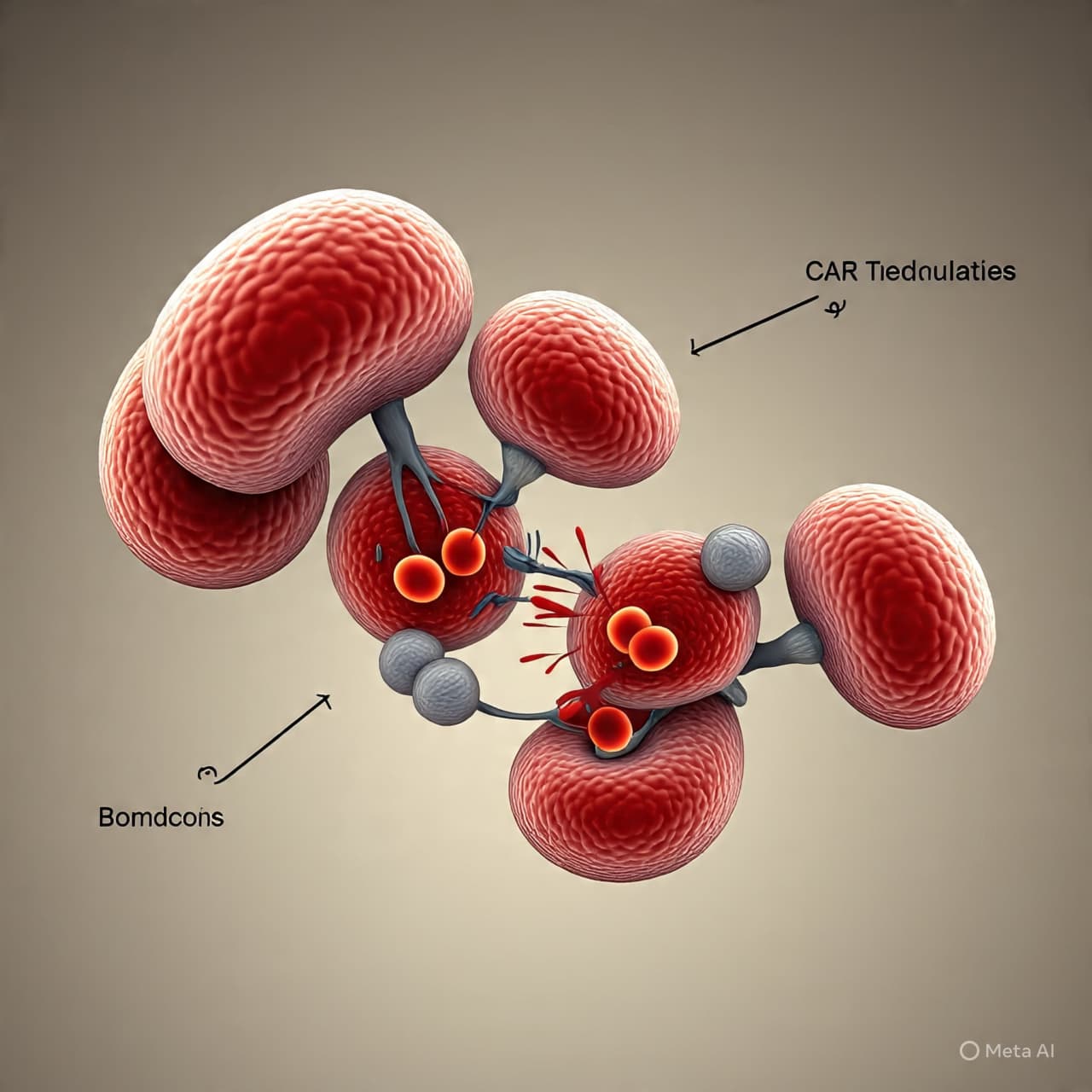
The nanoparticles act as tiny couriers. Constructed to recognize T cells, they bind to these immune cells and release strands of genetic material that encode a chimeric antigen receptor, or CAR. Once inside the cell, these instructions guide the production of a receptor capable of recognizing specific molecular targets.
In the study, researchers focused on B cells, a class of immune cells that can sometimes become harmful in autoimmune diseases or certain blood cancers. By directing CAR T cells to recognize markers on B cells, the modified T cells gained the ability to locate and eliminate them.
What distinguishes this method is not only its therapeutic aim but also its delivery system. Nanoparticles circulate through the bloodstream, interacting with immune cells as they pass. When they encounter T cells, they transfer the genetic payload that initiates the transformation. Over time, these newly programmed cells begin to perform the same functions as laboratory-engineered CAR T cells.
Early experimental results in animal models suggest that the approach can successfully generate CAR T cells inside the body and lead to the depletion of targeted B cells. The findings hint at a potential future in which complex cellular therapies could be administered more like conventional medicines—delivered through injections rather than laboratory manufacturing processes.
Researchers caution that further study will be necessary before such treatments reach clinical use. Questions remain about efficiency, long-term safety, and how precisely the nanoparticles can control which cells are reprogrammed. Yet the concept marks a shift in how cellular therapies might one day be produced.
For decades, medicine has relied on extracting cells from the body to manipulate them in controlled environments. The new approach suggests another possibility: that the body itself could become the laboratory.
The study reports that targeted nanoparticles can deliver genetic instructions directly to T cells in vivo, enabling the generation of CAR T cells that eliminate B cells. The findings highlight a potential pathway for simplifying cellular immunotherapies in the future.
AI Image Disclaimer
Visuals are AI-generated and serve as conceptual representations of the described scientific processes.
Source Check
Credible coverage and/or primary reporting exist from: Nature Biotechnology ScienceDaily STAT News Revie MIT Technology Review The Scientist
Published by Banx Network. This article is part of the Banx decentralized media programme, powered by the BXE token on the XRP Ledger.