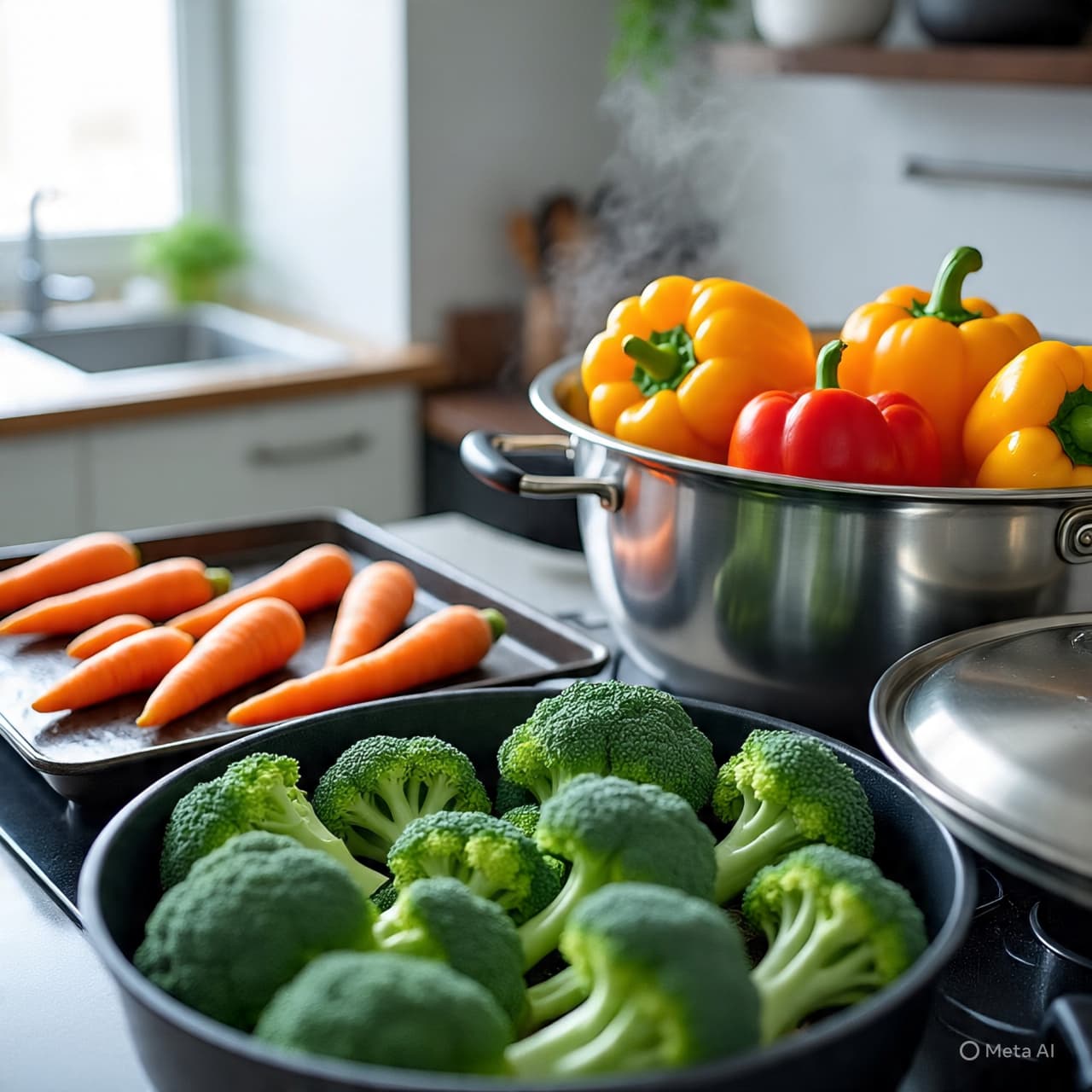
There is a moment in cooking when change becomes visible. The softening of a vegetable, the deepening of color, the quiet release of aroma into the air. It is easy to think of this as transformation for taste alone, a refinement of texture and flavor. Yet beneath that surface, something else is taking place—less apparent, but no less consequential.
Food, in its raw state, carries its nutrients in forms that are not always fully accessible. Cell walls hold structure tightly, compounds remain bound, and digestion becomes the process of unlocking what is already present. Heat, applied with care or intensity, begins to loosen these constraints. It alters structure, breaks barriers, and allows certain nutrients to emerge more readily.
Recent findings in nutrition science suggest that the way food is cooked can significantly influence how much of its nutritional value the body ultimately absorbs. It is not only what we eat, but how we prepare it that shapes what becomes available to us.
Some nutrients respond to heat by becoming more accessible. Lycopene, found in tomatoes, increases in bioavailability when the fruit is cooked, its structure altered in ways that make it easier for the body to absorb. Similarly, cooking can enhance the availability of beta-carotene in carrots and sweet potatoes, gently transforming the compounds into forms more readily processed.
At the same time, heat carries its own cost. Certain vitamins, particularly those that are water-soluble, such as vitamin C and some B vitamins, can diminish with prolonged cooking or exposure to high temperatures. Boiling, in particular, allows nutrients to leach into water, where they may be lost if the liquid is discarded.
The balance, then, is not fixed. Different methods create different outcomes. Steaming often preserves more nutrients than boiling, as it limits direct contact with water. Sautéing and roasting, depending on duration and temperature, can both enhance and reduce nutrient content, reshaping the composition of the food in subtle ways. Even chopping and preparation before cooking can influence how nutrients are retained or released.
There is a quiet complexity in this. Cooking is not simply a process of adding heat, but of negotiating between preservation and transformation. It involves time, temperature, and method, each adjusting the final result in ways that are not always visible.
And yet, despite this complexity, the kitchen remains a place of routine. Meals are prepared not through constant calculation, but through habit, preference, and availability. The science does not replace these rhythms; it sits alongside them, offering a deeper understanding of what is already being done.
In this sense, cooking becomes both practical and interpretive. A familiar act—boiling, steaming, roasting—carries within it a range of outcomes, each shaped by small variations. The difference between a lightly steamed vegetable and one that has simmered too long is not only in texture, but in what remains within it.
Recent research indicates that cooking methods can significantly affect nutrient absorption, with some techniques enhancing the bioavailability of compounds like lycopene and beta-carotene, while others may reduce levels of heat-sensitive vitamins. Experts recommend varied cooking methods to balance nutrient retention and availability.
AI Image Disclaimer
Illustrations were created using AI tools and are not real photographs.
Sources
Harvard T.H. Chan School of Public Health Mayo Clinic National Institutes of Health Journal of Nutrition BBC Science Focus
Published by Banx Network. This article is part of the Banx decentralized media programme, powered by the BXE token on the XRP Ledger.