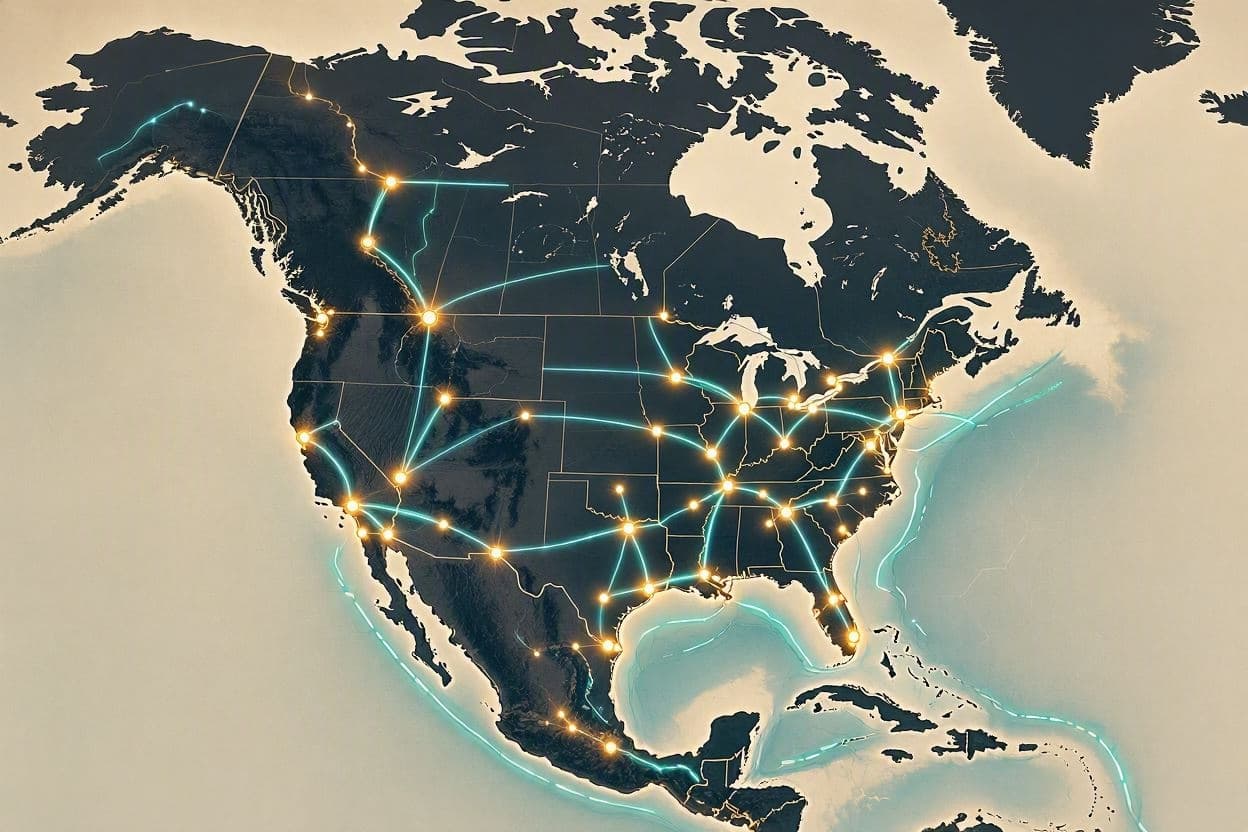
Trade is the lifeblood of nations, a complex network of exchange that binds economies together in mutual reliance. Between the United States and Canada, this connection is particularly deep, with billions of dollars in goods and services crossing the border daily. A recent analysis maps out exactly which regions depend most heavily on this bilateral relationship, revealing a landscape of interdependence that shapes livelihoods and industries. It is a story of shared prosperity, where the fortunes of one nation are closely tied to the other.
The data shows that certain provinces and states are more exposed to trade fluctuations than others. Ontario, for instance, relies heavily on the U.S. market for its automotive and manufacturing sectors, with over 77% of its goods exports heading south. Similarly, Michigan and Ohio in the U.S. depend on Canadian energy and raw materials to fuel their industries. This symbiotic relationship creates a web of economic stability, but also vulnerability when tensions arise.
Tariffs and trade policies can disrupt this delicate balance, causing ripple effects that reach far beyond border towns. For businesses integrated into cross-border supply chains, uncertainty is a significant challenge. A map of trade dependency highlights these hotspots, showing where the impact of policy changes would be most acute. It serves as a tool for policymakers to understand the stakes and to craft strategies that minimize harm.
For workers in these regions, trade is not just an abstract concept but a daily reality. Jobs in manufacturing, logistics, and agriculture are often linked to export markets, making them sensitive to shifts in demand. When trade flows smoothly, communities thrive; when barriers arise, anxiety grows. Understanding who depends most on this trade helps to humanize the statistics, reminding us that behind every number are families and futures.
The energy sector is another critical component of this relationship, with Canada being a major supplier of oil and gas to the U.S. States like Texas and North Dakota benefit from this integration, while Canadian provinces like Alberta rely on access to American markets. Disruptions in this sector can have global implications, affecting energy prices and security.
As geopolitical dynamics evolve, the importance of maintaining open and fair trade channels becomes ever more critical. Both nations have a vested interest in preserving the strength of their economic partnership, recognizing that cooperation yields greater benefits than isolation. Dialogue and negotiation are essential tools in navigating challenges, ensuring that trade remains a bridge rather than a barrier.
Looking ahead, the map of dependency serves as a guide for resilience. By identifying vulnerable sectors, governments and businesses can diversify and adapt, reducing risk while maintaining connectivity. Innovation and collaboration will be key in sustaining this vital relationship, allowing both countries to thrive in a changing global economy.
In the end, the story of U.S.-Canada trade is one of mutual benefit and shared destiny. It reminds us that in an interconnected world, our successes are linked. As we navigate the complexities of modern commerce, let us prioritize partnership and understanding, ensuring that trade continues to serve as a foundation for peace and prosperity.
Note: Visuals for this article are AI-generated representations of trade networks and economic maps, designed to complement the narrative.
Sources: Financial Post, Business Data Lab, Government of Canada, FAO Ontario
Published by Banx Network. This article is part of the Banx decentralized media programme, powered by the BXE token on the XRP Ledger.