The moon has long been a silent witness to human ambition, its cratered face bearing the scars of both natural impacts and our own exploratory ventures. Soon, it will receive another mark, this time from a discarded piece of modern technology. A spent upper stage of a SpaceX Falcon 9 rocket is on a collision course with the lunar surface, scheduled to strike on August 5, 2026. While such events are not uncommon in the age of space exploration, this particular impact offers a rare opportunity for observation, as it may be visible from Earth, turning a piece of space debris into a momentary celestial event.
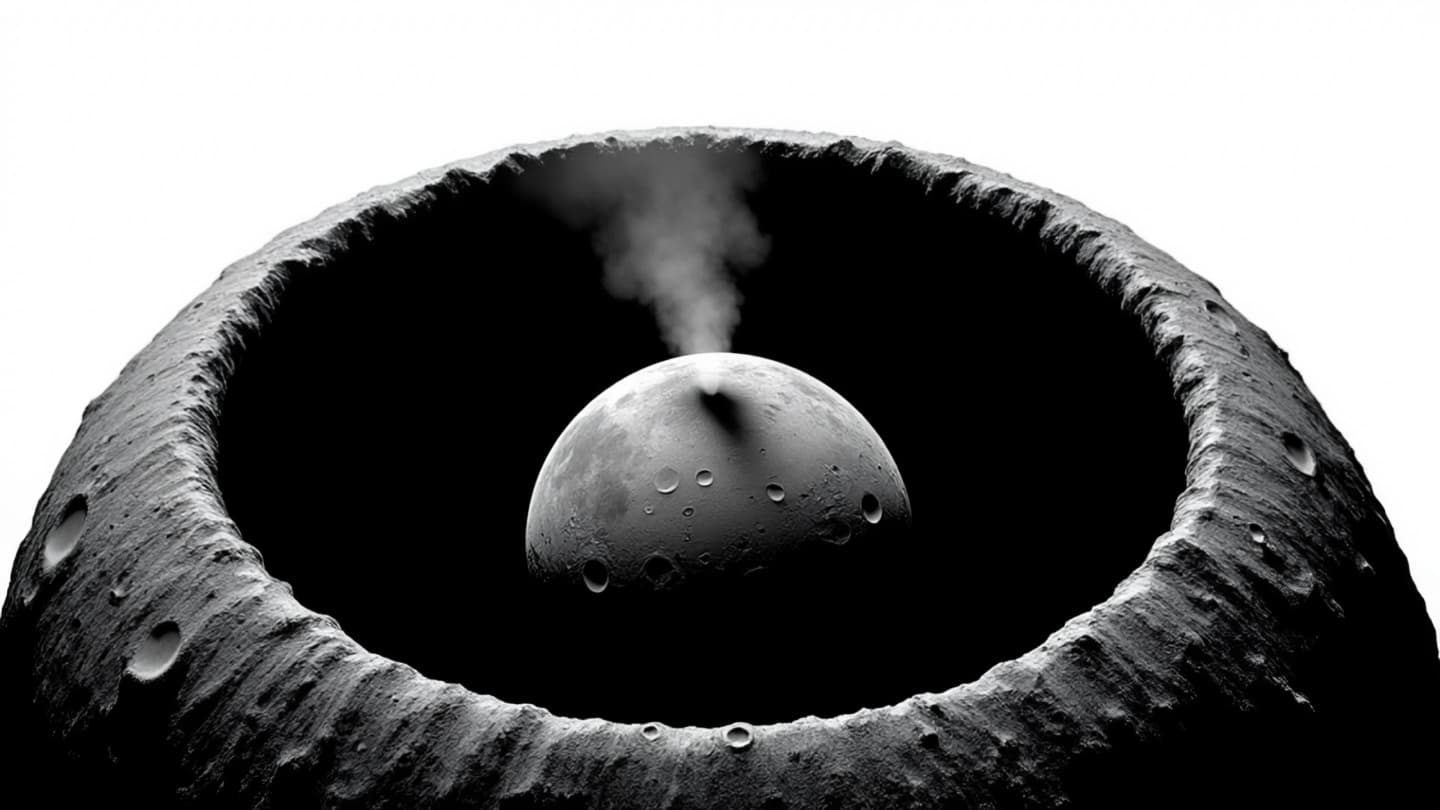
The object in question is the second stage of a Falcon 9 rocket launched in January 2025. After delivering its payload, the stage was left in a trajectory that, influenced by gravitational forces, has gradually spiraled toward the moon. Predictions indicate it will strike near Einstein Crater at a speed of approximately 5,400 miles per hour. The impact will create a new crater and eject a plume of dust and regolith, which, if illuminated by sunlight, could be detected by telescopes on Earth.
For astronomers, this unplanned experiment provides valuable data. By observing the flash and the resulting ejecta, scientists can gain insights into the composition of the lunar subsurface. The kinetic energy of the impact will simulate a small meteorite strike, allowing researchers to study how the moon’s surface responds to such forces. This information contributes to our broader understanding of planetary geology and the history of bombardment in the solar system.
However, the event also highlights the growing issue of space debris. As commercial spaceflight expands, the number of objects left in orbit or on trajectories toward other celestial bodies increases. While this specific impact poses no danger to existing lunar assets, it raises questions about the long-term management of space hardware. Efforts to mitigate debris, such as designing stages for controlled re-entry or disposal in safe orbits, are becoming increasingly important.
Public interest in the crash is high, with amateur astronomers and skywatchers preparing their telescopes. Although the impact itself will not be visible to the naked eye, the resulting dust cloud may be detectable with moderate equipment. Online communities are sharing tips on where and when to look, fostering a sense of shared discovery. This engagement helps demystify space science and encourages a deeper appreciation for the dynamics of our cosmic neighborhood.
SpaceX has acknowledged the trajectory but noted that correcting it would require significant fuel and effort, which is not feasible for a spent stage. The company emphasizes its commitment to sustainability and is working on technologies to reduce the environmental footprint of its launches. This incident serves as a case study in the challenges of balancing innovation with responsibility in the new space economy.
As the date approaches, the moon remains indifferent, its surface ready to absorb another impact. For us, however, it is a reminder of our reach into the cosmos. Each mark we leave, whether intentional or accidental, tells a story of exploration, curiosity, and the unintended consequences of progress.
The impending crash of the SpaceX Falcon 9 upper stage is a minor event in the grand scale of the universe, but it carries significant lessons. It invites us to watch, learn, and reflect on our role as stewards of both Earth and the space beyond.
AI Image Disclaimer: The visuals accompanying this article are AI-generated illustrations designed to represent the themes of space debris and lunar impact.
Sources: Project Pluto, ABC News, USA Today, Space.com
Published by Banx Network. This article is part of the Banx decentralized media programme, powered by the BXE token on the XRP Ledger.