
Key Highlights
- Discovery:Astronomers have found evidence of winds from Sagittarius A, the Milky Way's supermassive black hole.
- Research Tools:The findings were made using the Atacama Large Millimeter/submillimeter Array and NASA’s Chandra X-ray Observatory.
- Significance:This discovery confirms theoretical predictions about black holes and their interactions with surrounding matter.
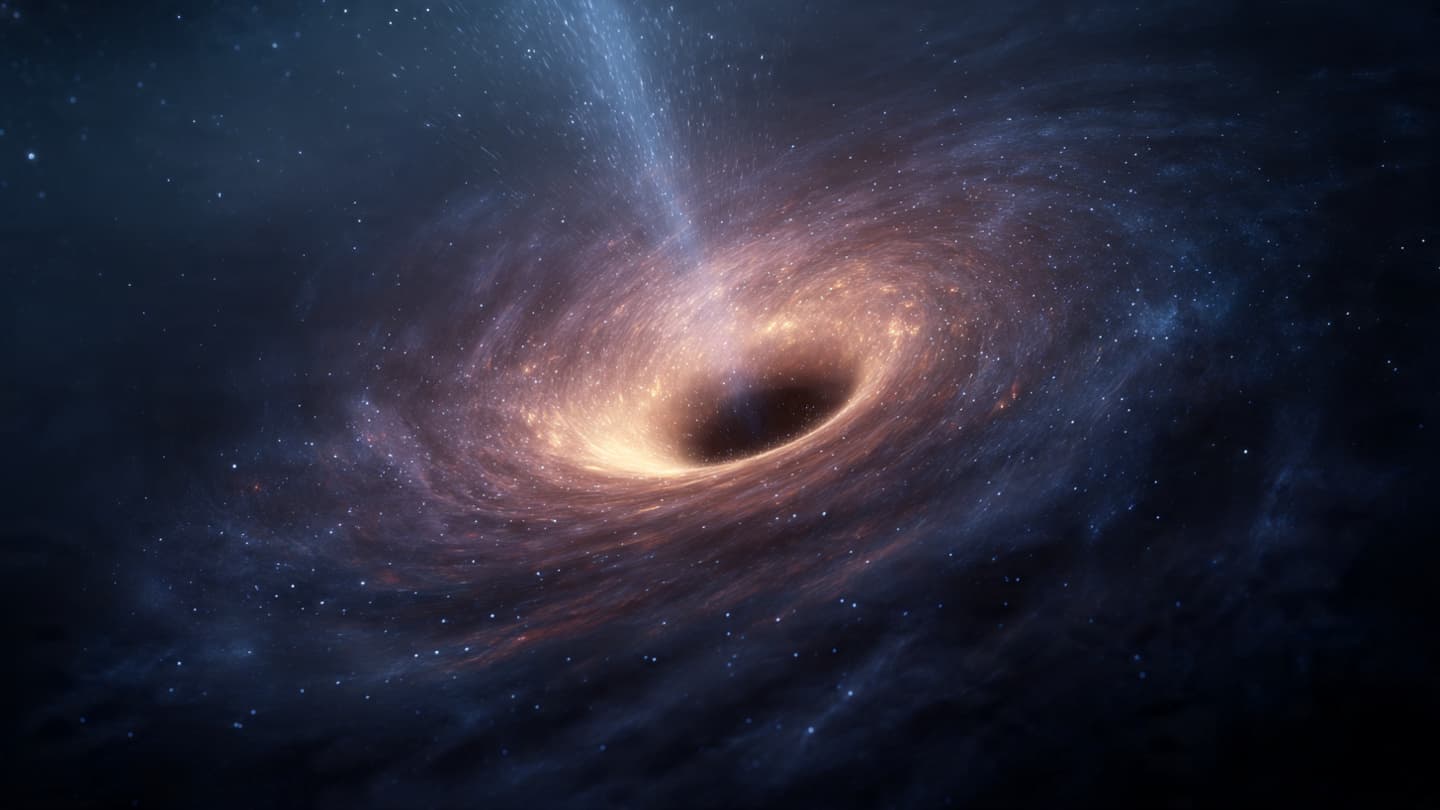
Researchers have made a groundbreaking discovery at the center of the Milky Way, revealing that winds are emerging from Sagittarius A, the supermassive black hole that lies at its heart. For decades, scientists have speculated about the activity of this black hole, which has long been shrouded in mystery. The new findings, published in The Astrophysical Journal Letters, mark a significant milestone in our understanding of black holes and their influence on galactic environments.
The research team utilized advanced observational tools, including the Atacama Large Millimeter/submillimeter Array (ALMA) and NASA’s Chandra X-ray Observatory, to gather data over a span of more than fifty years. Their efforts have culminated in the identification of a cone-shaped cavity near Sagittarius A, which is believed to have been formed by a stream of hot gas flowing outward from the black hole. This outflow is significant as it challenges the traditional view of black holes as solely consuming matter without any outward influence.
The newly discovered winds are relatively gentle compared to the powerful jets observed in more active black holes across the universe. However, their existence confirms long-held theoretical predictions about the behavior of black holes. The findings suggest that even in a quieter state, black holes can still interact with their surroundings in meaningful ways, redistributing gas and influencing the dynamics of star formation within galaxies.
Interestingly, the presence of these winds provides astronomers with a unique opportunity to study black holes in a less active state. While many studies focus on highly energetic galactic centers, Sagittarius A offers a more subtle environment for understanding the complex interactions between black holes and their host galaxies. This research could pave the way for new insights into the role of black holes in shaping the evolution of galaxies over time.
The implications of this discovery extend beyond the Milky Way. By understanding how black holes like Sagittarius A operate, scientists can gain insights into similar phenomena occurring in distant galaxies. The winds from Sagittarius A may play a crucial role in regulating the movement of gas, which is essential for star formation and the overall structure of galaxies.
As astronomers continue to investigate the heart of our galaxy, the detection of these winds serves as a reminder of the mysteries that still exist in the cosmos. The findings not only close a long-standing search in astronomy but also open new avenues for future research, highlighting the importance of continued exploration in understanding the universe.
The research community is optimistic about the potential for further discoveries as they delve deeper into the complexities of black holes and their environments. The winds from Sagittarius A may hold the key to unlocking more secrets about the formation and evolution of galaxies, making this a pivotal moment in astrophysical research.
Published by Banx Network. This article is part of the Banx decentralized media programme, powered by the BXE token on the XRP Ledger.



