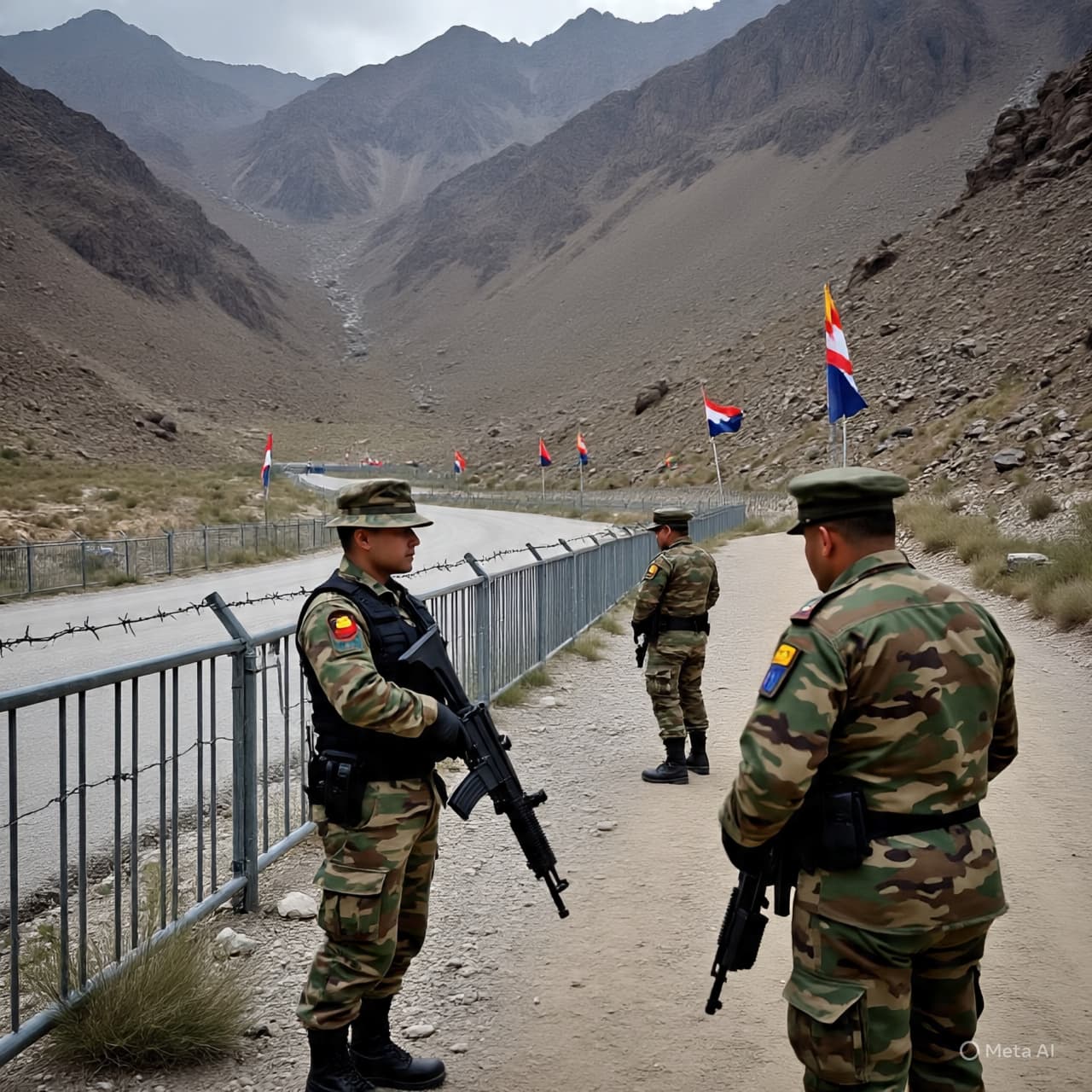
Mountains do not shout when they shift; they simply tremble, and those who live in their shadow feel it first. Along the rugged spine that separates Pakistan and Afghanistan, the air often carries more than dust. It carries history, suspicion, and the quiet echo of unfinished wars. In these highlands, borders are not only lines drawn on maps — they are lived realities, negotiated daily between soldiers, villagers, and shifting political winds. In recent days, tensions along the Pakistan–Afghanistan frontier have again risen, as cross-border incidents and security operations sharpen the fragile balance between Islamabad and Kabul. Pakistan’s military has intensified operations targeting militant elements it believes are using Afghan territory as sanctuary. Kabul, under the leadership of the Afghan Taliban, has responded with firm rhetoric, signaling that sovereignty is not a word to be spoken lightly. The Durand Line — a boundary long disputed in sentiment if not always in practice — has once more become a stage where grievances gather like storm clouds. Pakistan argues that security measures are necessary to stem attacks carried out by groups such as Tehrik-i-Taliban Pakistan (TTP), whose violence has troubled cities and security posts alike. Afghan Taliban officials, meanwhile, have rejected allegations of harboring militants, framing Pakistan’s actions as incursions that strain neighborly ties. In this atmosphere, statements have grown sharper, though still measured in the language of diplomacy. Taliban spokesmen have suggested that any continued military pressure could invite reciprocal steps. Pakistan, for its part, has emphasized its right to defend its territory and citizens. Between assertion and response, the border communities wait — traders uncertain, families cautious, and local elders once again cast as informal mediators. The relationship between Islamabad and Kabul has always carried layers of complexity. Since the Taliban’s return to power in 2021, hopes of improved coordination have often collided with security realities. Trust, like a fragile bridge over a deep valley, requires careful maintenance. Each cross-border strike or militant attack becomes a stone added to its weight. Yet, neither side appears eager for open confrontation. Economic interdependence, humanitarian needs, and regional stability act as quiet restraints. Pakistan hosts millions of Afghan refugees and remains a key transit route for Afghan trade. Afghanistan, landlocked and economically strained, depends on workable relations with its neighbors. The calculus, therefore, is not merely military — it is human and economic. Regional observers note that the broader geopolitical landscape also plays a role. Major powers watch developments with cautious interest, aware that instability along this frontier can ripple outward. For both Pakistan and the Afghan Taliban, managing domestic expectations while avoiding escalation is a delicate exercise. As tensions simmer, the mountains remain, indifferent yet enduring. History suggests that flare-ups along this border are rarely permanent, but neither are they insignificant. Each episode leaves behind a trace — in policy, in public perception, and in the daily rhythm of border life. For now, official statements continue, patrols remain vigilant, and diplomatic channels stay open. Whether the current strain cools into dialogue or hardens into prolonged friction will depend on restraint as much as resolve. Along this restless frontier, calm is not the absence of tension, but the careful balance of competing claims. In the end, both nations face a familiar choice: to let the winds gather into storm, or to steady the bridge before it sways too far.
AI Image Disclaimer
Visuals are created with AI tools and are not real photographs.
SOURCE CHECK
Credible mainstream and regional sources covering the Pakistan–Afghanistan border tensions and Taliban responses include: Reuters Al Jazeera BBC News Associated Press (AP) Dawn (Pakistan)
Published by Banx Network. This article is part of the Banx decentralized media programme, powered by the BXE token on the XRP Ledger.