
Key Highlights
- Recent tensions have escalated along the Pakistan-Afghanistan border due to military operations.
- The Durand Line remains a contentious issue, impacting diplomatic relations.
- Economic interdependence complicates the potential for conflict between the two nations.
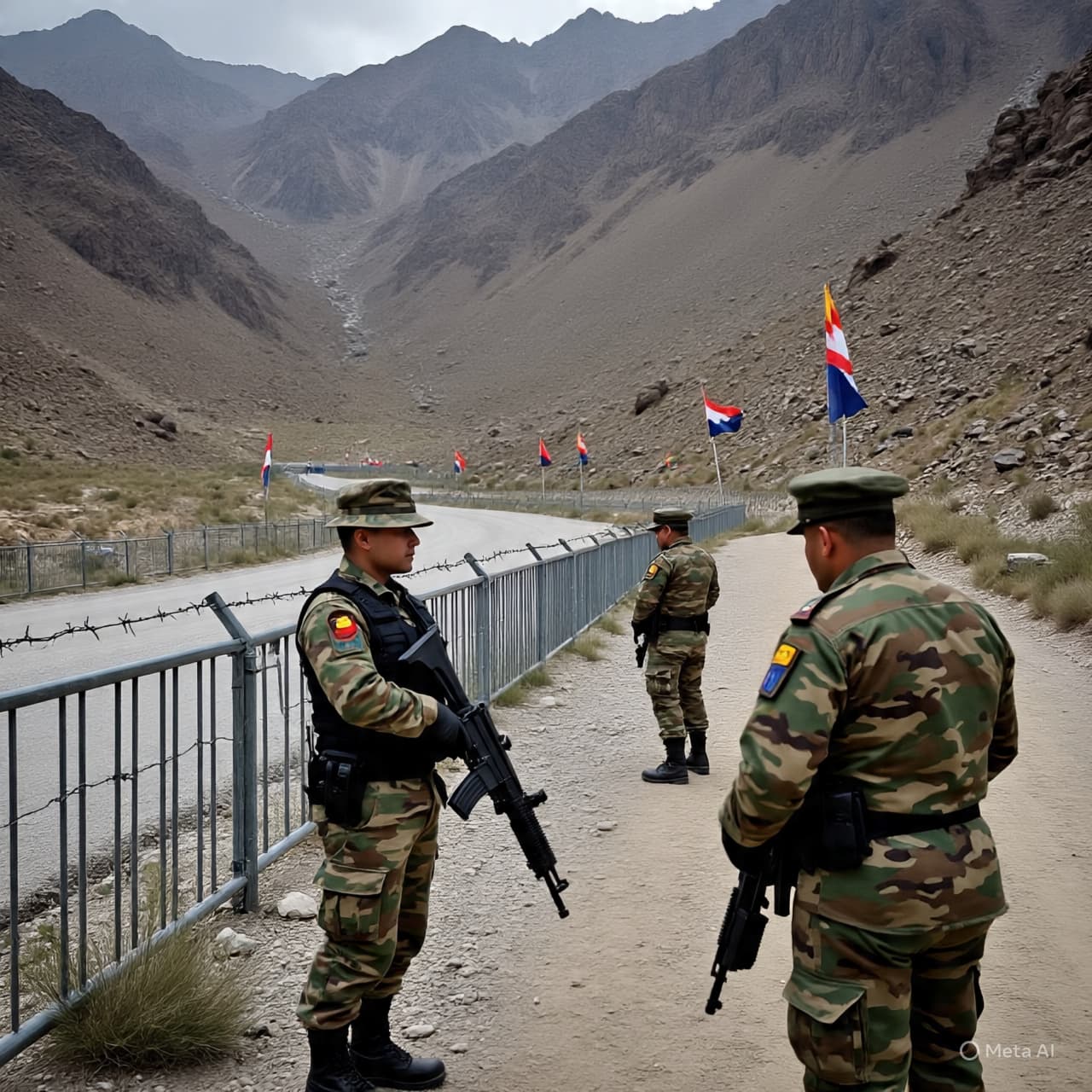
The rugged terrain along the Pakistan-Afghanistan border has long been a site of conflict and negotiation, where the air is thick with history and the weight of unresolved grievances. Recently, tensions have surged as both nations grapple with security concerns and the implications of military operations. The Pakistan military has ramped up its efforts against militant groups it believes are using Afghan territory as a base, while the Afghan Taliban has responded with strong rhetoric, emphasizing its sovereignty.
The Durand Line, a boundary that has been a source of contention for decades, is once again at the forefront of diplomatic discussions. Pakistan asserts that its security measures are essential to combat groups like Tehrik-i-Taliban Pakistan (TTP), which have been responsible for numerous attacks within its borders. In contrast, Afghan officials have denied harboring militants, framing Pakistan's military actions as violations of their sovereignty.
As the situation unfolds, both sides have issued statements that reflect a cautious approach to diplomacy. Taliban spokesmen have warned that continued military pressure from Pakistan could provoke a response, while Islamabad maintains its right to defend its territory. This delicate balance leaves border communities in a state of uncertainty, with traders and families caught in the crossfire of political maneuvering.
The relationship between Islamabad and Kabul is layered with complexity, particularly since the Taliban regained power in 2021. Hopes for improved cooperation have often been overshadowed by security challenges. Trust between the two nations is fragile, and each incident along the border adds to the strain. Yet, both sides seem to recognize the importance of avoiding outright conflict. Economic ties and humanitarian needs serve as significant factors that restrain escalation.
Pakistan is home to millions of Afghan refugees and serves as a crucial transit route for Afghan trade, while Afghanistan relies on stable relations with its neighbors for economic survival. This interdependence complicates the military calculus, as both nations must navigate their domestic expectations while managing external pressures.
The geopolitical landscape further complicates the situation, with major powers closely monitoring developments. Instability along the border can have far-reaching consequences, making it imperative for both Pakistan and the Afghan Taliban to tread carefully. As tensions simmer, the mountains that separate the two nations stand as silent witnesses to the ongoing struggle for peace and stability.
In conclusion, the current strain in relations between Islamabad and Kabul could either lead to constructive dialogue or deepen existing divides. The future of this border region hinges on the ability of both nations to exercise restraint and seek common ground. As history has shown, the path to peace is often fraught with challenges, but it is a journey that both nations must undertake for the sake of their people.
Published by Banx Network. This article is part of the Banx decentralized media programme, powered by the BXE token on the XRP Ledger.



