
Key Highlights
- Unique Structure:A 20-story lighthouse built in a desert region.
- Architectural Curiosity:The lighthouse contrasts with its arid surroundings.
- Tourism Efforts:Local officials aim to attract visitors through iconic landmarks.
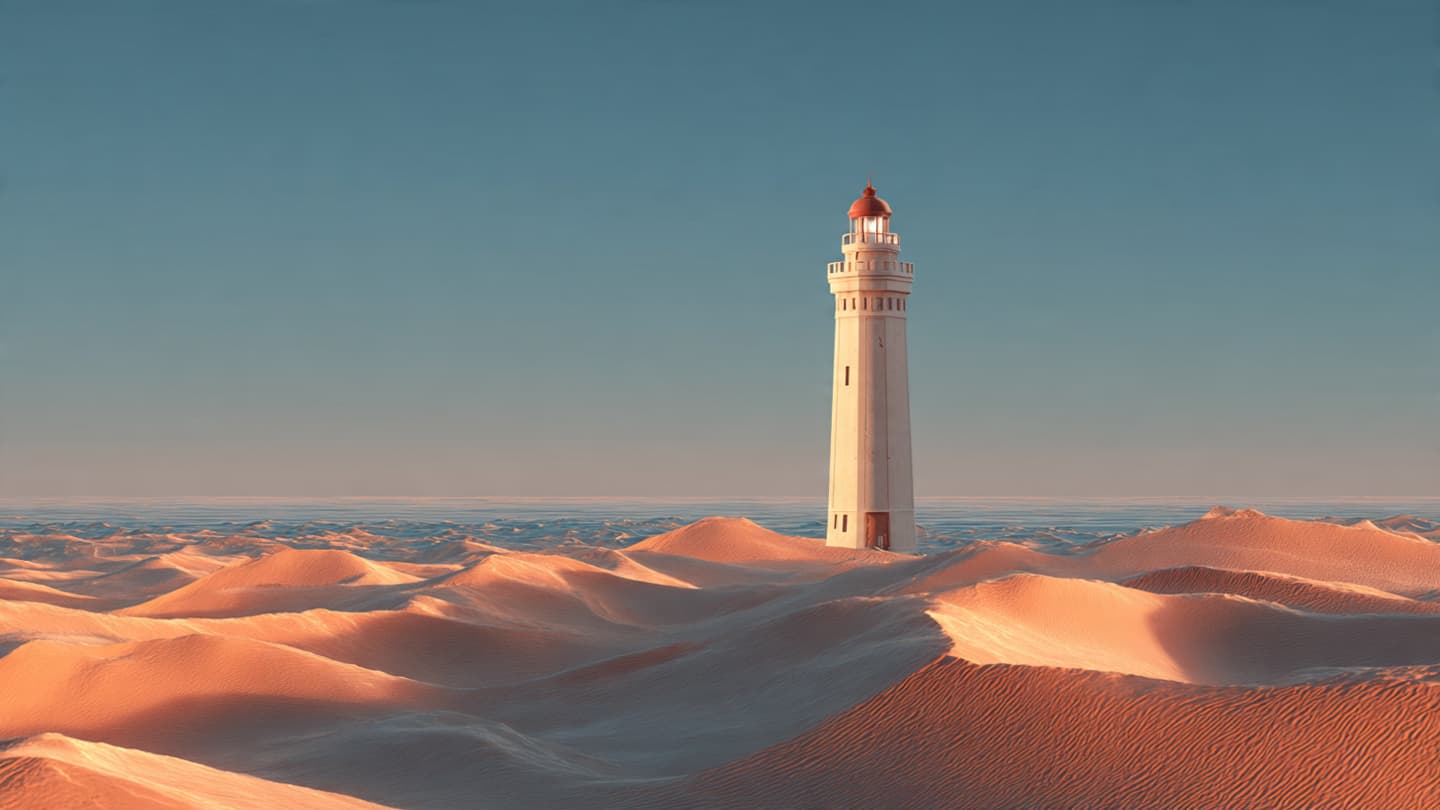
A lighthouse typically conjures images of coastal landscapes, guiding ships through turbulent waters. However, in a surprising twist, a 20-story lighthouse has been constructed in a desert, far removed from any ocean. This unusual structure has become an architectural curiosity, captivating the attention of architects, travelers, and urban observers alike. The juxtaposition of a maritime symbol in a dry, sandy environment raises questions about its purpose and significance.
The lighthouse, reportedly located in a region characterized by harsh winds and endless dunes, stands as a testament to human creativity and ambition. Local officials have indicated that the structure is part of a broader initiative to diversify the economy through tourism. By erecting iconic landmarks, regions with challenging climates hope to attract visitors and gain international recognition. The desert lighthouse fits neatly into this narrative, serving as both a visual spectacle and a potential economic driver.
Images circulating on social media depict the lighthouse against a backdrop of open skies and rocky terrain, rather than the traditional harbors and fishing villages typically associated with such structures. This striking visual contrast has sparked public fascination, with many describing the lighthouse as surreal or cinematic. The imagery invites viewers to ponder the meaning of a lighthouse in a place where waves have never reached.
Architectural experts note that modern landmarks often transcend their original functions. While lighthouses were once solely navigational aids, contemporary versions can embody cultural identity, ambition, or branding. In this case, the absence of water may be a deliberate choice, emphasizing the lighthouse's role as a symbol of resilience and adaptation in an unexpected setting.
Tourism specialists highlight that unique projects like this lighthouse can generate significant attention in today's digital landscape. Visual distinctiveness can transform a local attraction into a global phenomenon, making the desert lighthouse not just an architectural feat but also a carefully curated image aimed at contemporary audiences. The structure may serve as a beacon of hope and innovation, drawing visitors to a region that might otherwise go unnoticed.
However, the construction of such symbolic megastructures in extreme environments is not without its critics. Concerns regarding practicality, sustainability, and long-term utility often arise in discussions about projects that prioritize spectacle over functionality. Critics argue that while the lighthouse may attract attention, its effectiveness as a navigational aid or tourist destination remains to be seen.
Despite these debates, the image of a lighthouse standing solitary in the desert evokes a sense of reflection. It suggests that symbols can evolve beyond their origins, reshaped by new landscapes and aspirations. In an era defined by reinvention, even structures designed for the sea may find new purpose in the sands of time.
AI-generated images are used for visual illustration purposes only.
Published by Banx Network. This article is part of the Banx decentralized media programme, powered by the BXE token on the XRP Ledger.



