
Key Highlights
- Rescue Operation:An American citizen was airlifted from McMurdo Station during Antarctica's midwinter.
- International Collaboration:The mission involved Australian aircrew and New Zealand medical teams.
- Rare Event:Midwinter evacuations are uncommon due to extreme conditions.
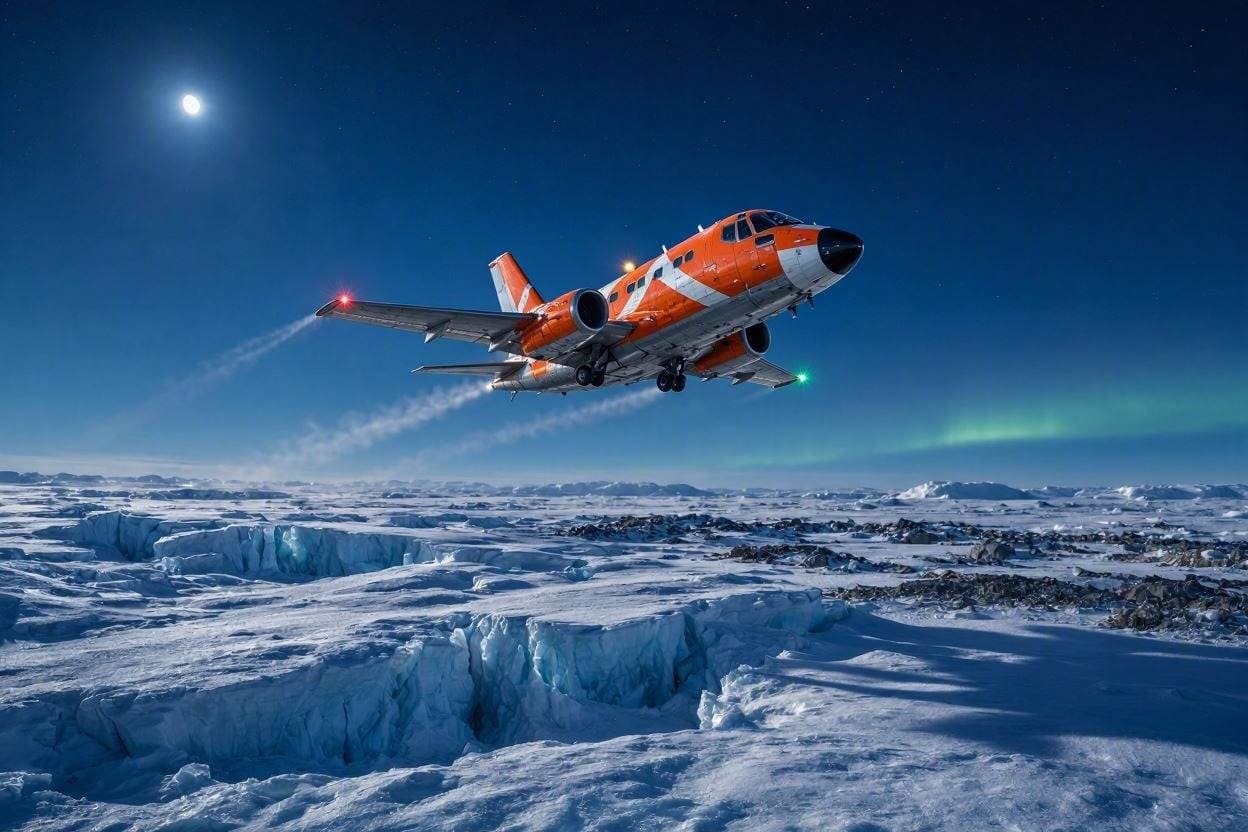
In the depths of Antarctica's winter, where darkness prevails for months and temperatures can plunge to lethal lows, a remarkable rescue operation took place. An American citizen, facing a serious medical emergency at McMurdo Station, was airlifted to a hospital in New Zealand in a rare midwinter evacuation. This mission, executed by an Australian air crew, defied the extreme conditions that typically ground all flights during this season, highlighting the extraordinary lengths taken to preserve life in one of the most remote places on Earth.
The rescue involved a specialized aircraft designed to operate in polar night and severe cold. Pilots navigated through pitch-black skies and turbulent weather, relying on advanced instruments and their exceptional skills. The flight from Antarctica to Christchurch, New Zealand, spans thousands of kilometers of unforgiving terrain, where any mechanical failure or navigational error could have led to catastrophic consequences. Nevertheless, the crew executed the mission flawlessly, demonstrating the highest level of professionalism and courage.
The identity of the patient has not been disclosed, but they were stabilized before departure and received continuous care throughout the flight. Upon arrival in New Zealand, the individual was transferred to a hospital for further treatment. This successful mission underscores the importance of having robust emergency protocols in place for research stations in polar regions. Although isolated, these outposts are supported by a network of global partners ready to assist in crises.
Midwinter rescues are exceptionally rare due to the inherent dangers involved. Most evacuations occur during the summer months when daylight and milder weather allow for safer operations. This incident highlights the unpredictability of medical emergencies and the necessity for year-round readiness. It also reflects the strong ties between nations operating in Antarctica, including the United States, Australia, and New Zealand.
Officials from the U.S. Embassy in Wellington expressed profound gratitude to the Australian and New Zealand teams involved in the operation. They praised the bravery and expertise of the aircrew, noting that the mission was one of the most technically demanding operations imaginable. Such collaboration strengthens the bonds of friendship and mutual support that define the Antarctic community.
For the scientific community, this rescue serves as a stark reminder of the risks associated with polar research. Living and working in such extreme environments requires resilience and thorough preparation. The successful outcome brings relief to colleagues at McMurdo Station, who depend on one another for safety and support, reinforcing the spirit of camaraderie that thrives in isolation.
The midwinter rescue of an American from Antarctica stands as a remarkable achievement in both aviation and humanitarian aid. It exemplifies the power of international partnership in overcoming nature’s toughest challenges. As the patient recovers, this story serves as an inspiration to all who venture into the unknown.
Published by Banx Network. This article is part of the Banx decentralized media programme, powered by the BXE token on the XRP Ledger.



