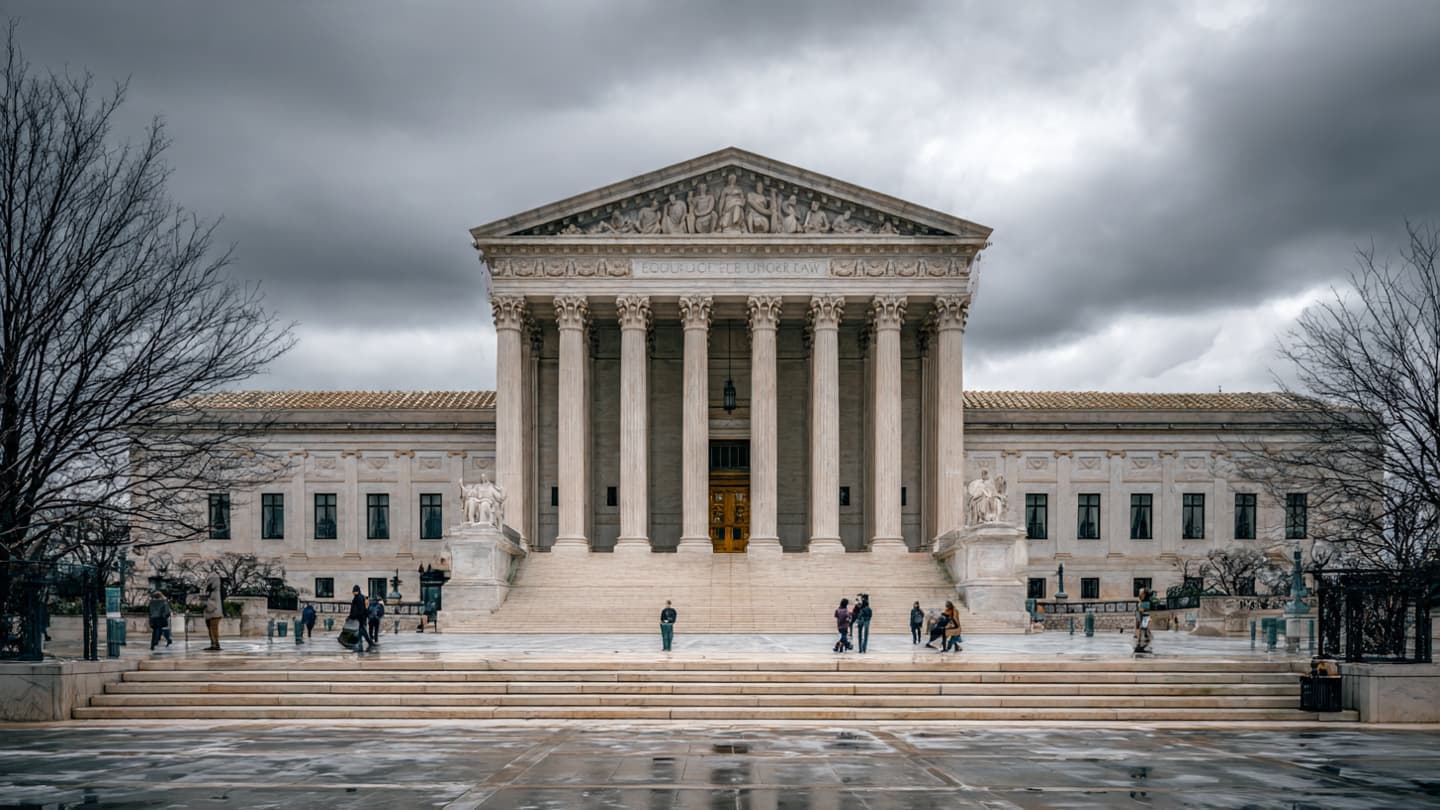
Legal disputes often travel slowly through the court system, moving from one chamber of review to another as arguments are refined and challenged. Each decision becomes both an ending and a beginning, closing one path while opening another. That process continued in the case involving Mahmoud Khalil, whose legal team announced plans to appeal to the United States Supreme Court after an appeals court declined to review the matter.
The development followed a lower appellate court decision not to revisit earlier rulings connected to Khalil’s case. Attorneys representing Khalil stated that they believe constitutional and procedural questions remain unresolved and deserve consideration by the nation’s highest court.
Cases reaching the Supreme Court typically involve broader legal implications extending beyond the individuals directly involved. Lawyers often seek review by arguing that important constitutional principles, federal interpretations, or conflicting lower court rulings require clarification.
The judicial process surrounding appeals can take months or even years, particularly in cases attracting public or political attention. During that time, legal teams continue filing motions, preparing arguments, and responding to procedural decisions from multiple courts.
Observers noted that the appeals process reflects both the complexity and layered structure of the American legal system. Not every request for review is accepted, and the Supreme Court hears only a limited number of cases each year from thousands of petitions submitted nationwide.
Supporters of Khalil argued that the case raises significant concerns involving rights, due process, and judicial interpretation. Others maintained that lower court rulings should stand unless clear legal errors can be demonstrated through established standards of review.
Legal scholars also pointed out that Supreme Court appeals frequently serve as symbolic moments even before any ruling is issued. The decision whether to hear a case can itself shape public discussion around broader legal or political questions connected to the dispute.
Khalil’s attorneys confirmed they intend to continue pursuing review through the Supreme Court process. Whether the justices ultimately agree to hear the case remains uncertain, but the legal battle has now entered another stage within the country’s highest judicial framework.
AI Image Disclaimer: Some images accompanying this article were AI-generated to depict judicial institutions and appellate court proceedings.
Sources: Reuters, Associated Press, CNN, The New York Times
Published by Banx Network. This article is part of the Banx decentralized media programme, powered by the BXE token on the XRP Ledger.