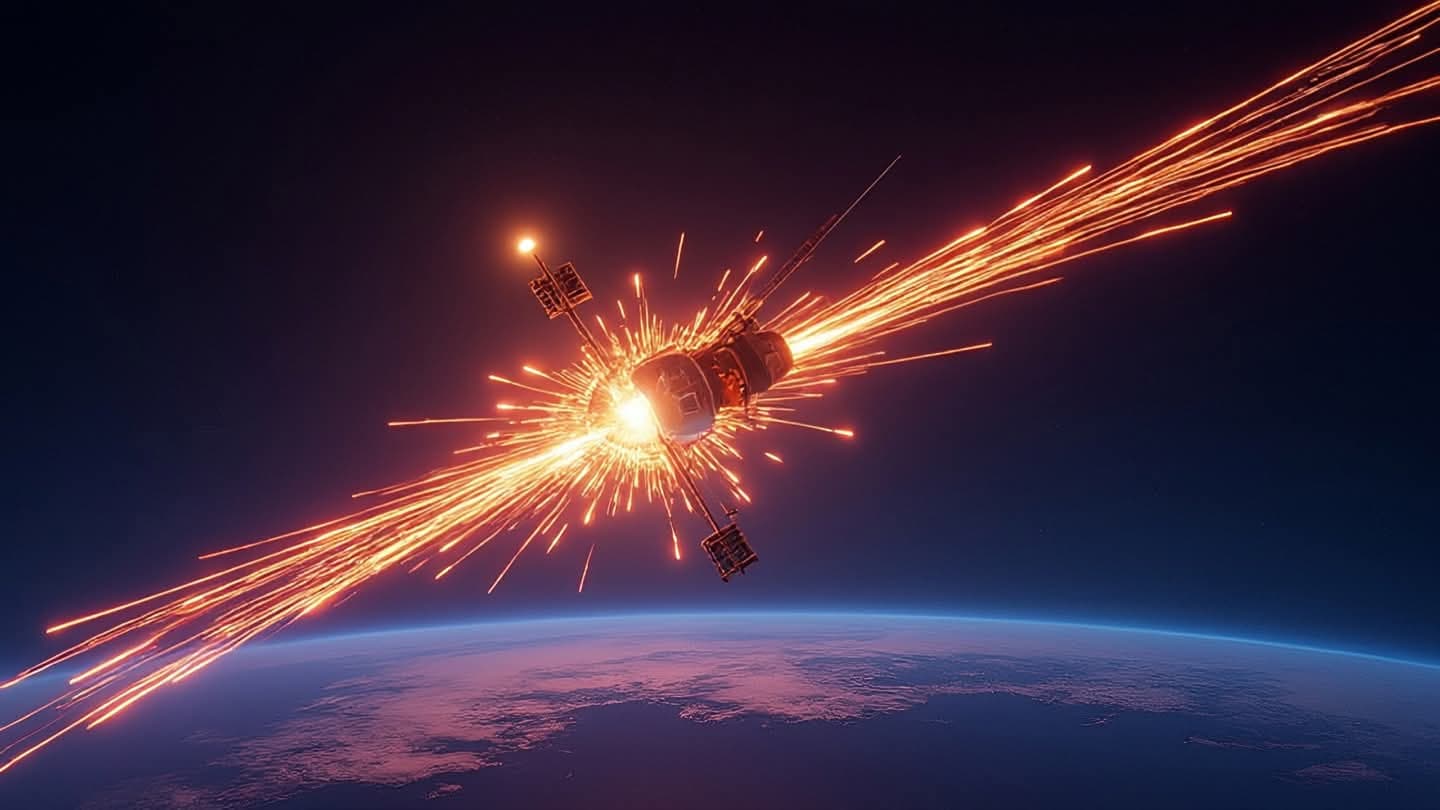
For nearly two decades, the Swift space telescope has been a vigilant eye on the high-energy universe, capturing the fleeting flashes of gamma-ray bursts. But every mission has an end, and for Swift, that end is approaching in a dramatic fashion. After a recent private attempt to boost its orbit failed, the spacecraft is now destined to return to Earth, burning up in the atmosphere in a fiery finale that marks the close of a distinguished career.
The decision to let Swift re-enter naturally came after a commercial rescue mission, intended to raise the telescope’s altitude and extend its life, encountered technical difficulties. Without this boost, atmospheric drag will gradually slow the spacecraft, causing its orbit to decay. NASA has confirmed that the re-entry is expected to occur in late 2025 or early 2026, though the exact date remains uncertain due to variables in solar activity and atmospheric density.
Predicting the precise location of debris impact is challenging. While most of the telescope will burn up upon re-entry, some heavier components may survive and reach the surface. NASA models suggest that the risk to human life is extremely low, as the majority of the Earth’s surface is covered by water or uninhabited land. Nevertheless, agencies are monitoring the situation closely to provide timely warnings if necessary.
Swift’s legacy is one of groundbreaking discovery. Launched in 2004, it revolutionized our understanding of gamma-ray bursts, the most powerful explosions in the universe since the Big Bang. Its ability to quickly pivot and observe these transient events allowed astronomers to study the birth of black holes and the deaths of massive stars with unprecedented detail.
The failure of the private rescue mission highlights the growing role of commercial entities in space sustainability. While the attempt did not succeed, it demonstrated the potential for in-orbit servicing to extend the lives of valuable scientific assets. Future missions may benefit from the lessons learned during this effort, paving the way for a more sustainable approach to space exploration.
As the countdown to re-entry begins, the scientific community is reflecting on Swift’s contributions. Data from the telescope continues to be analyzed, yielding new insights even as the hardware approaches its end. The mission’s success is measured not just in years operated, but in the knowledge gained and the questions answered.
NASA has assured the public that safety protocols are in place to manage the re-entry. Coordination with international space agencies ensures that any potential debris zones are identified and communicated effectively. The focus remains on maximizing the scientific return from Swift’s remaining operational time.
Swift will continue to operate until its orbit decays completely, providing final observations of the high-energy sky. Its eventual return to Earth will mark the end of an era, but its scientific impact will endure for years to come.
AI Image Disclaimer: The images associated with this piece are AI-generated visualizations intended to represent the themes of space re-entry and satellite lifecycle.
Sources: NASA Goddard Space Flight Center SpaceNews BBC News The Verge Reuters
Published by Banx Network. This article is part of the Banx decentralized media programme, powered by the BXE token on the XRP Ledger.