There is a particular kind of exhaustion that settles over a city when the systems designed to handle its waste can no longer keep pace—when the mountain of what is discarded grows taller than the capacity to manage it, and the ground itself begins to give way. In Depok, a city on the southern edge of Jakarta, that exhaustion has found its symbol in the Cipayung landfill, where a landslide triggered by sheer overload has blocked access, disrupted waste collection, and sent a quiet but urgent message about the limits of a system that has been stretched too thin for too long.
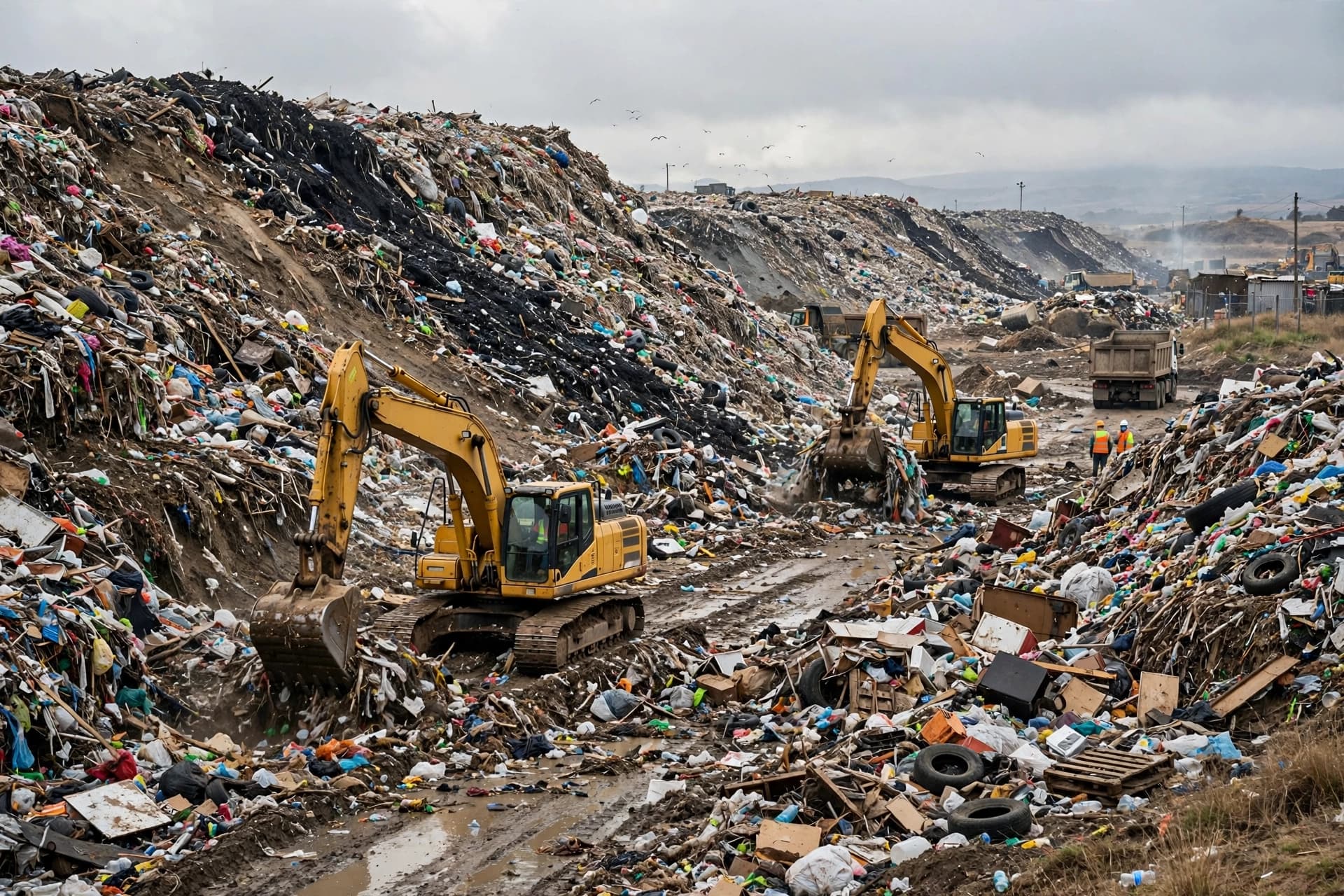
The landslide occurred on Friday at the Cipayung Final Disposal Site, a facility that has long exceeded its designed capacity. According to Reni Siti Nuraeni, head of Depok's Environment and Sanitation Agency (DLHK), the incident was caused by the site being overloaded—the accumulated waste had grown so heavy and so high that it could no longer be contained . The slide narrowed the maneuvering area for the heavy equipment used to compact and manage the waste, creating a bottleneck that slowed operations to a crawl .
The practical consequences rippled outward almost immediately. Trucks that normally rotate through the landfill to deposit their loads found their routes blocked. As a driver named Naming told Media Indonesia, the main access road was obstructed by waste, setting off a "domino effect" . With trucks unable to dump their loads on schedule, waste began piling up at temporary collection points, residential neighborhoods, and markets across the city.
The Cipayung site has been a source of concern for years. A 2026 inspection by the Depok City Council found that the waste pile had reached approximately two million tons and stood between twenty and twenty-five meters high—a looming presence that posed risks of landslide, fire, and environmental contamination . Residents living near the landfill have complained for years about the smell and about the pollution of the Pesanggrahan River, which they say has been clogged and shallowed by runoff from the site .
In response to the immediate crisis, DLHK has deployed additional heavy equipment: one bulldozer and four excavators were brought in to help reshape the waste pile, clear the access routes, and restore the maneuvering area . Reni acknowledged that while the situation is being handled, operations are not yet back to normal. "The landfill is already in that condition," she said, describing the underlying problem as one of capacity that has long been exceeded .
Beyond the immediate cleanup, Reni urged residents to begin separating their waste at home, sorting organic material for composting or maggot feed and channeling inorganic waste to local waste banks. The goal, she said, is to reduce the burden on the landfill so that only residual waste—material with no remaining economic value—arrives at Cipayung .
The Cipayung landslide is not an isolated event. It is the visible symptom of a deeper strain: a landfill pushed far beyond its limits, an infrastructure that has not kept pace with the volume of waste a growing city produces, and a community that has learned to live with the consequences. The heavy equipment will clear the access roads. The trucks will resume their rotations. But the mountain will still be there, and so will the question of how much longer it can hold.
AI Image Disclaimer: The images accompanying this article were generated by artificial intelligence and are for illustrative purposes only.
Sources: detikNews, Kompas.com, Media Indonesia, Tribunnews Depok
Published by Banx Network. This article is part of the Banx decentralized media programme, powered by the BXE token on the XRP Ledger.